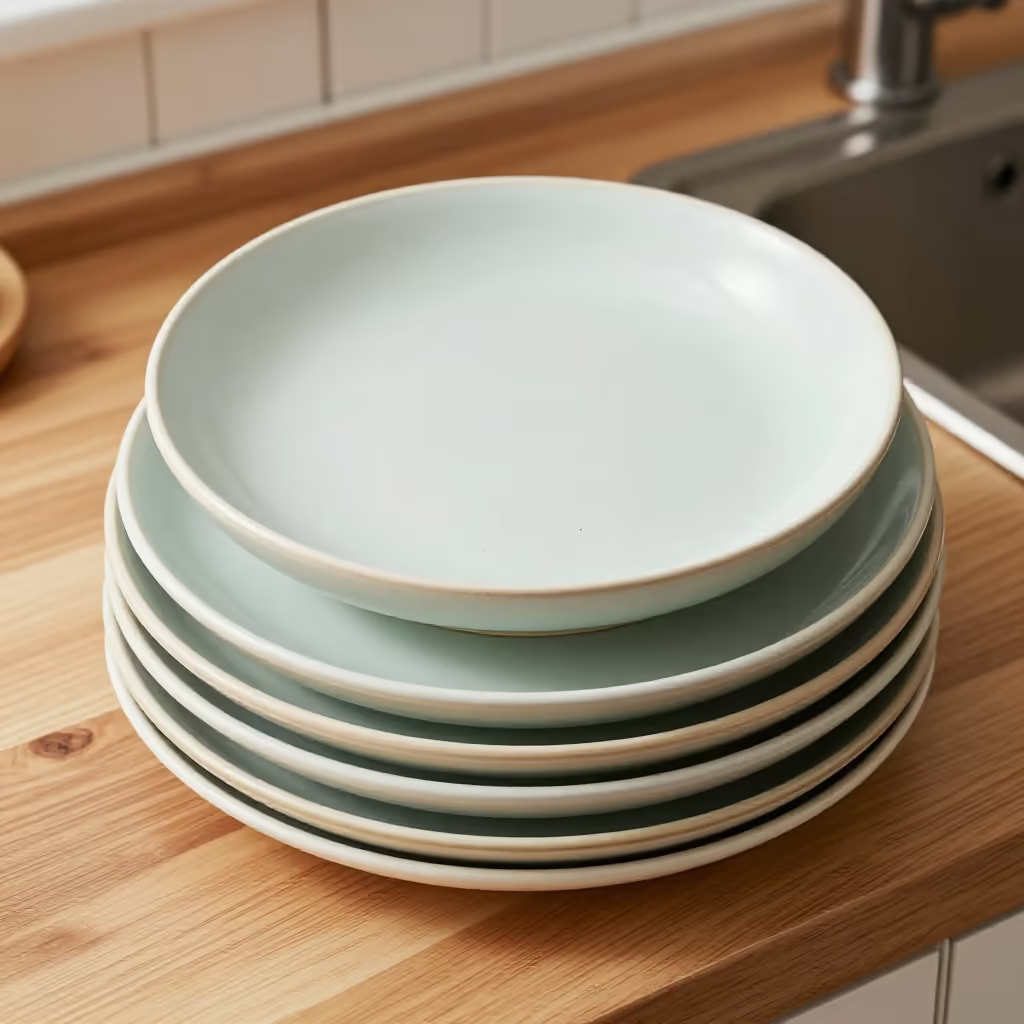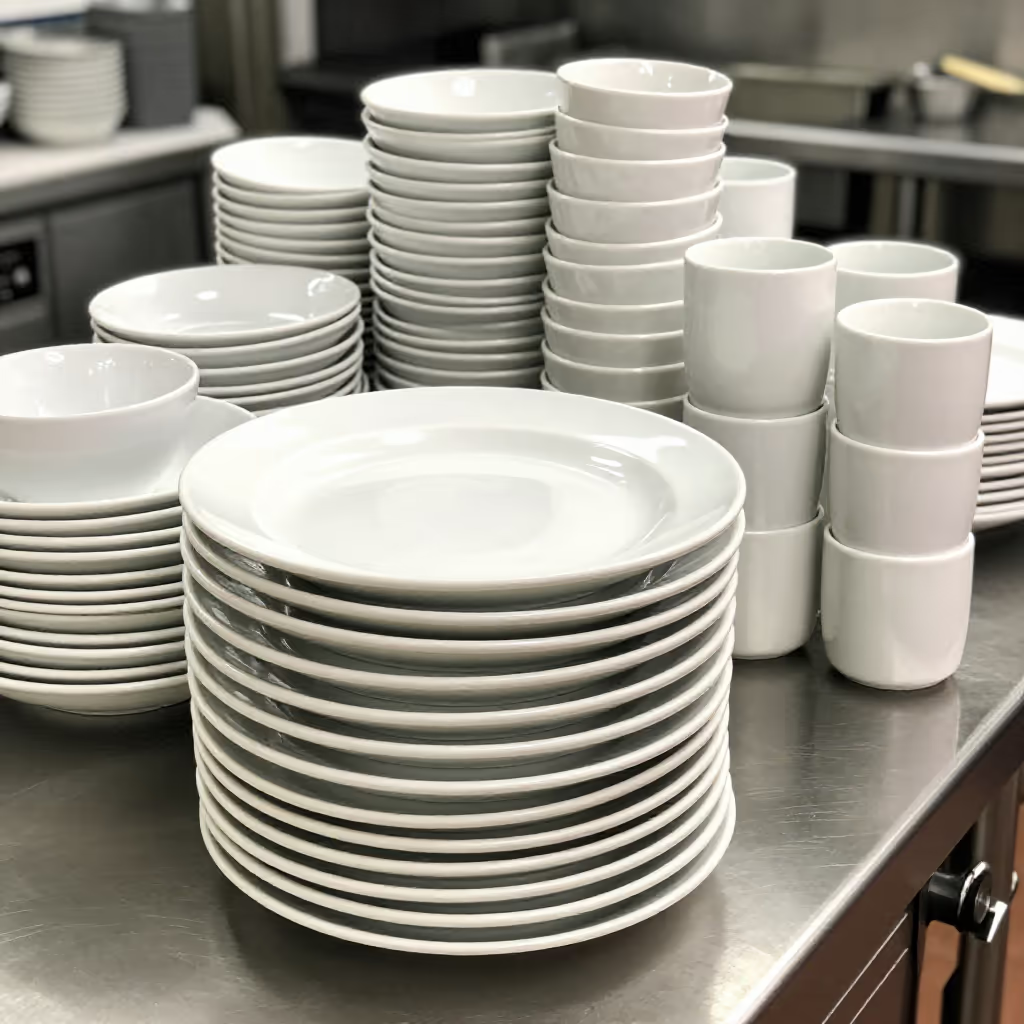
Describes the position of two or more things where one is directly on top of the other.
example
Die Kinder stapelten die Bauklötze übereinander, bis der Turm umfiel.
The children stacked the building blocks on top of each other until the tower fell over.

Usage tips
Word composition
The adverb 'übereinander' is made up of the preposition 'über' (over/about) and the reciprocal pronoun 'einander' (each other). This structure helps you understand both meanings: the literal position ('über einander' — over one another) and the figurative meaning ('über einander sprechen' — to talk about each other).
EXAMPLE
Bitte legt die Papiere nicht einfach übereinander, sondern sortiert sie.
Please don't just put the papers on top of each other; sort them instead.
Context clue
The context makes it clear which meaning is intended. Verbs that describe a physical action (e.g. 'legen' — to lay/put, 'stapeln' — to stack, 'sitzen' — to sit) point to the spatial position. Verbs of communication or thinking (e.g. 'reden' — to talk, 'lachen' — to laugh, 'wissen' — to know) refer to people.
EXAMPLE
Die Teller stehen im Schrank übereinander.
The plates are stacked on top of each other in the cupboard.
Typical collocations
In the spatial meaning, 'übereinander' is often used with verbs of positioning. A very common phrase is 'die Beine übereinander schlagen' (to cross one's legs).
EXAMPLE
Im Winter zieht man oft mehrere Schichten Kleidung übereinander an.
In winter, people often wear several layers of clothing on top of each other.
Typical collocations
When it is about people, 'übereinander' is often combined with verbs that express social interaction or judgment. Typical phrases are 'übereinander reden' (to talk about each other), 'übereinander lachen' (to laugh about each other), or 'schlecht übereinander denken' (to think badly of each other).
EXAMPLE
Es ist unhöflich, in Anwesenheit anderer schlecht übereinander zu reden.
It is impolite to speak badly about each other in the presence of others.
Compare with
confusable
übereinander vs miteinander
with each other
'miteinander' and 'übereinander' are easy to confuse because both express a relationship between several people or things. 'miteinander' means that people do something together or are in direct contact. 'übereinander' has two important uses: things can be positioned on top of each other, or people can speak, think, or know something about other people. The difference is especially important in conversations: 'miteinander sprechen' means to speak directly with each other. 'übereinander sprechen' means to speak about another person, often without that person being present.
übereinander
Die Kisten stehen im Keller übereinander, weil der Raum sehr klein ist.
The boxes are stacked on top of each other in the basement because the room is very small.
miteinander
In der Pause haben die Kollegen miteinander über den neuen Plan gesprochen.
During the break, the colleagues talked with each other about the new plan.