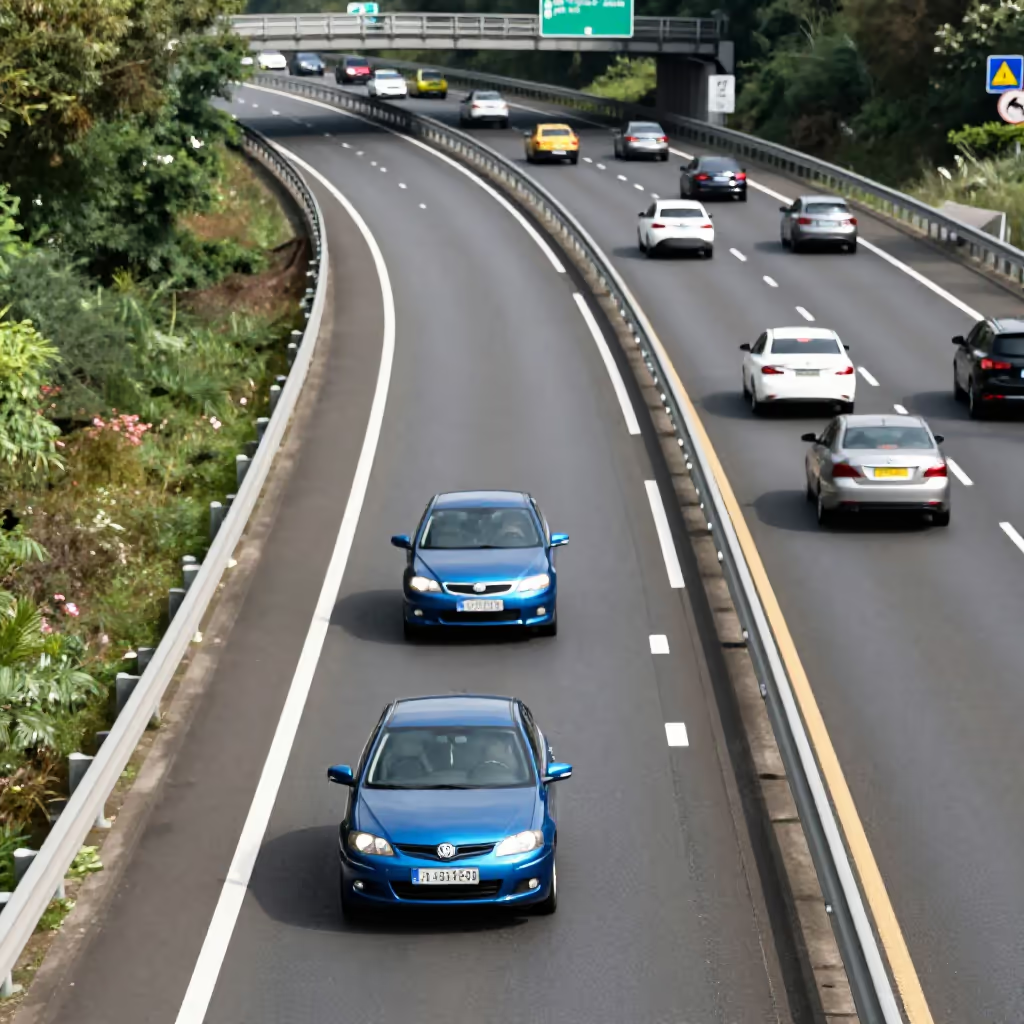
In road traffic, to crash with one's own vehicle into a vehicle that is driving ahead or is stopped.
example
Wegen des plötzlichen Staus sind mehrere Autos aufeinander aufgefahren.
Because of the sudden traffic jam, several cars rear-ended one another.
Usage tips
Separable verb
'Auffahren' (to rear-end / merge) is a separable verb. The prefix 'auf' comes at the end in main clauses. In subordinate clauses or with the infinitive with 'zu', the verb stays together.
EXAMPLE
Er fährt an der nächsten Ausfahrt auf die Autobahn auf.
He merges onto the highway at the next exit.
Auxiliary verb: sein or haben?
The choice of auxiliary verb in the perfect tense depends on the meaning. For all meanings that describe movement or a sudden change of state, such as an accident, entering the highway, or becoming angry, use 'sein' (to be). Only when it is about serving food do you use 'haben' (to have).
EXAMPLE
Der LKW ist auf ein Stauende aufgefahren.
The truck rear-ended the end of a traffic jam.
Rear-end collision
In the meaning 'to cause an accident', the preposition 'auf' with the accusative is often used to name the obstacle. The subject is the vehicle coming from behind.
EXAMPLE
Mein Auto ist auf das vordere Fahrzeug aufgefahren.
My car rear-ended the vehicle in front.
Putting on a spread
When 'auffahren' (to put on) is used in the context of food, it means to serve a large, impressive amount of food. It is often used without a specific object or with general terms such as 'ein Buffet' (a buffet).
EXAMPLE
Bei der Hochzeit wurde ein riesiges Buffet aufgefahren.
A huge buffet was put on at the wedding.
Emotional reaction
This figurative meaning describes a sudden, violent, and usually negative emotional reaction. The verb is used here without an object and has no literal connection to driving.
EXAMPLE
Als ich ihn auf den Fehler hinwies, ist er sofort aufgefahren.
When I pointed out the mistake to him, he immediately flared up.
Compare with
near_synonym · confusable
auffahren vs aufstellen
to set up / nominate
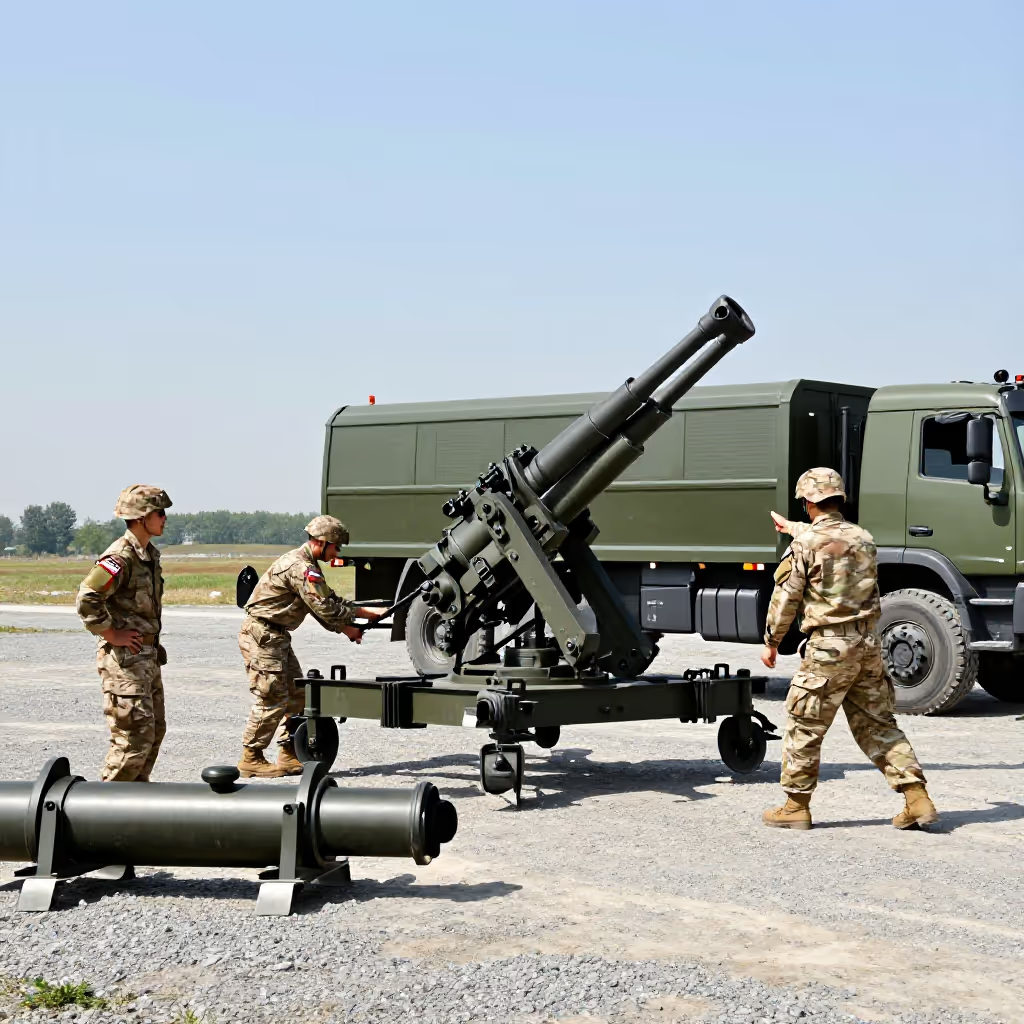
'aufstellen' and 'auffahren' can both mean that something is brought to a particular place. However, their usage is very different. 'Aufstellen' is used for things or groups that you arrange or put in place, for example chairs, signs, or people. In this meaning, 'auffahren' mainly fits heavy equipment or military equipment that is brought into position. In everyday language, 'auffahren' also often has other meanings, for example in traffic. Learners may confuse the words because of their similar form and the idea of 'bringing something to a place'. For ordinary objects, 'aufstellen' is almost always correct.
auffahren
Für die Bauarbeiten fuhren am Morgen mehrere schwere Maschinen auf.
Several heavy machines were brought into position in the morning for the construction work.
aufstellen
Vor der Feier stellen wir im Garten noch ein paar Tische auf.
Before the party, we still need to set up a few tables in the garden.