

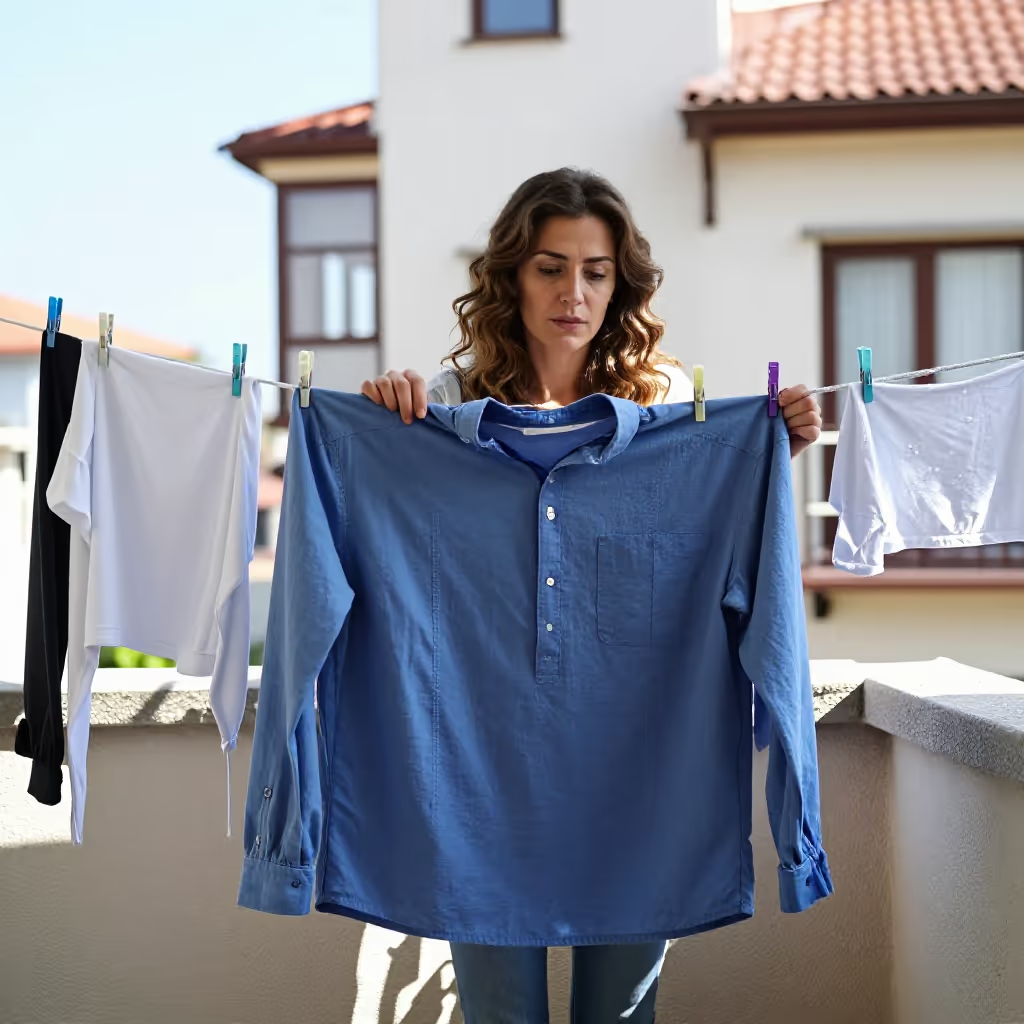
aufhängen
to hang up
To attach something to a hook, line, or nail so that it hangs down freely.
EXAMPLE
Kannst du mir helfen, die Wäsche aufzuhängen?
Can you help me hang up the laundry?
to hang up
Loading your saved state.
to hang up
To attach something to a hook, line, or nail so that it hangs down freely.
Kannst du mir helfen, die Wäsche aufzuhängen?
Can you help me hang up the laundry?

to hang up
To end a phone call by putting down the receiver or pressing the appropriate button.
Sei nicht böse, aber ich muss jetzt aufhängen, es klingelt an der Tür.
Don't be mad, but I have to hang up now; someone is ringing the doorbell.

to freeze
Colloquial for a computer or program that no longer responds and is stuck.
Mein Browser hat sich schon wieder aufgehängt, ich kann keine Tabs mehr schließen.
My browser has frozen again; I can't close any tabs anymore.

to hang oneself
To take one's own life by hanging.
Die Nachricht, dass er sich im Wald aufgehängt hatte, war ein großer Schock.
The news that he had hanged himself in the forest was a great shock.
'Aufhängen' (to hang up) is a separable verb. The prefix 'auf-' comes at the end in a main clause, stays attached to the verb in a subordinate clause, and in the infinitive with 'zu', 'zu' goes in between.
Er hängt das neue Bild im Wohnzimmer auf.
He hangs the new picture up in the living room.
The meaning depends strongly on the grammar. If there is an accusative object, it usually means to attach something. If the verb is reflexive ('sich aufhängen'), it refers either to a technical problem or to suicide.
Ich hänge meine Jacke auf.
I hang up my jacket.
In this meaning, 'aufhängen' (to hang up) is often combined with things that you attach around the home: 'Wäsche aufhängen' (to hang up laundry), 'ein Bild aufhängen' (to hang up a picture), 'einen Mantel aufhängen' (to hang up a coat), or 'Gardinen aufhängen' (to hang up curtains).
Nach dem Waschen hänge ich die Wäsche immer im Garten auf.
After washing, I always hang the laundry up in the garden.
When it is about a phone call, 'aufhängen' (to hang up) is often used without an object. It then stands at the end of the sentence and signals the end of the conversation.
Er hat einfach aufgelegt, ohne sich zu verabschieden.
He simply hung up without saying goodbye.
The reflexive form 'sich aufhängen' in this meaning is used only for technical devices or software. The subject is always something non-human, such as 'der Computer' (the computer), 'das Programm' (the program), or 'der Browser' (the browser).
Ich muss den Laptop neu starten, weil das Programm sich aufgehängt hat.
I have to restart the laptop because the program has frozen.
to hang
Hängen and aufhängen can both refer to fastening an object so that it hangs down. Hängen can also simply describe the existing state. Aufhängen, by contrast, always emphasizes the action that puts the object in this position.
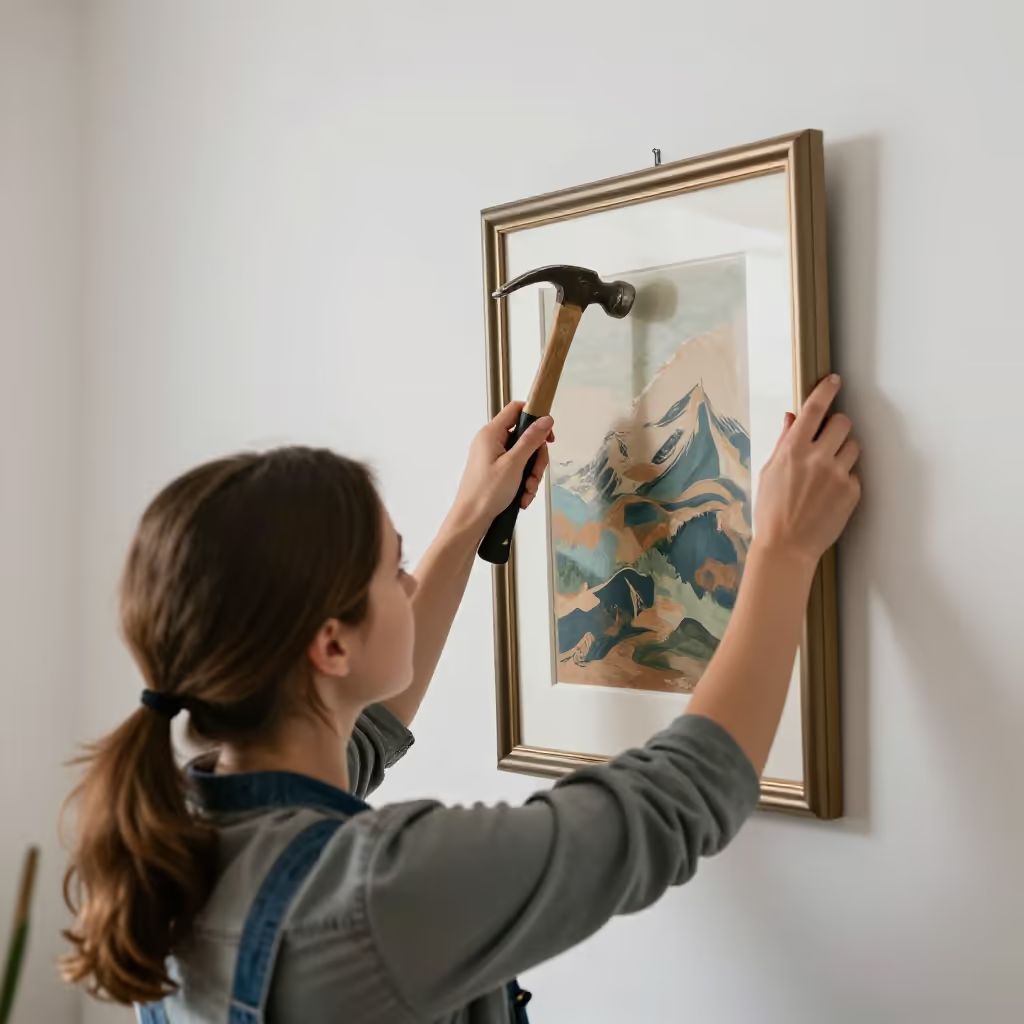
Mia will das Bild jetzt an der Wand aufhängen.
Mia wants to hang the picture up on the wall now.
Das Bild hängt bereits an der Wand.
The picture is already hanging on the wall.