

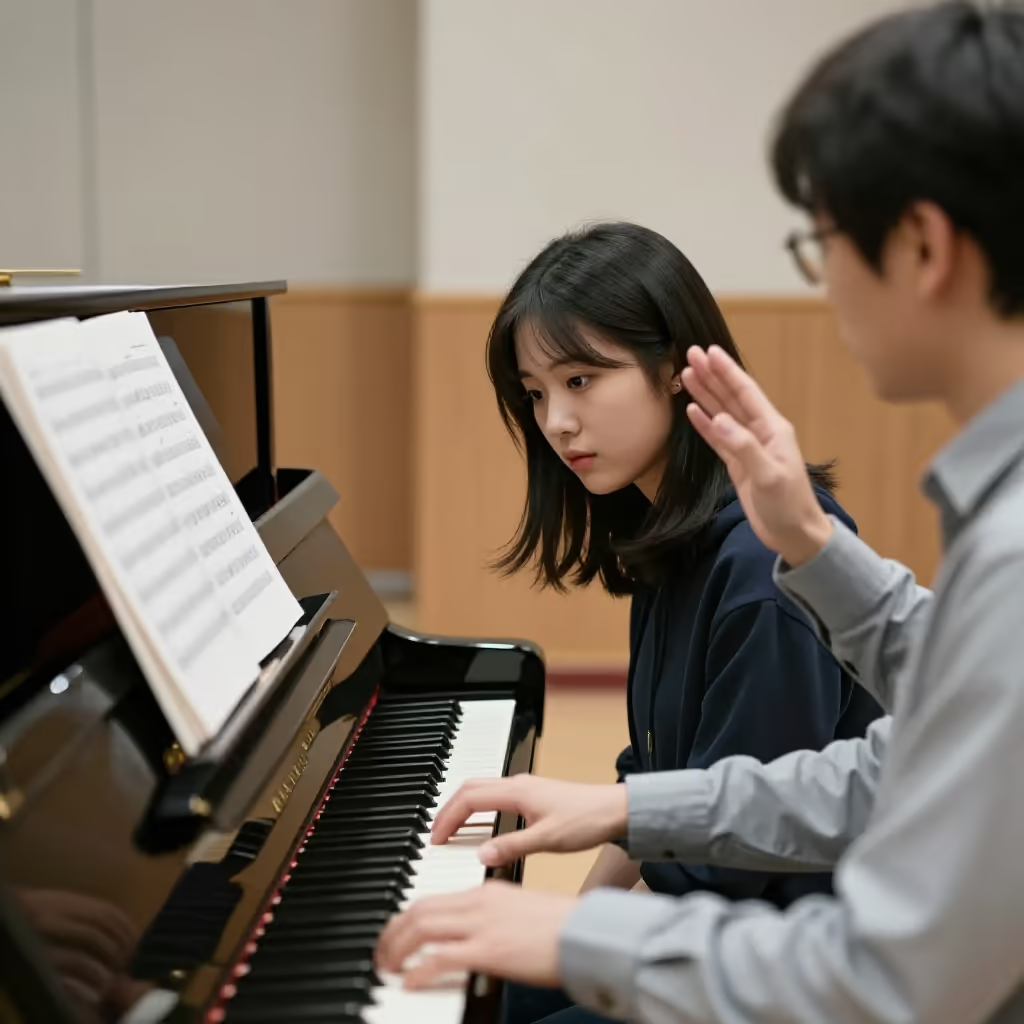
aufhören
to stop
To end or interrupt an activity or action. Often used with 'mit' or an infinitive with 'zu'.
EXAMPLE
Kannst du bitte aufhören, mit dem Stift zu klicken?
Can you please stop clicking the pen?
to stop
Loading your saved state.
to stop
To end or interrupt an activity or action. Often used with 'mit' or an infinitive with 'zu'.
Kannst du bitte aufhören, mit dem Stift zu klicken?
Can you please stop clicking the pen?

to stop
Describes the end of a state or event, such as weather phenomena.
Gegen Abend hat der Regen endlich aufgehört.
Toward evening, the rain finally stopped.
'Aufhören' (to stop) is a separable verb. In a main clause, the prefix 'auf' comes at the end. In subordinate clauses and in the infinitive with 'zu', 'auf' and 'hören' stay together.
Hör bitte mit dem Lärm auf!
Please stop making that noise!
To say what someone stops doing, there are two common constructions: 'aufhören mit' + noun in the dative, or 'aufhören, zu' + infinitive of another verb.
Sie hat mit dem Projekt aufgehört.
She stopped working on the project.
When an event ends, the subject of 'aufhören' is often an impersonal phenomenon. It is especially often used for weather such as rain, snow, or wind.
Der Schneefall hat erst am Morgen aufgehört.
The snowfall did not stop until morning.
to end
Both words can express that an activity is not continuing. „Beenden“ normally takes an accusative object: someone brings an activity to an end. „Aufhören“ is usually used without an object or with „mit“ or an infinitive, and presents the person taking action as the subject. Choose the verb according to the sentence structure.

Ich höre für heute mit der Arbeit auf und gehe nach Hause.
I’m stopping work for today and going home.
Ich beende die Arbeit für heute und gehe nach Hause.
I’m ending work for today and going home.