

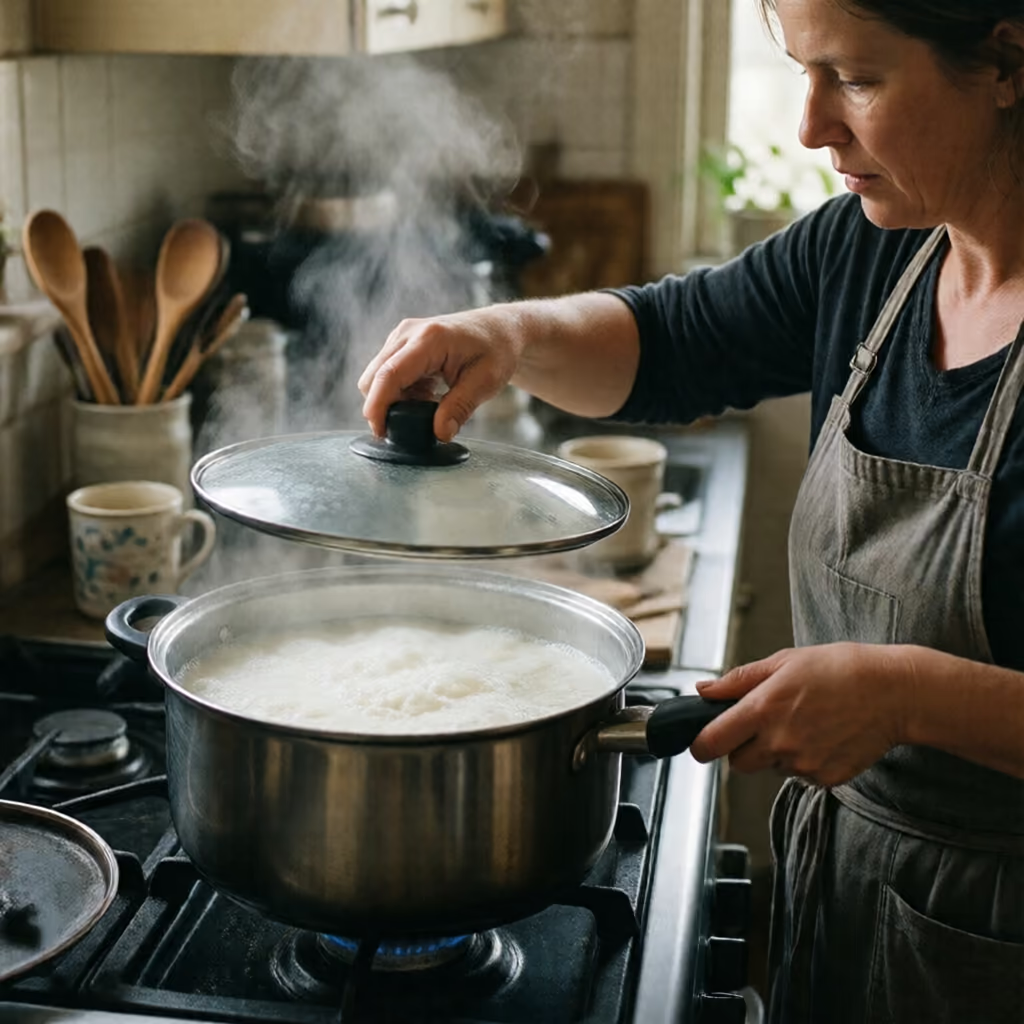
aufkochen
bring to a boil
To heat a liquid to its boiling point so that it boils.
EXAMPLE
Ich muss die Milch noch kurz aufkochen.
I still need to bring the milk to a boil briefly.
to bring to a boil / come to a boil
aufkochen – kochte auf – hat aufgekocht
Loading your saved state.
bring to a boil
To heat a liquid to its boiling point so that it boils.
Ich muss die Milch noch kurz aufkochen.
I still need to bring the milk to a boil briefly.
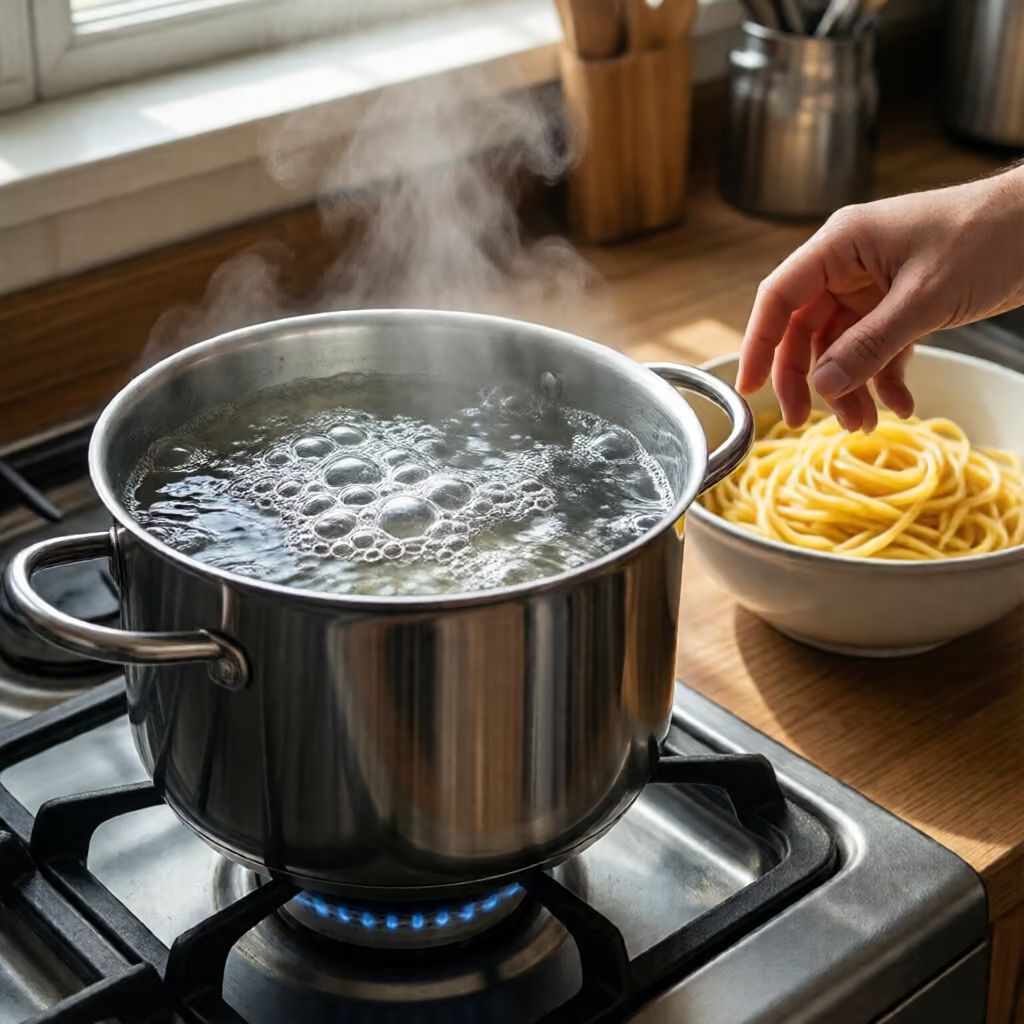
come to a boil
To begin boiling when heated; used of liquids and food.
Sobald das Wasser aufkocht, kannst du die Nudeln hineingeben.
As soon as the water comes to a boil, you can add the pasta.
| ich | koche auf |
|---|---|
| du | kochst auf |
| er/sie/es | kocht auf |
| wir | kochen auf |
| ihr | kocht auf |
| sie | kochen auf |
| ich | kochte auf |
|---|---|
| du | kochtest auf |
| er/sie/es | kochte auf |
| wir | kochten auf |
| ihr | kochtet auf |
| sie | kochten auf |
| ich | habe aufgekocht |
|---|---|
| du | hast aufgekocht |
| er/sie/es | hat aufgekocht |
| wir | haben aufgekocht |
| ihr | habt aufgekocht |
| sie | haben aufgekocht |
| du | koch auf! koche auf! |
|---|---|
| ihr | kocht auf! |
| Sie | kochen Sie auf! |
| ich | hatte aufgekocht |
|---|---|
| du | hattest aufgekocht |
| er/sie/es | hatte aufgekocht |
| wir | hatten aufgekocht |
| ihr | hattet aufgekocht |
| sie | hatten aufgekocht |
| ich | werde aufkochen |
|---|---|
| du | wirst aufkochen |
| er/sie/es | wird aufkochen |
| wir | werden aufkochen |
| ihr | werdet aufkochen |
| sie | werden aufkochen |
| ich | koche auf |
|---|---|
| du | kochest auf |
| er/sie/es | koche auf |
| wir | kochen auf |
| ihr | kochet auf |
| sie | kochen auf |
Used for reported speech.
| ich | kochte auf |
|---|---|
| du | kochtest auf |
| er/sie/es | kochte auf |
| wir | kochten auf |
| ihr | kochtet auf |
| sie | kochten auf |
Used for wishes and “would”.
| infinitive | aufkochen |
|---|---|
| with zu | aufzukochen |
| present participle | aufkochend |
| past participle | aufgekocht |
'Aufkochen' (to bring to a boil / come to a boil) consists of 'auf' and 'kochen' (to boil) and is separable. In a main clause, 'auf' is separated and placed at the end; in a subordinate clause, the verb stays together. In the infinitive with 'zu', 'zu' goes between 'auf' and 'kochen'.
Für den Tee koche ich frisches Wasser auf.
I bring fresh water to a boil for the tea.
Bleib am Herd, bis die Milch aufkocht.
Stay by the stove until the milk comes to a boil.
Vergiss nicht, die Brühe kurz aufzukochen.
Don't forget to bring the broth to a boil briefly.
When referring to heating, 'aufkochen' (to bring to a boil / come to a boil) can be used with or without an accusative object: a person brings a liquid to a boil, or the liquid itself comes to a boil. Pay attention to whether the liquid is the object or the subject of the sentence.
Die Köchin kocht die Soße auf.
The cook brings the sauce to a boil.
Die Soße kocht auf.
The sauce comes to a boil.
Recipes often use 'aufkochen lassen' (to bring to a boil). In this construction, 'aufkochen' follows the liquid or mixture to be heated, without 'zu'.
Lass die Mischung unter Rühren aufkochen.
Bring the mixture to a boil while stirring.