

der Oregano
oregano
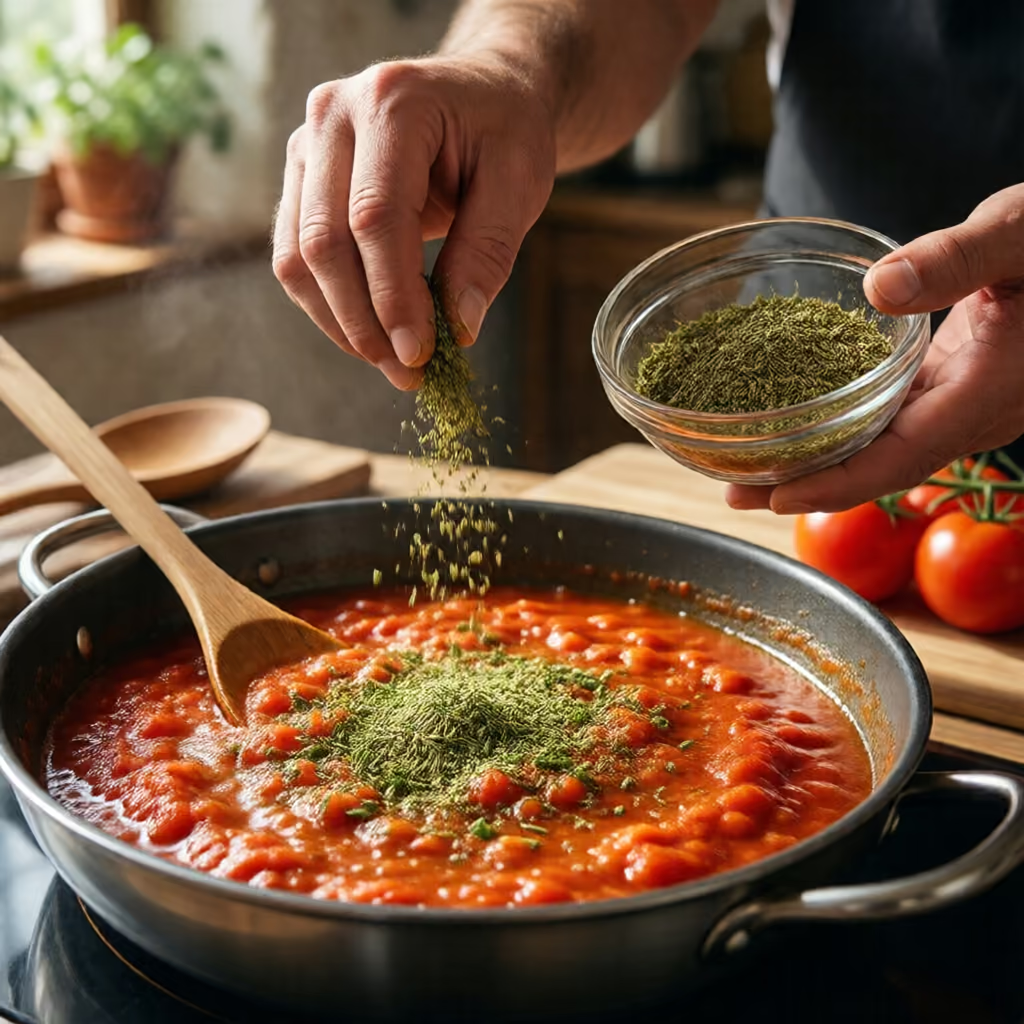
A seasoning made from the fresh or dried leaves and flowers of the oregano plant, used especially in Mediterranean cooking.
EXAMPLE
Sie würzt die Tomatensoße mit Oregano.
She seasons the tomato sauce with oregano.
oregano
der Oregano
Loading your saved state.
oregano
A seasoning made from the fresh or dried leaves and flowers of the oregano plant, used especially in Mediterranean cooking.
Sie würzt die Tomatensoße mit Oregano.
She seasons the tomato sauce with oregano.
oregano
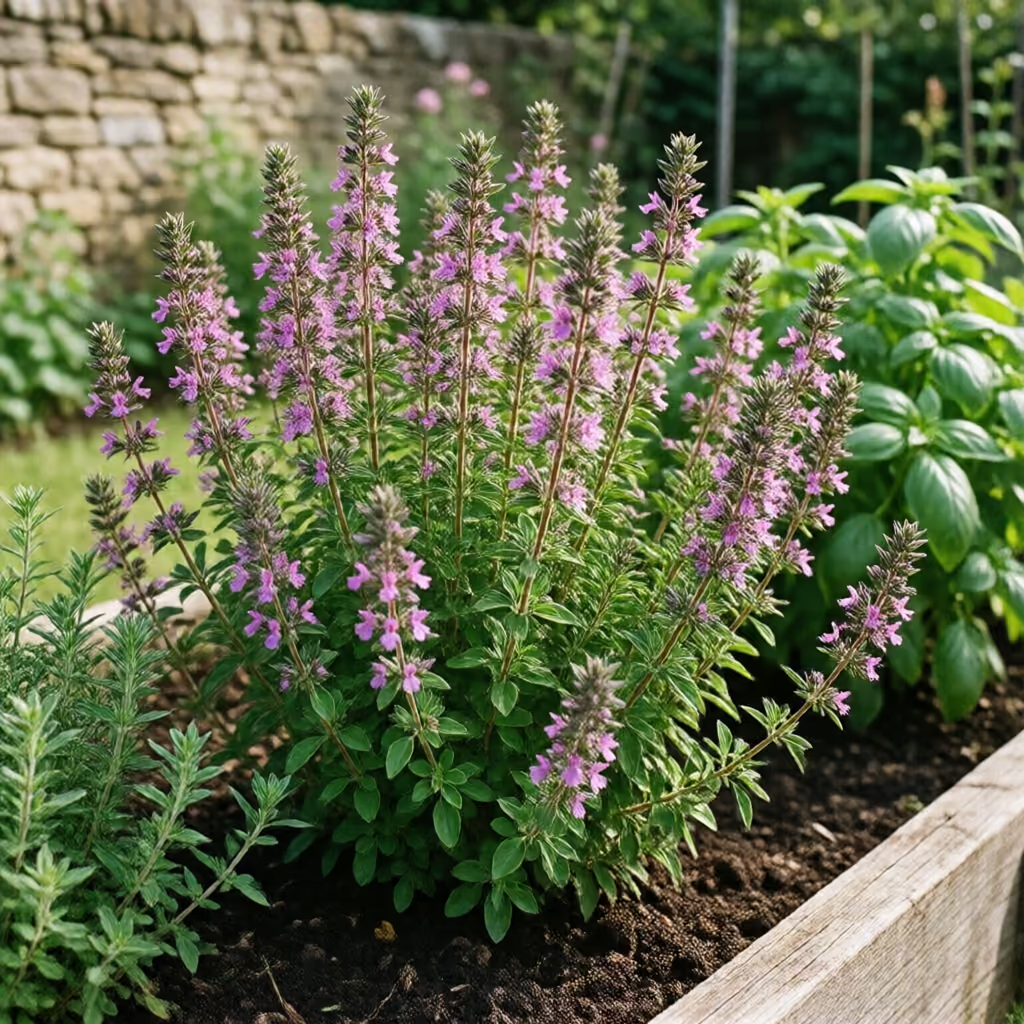
An aromatic perennial plant with small leaves and usually pink to purple flowers, used as a culinary herb. It is also called 'Dost' (wild marjoram) in German.
Der Oregano in unserem Kräuterbeet blüht den ganzen Sommer über.
The oregano in our herb bed blooms all summer long.
| gender | masculine der |
|---|---|
| genitive | des Oregano |
| singular | plural | |
|---|---|---|
| nominative | der Oregano | – |
| accusative | den Oregano | – |
| dative | dem Oregano | – |
| genitive | des Oregano des Oreganos | – |
The article changes with the case; it is shown in colour.
You can often tell whether 'der Oregano' (oregano) refers to the seasoning or the plant from the verbs and nouns in the sentence: seasoning involves the leaves or their flavor, while references to the plant involve growth, flowers, or where it grows.
Der Oregano verleiht der Soße ein kräftiges Aroma.
The oregano gives the sauce a robust flavor.
Der Oregano wächst bei uns in einem sonnigen Kräuterbeet.
The oregano grows in a sunny herb bed in our garden.
When referring to the seasoning, 'Oregano' (oregano) often appears with verbs such as 'würzen' (to season), 'streuen' (to sprinkle), and 'verfeinern' (to enhance the flavor). Typical phrases include 'getrockneter Oregano' (dried oregano), 'frischer Oregano' (fresh oregano), and 'Oregano auf die Pizza streuen' (to sprinkle oregano on the pizza).
Vor dem Servieren streut er getrockneten Oregano über die Pizza.
Before serving, he sprinkles dried oregano over the pizza.
When 'Oregano' (oregano) refers to the plant, it often appears with verbs and phrases related to growing it, such as 'wachsen' (to grow), 'blühen' (to bloom), 'pflanzen' (to plant), or 'im Kräuterbeet' (in the herb bed). A location with plenty of sunshine is also typical in this context.
Der Oregano blüht im Juli und zieht viele Insekten an.
The oregano blooms in July and attracts many insects.