

auflockern
to loosen
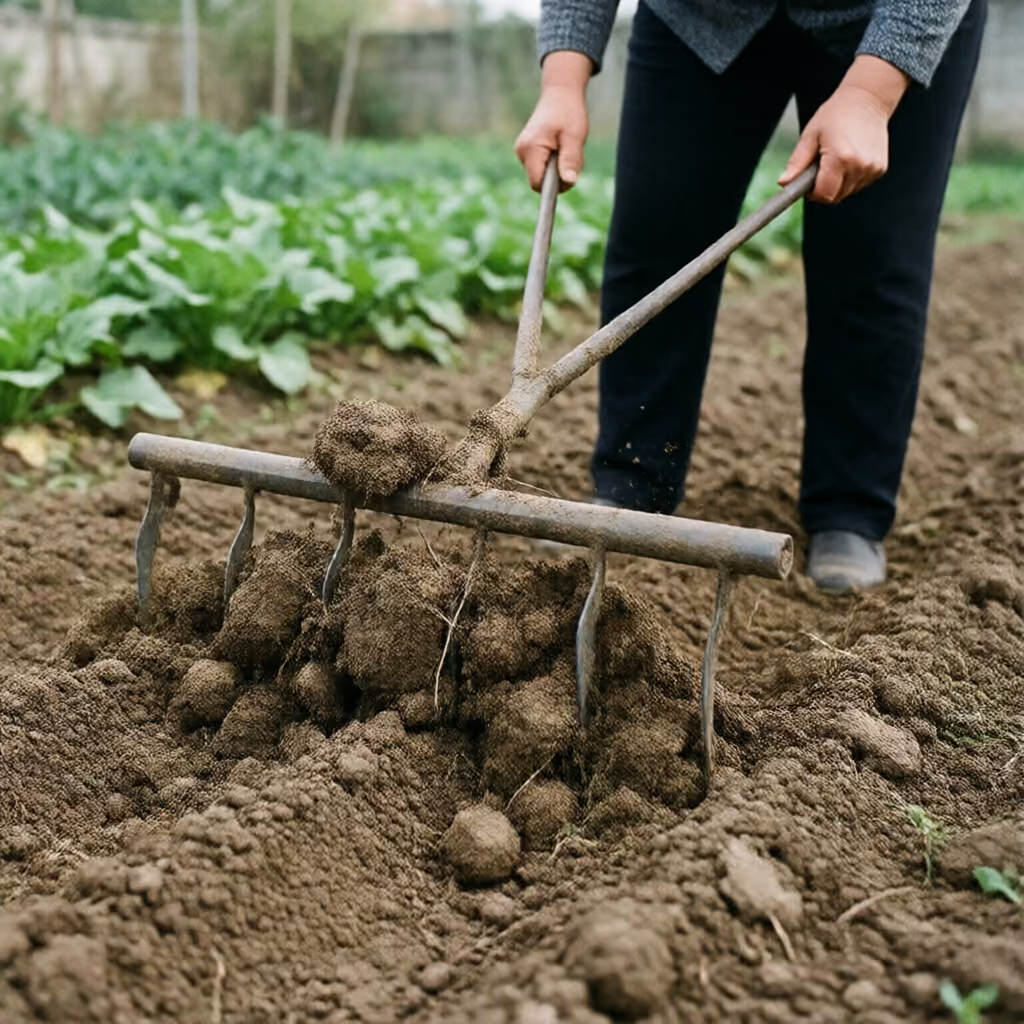
To work on something solid or dense so that it becomes looser and less compact.
EXAMPLE
Vor dem Pflanzen lockert sie die Erde mit einer Hacke auf.
Before planting, she loosens the soil with a hoe.
to loosen
auflockern – lockerte auf – hat aufgelockert
Loading your saved state.
to loosen
To work on something solid or dense so that it becomes looser and less compact.
Vor dem Pflanzen lockert sie die Erde mit einer Hacke auf.
Before planting, she loosens the soil with a hoe.

to lighten
To make a tense or stiff atmosphere more relaxed and informal.
Mit einem kleinen Scherz lockerte die Moderatorin die Atmosphäre auf.
The moderator lightened the atmosphere with a little joke.
to break up
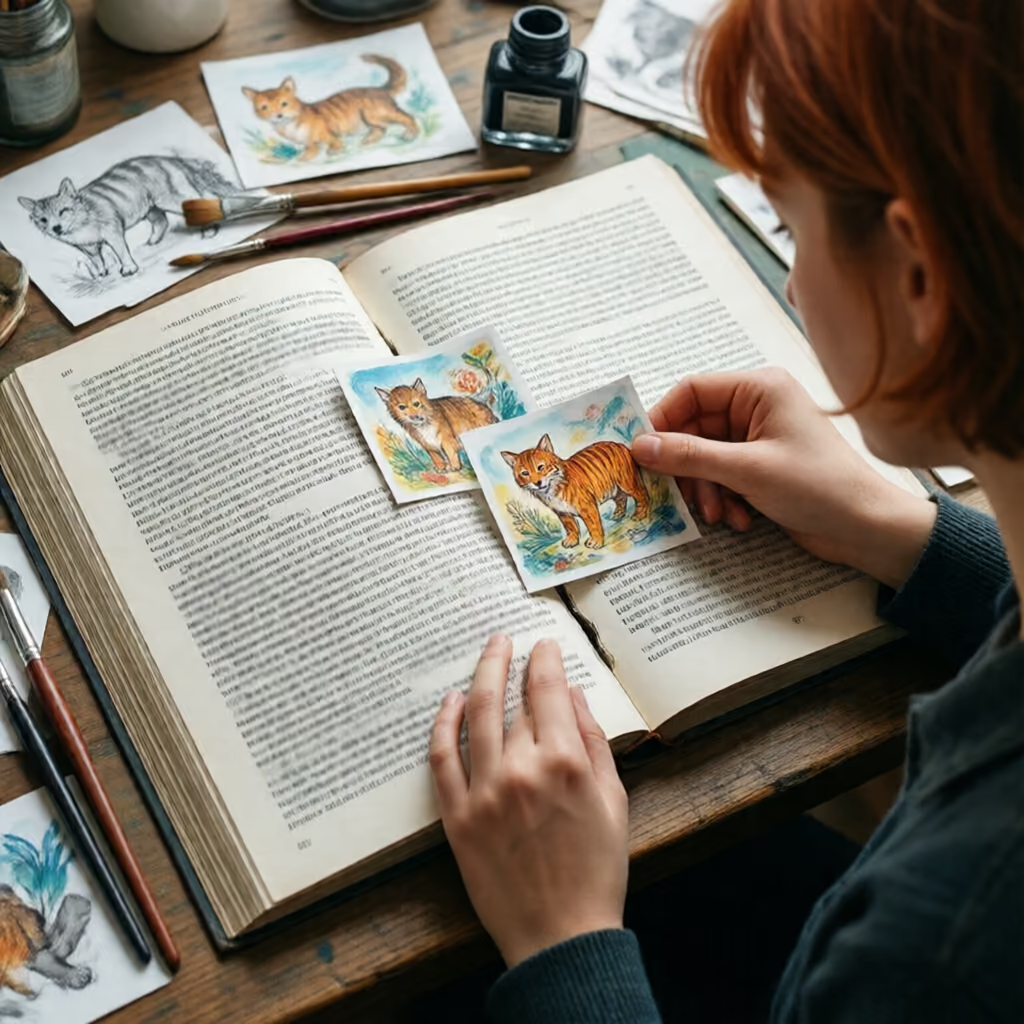
To make something seem less monotonous, dense, or rigid through variety or additional elements.
Die Autorin hat den langen Sachtext durch humorvolle Zeichnungen aufgelockert.
The author broke up the long nonfiction text with humorous illustrations.
to loosen
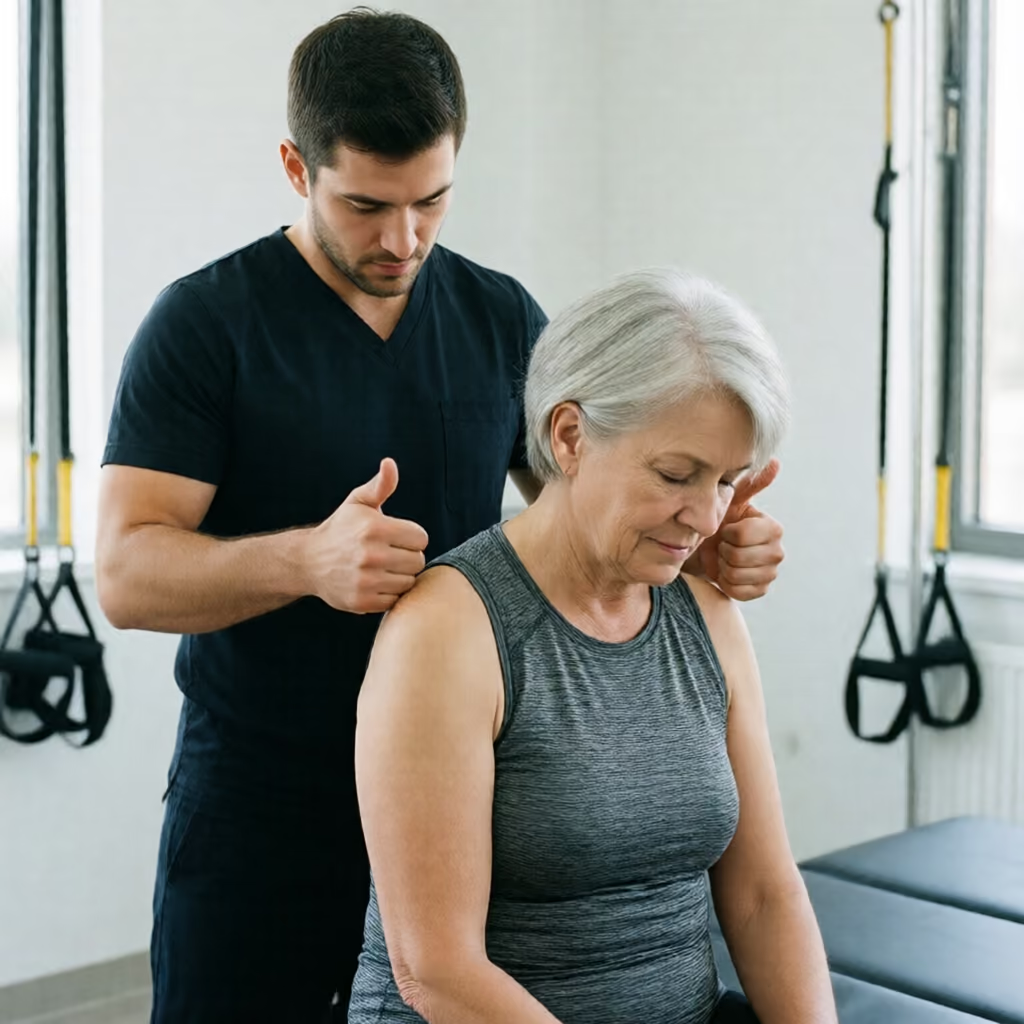
To relax muscles through movement or massage and make them less stiff.
Mit einer sanften Massage lockerte der Physiotherapeut die verspannte Muskulatur auf.
The physiotherapist loosened the tense muscles with a gentle massage.
to relax
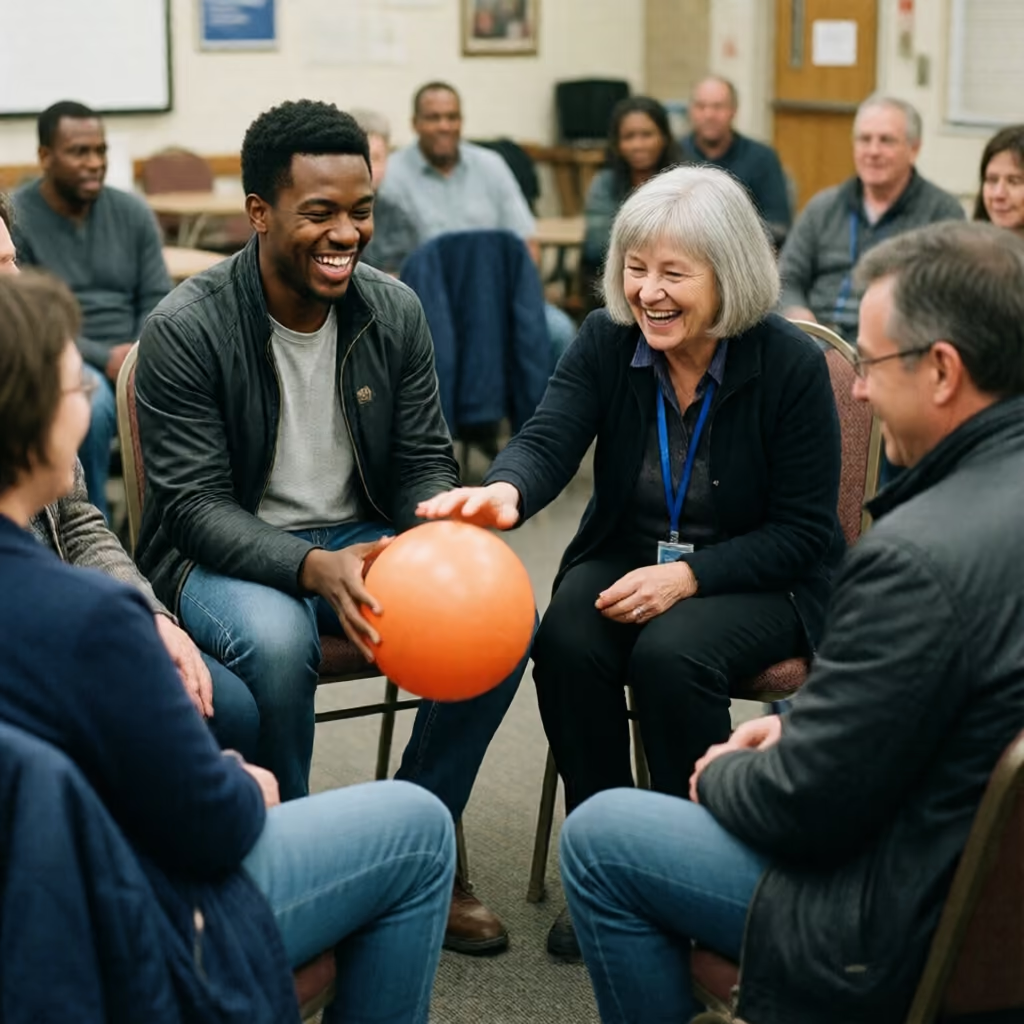
To become more relaxed and informal. This is especially said of a mood or atmosphere.
Nach den ersten gemeinsamen Spielen lockerte sich die Stimmung in der Gruppe auf.
After the first games together, the mood in the group relaxed.
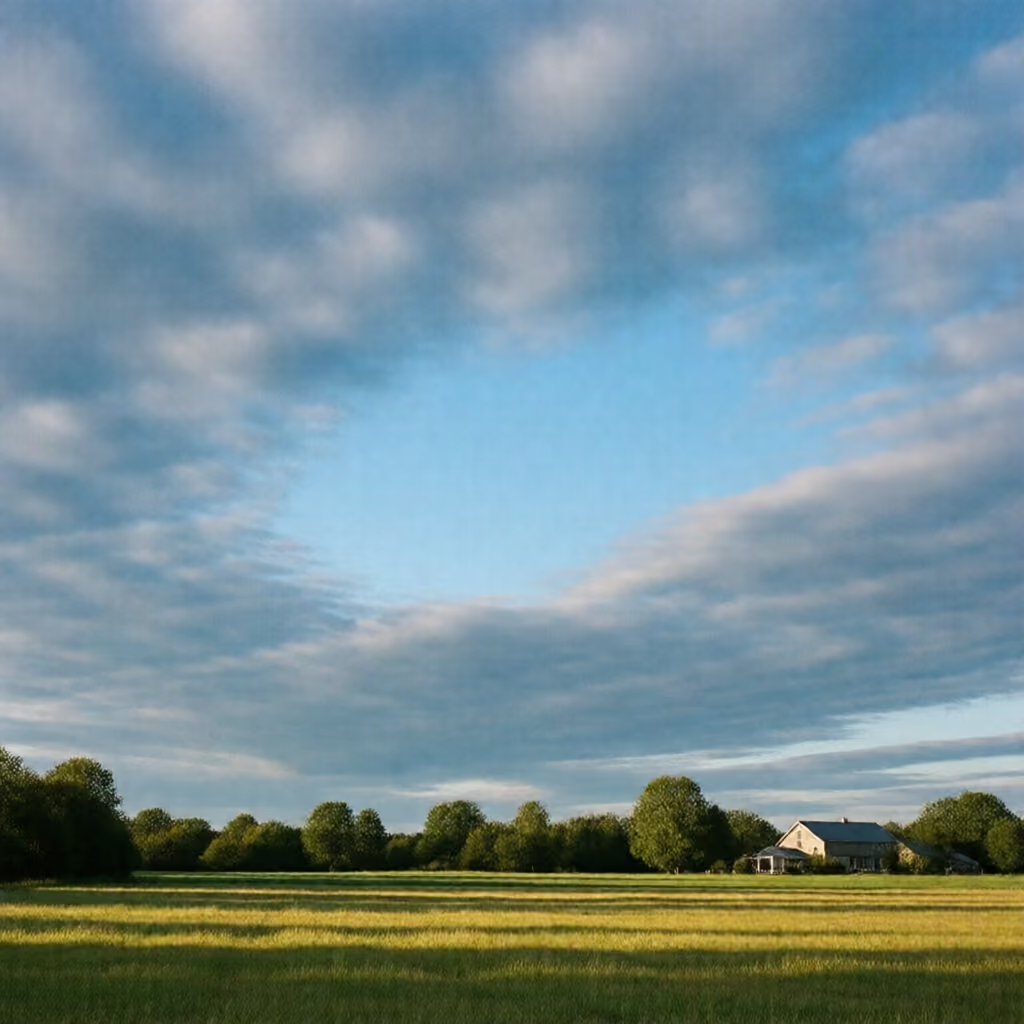
to clear
Used of clouds or cloud cover: to become less dense so that clear patches appear in the sky.
Am Nachmittag lockerte sich die Bewölkung auf, und die Sonne kam hervor.
In the afternoon, the cloud cover cleared, and the sun came out.
| ich | lockere auf lockre auf |
|---|---|
| du | lockerst auf |
| er/sie/es | lockert auf |
| wir | lockern auf |
| ihr | lockert auf |
| sie | lockern auf |
| ich | lockerte auf |
|---|---|
| du | lockertest auf |
| er/sie/es | lockerte auf |
| wir | lockerten auf |
| ihr | lockertet auf |
| sie | lockerten auf |
| ich | habe aufgelockert |
|---|---|
| du | hast aufgelockert |
| er/sie/es | hat aufgelockert |
| wir | haben aufgelockert |
| ihr | habt aufgelockert |
| sie | haben aufgelockert |
| du | locker auf! lockere auf!, lockre auf! |
|---|---|
| ihr | lockert auf! |
| Sie | lockern Sie auf! |
| ich | hatte aufgelockert |
|---|---|
| du | hattest aufgelockert |
| er/sie/es | hatte aufgelockert |
| wir | hatten aufgelockert |
| ihr | hattet aufgelockert |
| sie | hatten aufgelockert |
| ich | werde auflockern |
|---|---|
| du | wirst auflockern |
| er/sie/es | wird auflockern |
| wir | werden auflockern |
| ihr | werdet auflockern |
| sie | werden auflockern |
| ich | lockere auf lockre auf |
|---|---|
| du | lockerst auf |
| er/sie/es | lockere auf lockre auf |
| wir | lockern auf |
| ihr | lockert auf |
| sie | lockern auf |
Used for reported speech.
| ich | lockerte auf |
|---|---|
| du | lockertest auf |
| er/sie/es | lockerte auf |
| wir | lockerten auf |
| ihr | lockertet auf |
| sie | lockerten auf |
Used for wishes and “would”.
| infinitive | auflockern |
|---|---|
| with zu | aufzulockern |
| present participle | auflockernd |
| past participle | aufgelockert |
'Auflockern' (to loosen) is a separable verb. In a main clause, 'auf' comes at the end of the sentence; in a subordinate clause and in the infinitive with 'zu', the verb form stays together or 'zu' comes between the prefix and the stem.
Der Gärtner lockert jeden Frühling die Beete auf.
The gardener loosens the beds every spring.
Wir hoffen, dass ein paar Spiele die Stimmung auflockern.
We hope that a few games will lighten the mood.
Es ist wichtig, den Boden vor dem Pflanzen aufzulockern.
It is important to loosen the soil before planting.
'Auflockern' (to loosen) consists of the prefix 'auf' (up/open) and the verb 'lockern' (to loosen). The prefix turns the process of loosening into a change: something becomes looser or seems less solid and dense afterward.
Die Arbeiter lockern den harten Lehm mit einem Werkzeug auf.
The workers loosen the hard clay with a tool.
In this meaning, 'auflockern' (to loosen) is often used with 'Erde' (soil), 'Boden' (ground/soil), or 'Lehm' (clay). Typical collocations are 'die Erde auflockern' (to loosen the soil) and 'den Boden vor dem Pflanzen auflockern' (to loosen the soil before planting).
Nach dem Regen lockerte er die schwere Erde vorsichtig auf.
After the rain, he carefully loosened the heavy soil.
For a tense situation, 'die Stimmung' (the mood) and 'die Atmosphäre' (the atmosphere) are especially often used as the object. A joke, conversation, or short break can help 'die Stimmung auflockern' (lighten the mood).
Eine kurze Pause hat die angespannte Stimmung im Team etwas aufgelockert.
A short break lightened the tense mood in the team somewhat.
With texts, presentations, and events, 'auflockern' (to break up) often refers to variety that has been added deliberately. Pictures, examples, subheadings, or short breaks can break up long texts or talks.
Die Präsentation wurde durch anschauliche Bilder und kurze Beispiele aufgelockert.
The presentation was broken up with engaging pictures and short examples.
In its physical meaning, 'auflockern' (to loosen) is often used with 'Muskeln' (muscles), 'Muskulatur' (musculature), or 'Verspannungen' (muscle tension). Typical methods include movement, stretching, and massage.
Ein paar Dehnübungen lockern die Schultermuskeln auf.
A few stretching exercises loosen the shoulder muscles.
With 'sich auflockern' (to clear) and weather reports, the word usually refers to 'Wolken' (clouds) or 'Bewölkung' (cloud cover). Signal words such as 'Wolken' (clouds), 'Himmel' (sky), or 'Sonne' (sun) show that the cloud cover is becoming less dense.
Im Süden lockern sich die Wolken schon am Vormittag auf.
In the south, the clouds are already clearing in the morning.