

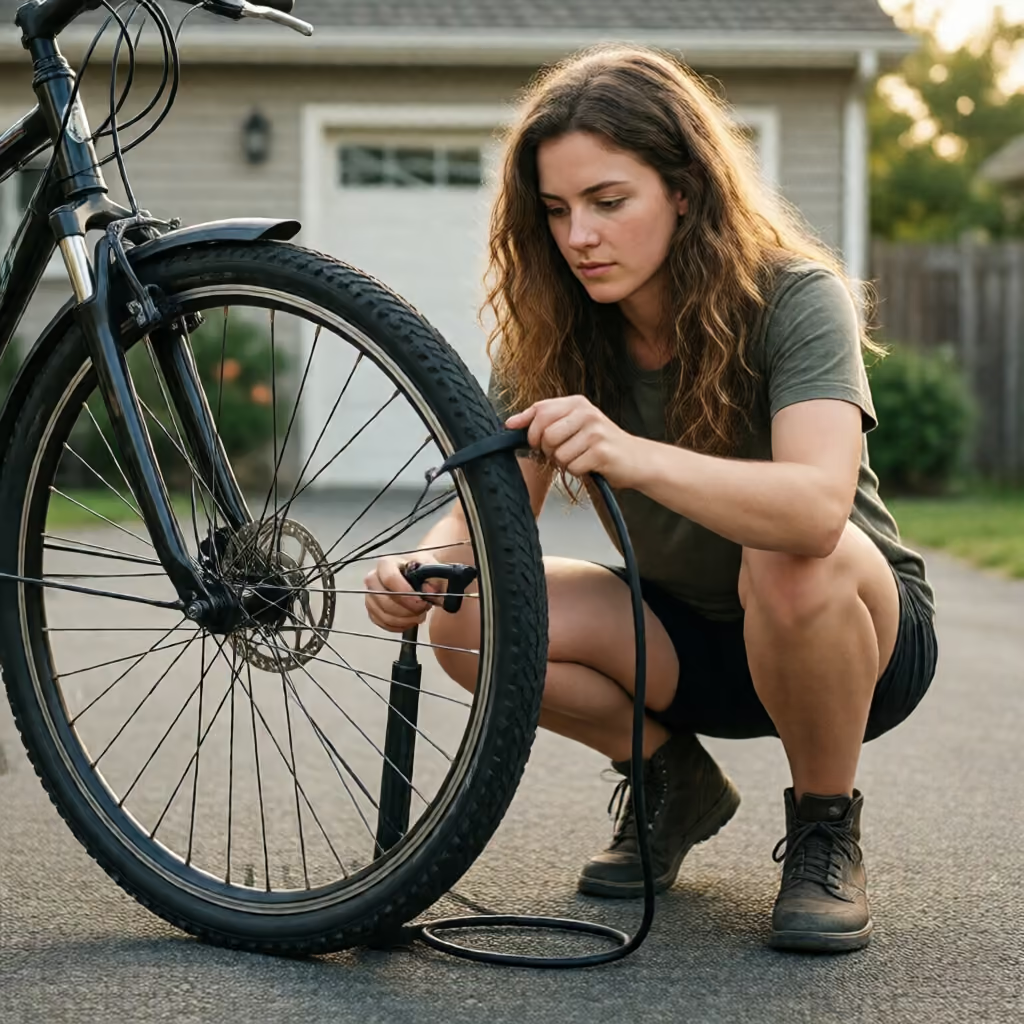
aufpumpen
to pump up
To fill something with air or another gas using a pump so that it reaches its desired shape or the required pressure.
EXAMPLE
Ich muss die Reifen meines Fahrrads aufpumpen.
I need to pump up my bicycle tires.
to pump up
aufpumpen – pumpte auf – hat aufgepumpt
Loading your saved state.
to pump up
To fill something with air or another gas using a pump so that it reaches its desired shape or the required pressure.
Ich muss die Reifen meines Fahrrads aufpumpen.
I need to pump up my bicycle tires.
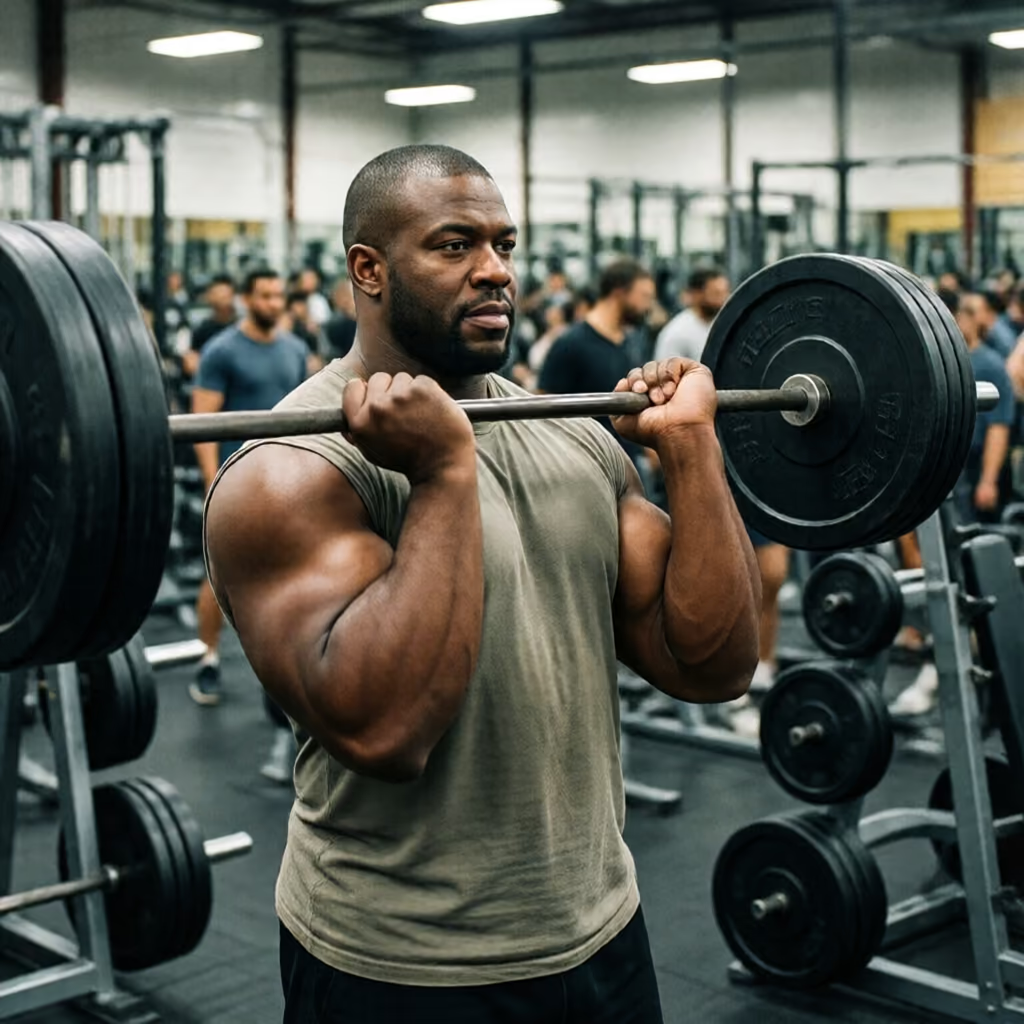
to pump up
Colloquial: To make muscles bigger and stronger through intensive strength training.
Er pumpt im Fitnessstudio seine Muskeln auf.
He pumps up his muscles at the gym.

to pump up
To artificially increase something or excessively inflate its size or scope.
Die Firma hat ihre Bilanz durch Scheingeschäfte aufgepumpt.
The company pumped up its balance sheet through sham transactions.

to get worked up
Colloquial: To get excessively upset or make oneself seem important.
Pump dich nicht so auf, es ist doch gar nichts passiert!
Don't get so worked up; nothing even happened!
| ich | pumpe auf |
|---|---|
| du | pumpst auf |
| er/sie/es | pumpt auf |
| wir | pumpen auf |
| ihr | pumpt auf |
| sie | pumpen auf |
| ich | pumpte auf |
|---|---|
| du | pumptest auf |
| er/sie/es | pumpte auf |
| wir | pumpten auf |
| ihr | pumptet auf |
| sie | pumpten auf |
| ich | habe aufgepumpt |
|---|---|
| du | hast aufgepumpt |
| er/sie/es | hat aufgepumpt |
| wir | haben aufgepumpt |
| ihr | habt aufgepumpt |
| sie | haben aufgepumpt |
| du | pump auf! pumpe auf! |
|---|---|
| ihr | pumpt auf! |
| Sie | pumpen Sie auf! |
| ich | hatte aufgepumpt |
|---|---|
| du | hattest aufgepumpt |
| er/sie/es | hatte aufgepumpt |
| wir | hatten aufgepumpt |
| ihr | hattet aufgepumpt |
| sie | hatten aufgepumpt |
| ich | werde aufpumpen |
|---|---|
| du | wirst aufpumpen |
| er/sie/es | wird aufpumpen |
| wir | werden aufpumpen |
| ihr | werdet aufpumpen |
| sie | werden aufpumpen |
| ich | pumpe auf |
|---|---|
| du | pumpest auf |
| er/sie/es | pumpe auf |
| wir | pumpen auf |
| ihr | pumpet auf |
| sie | pumpen auf |
Used for reported speech.
| ich | pumpte auf |
|---|---|
| du | pumptest auf |
| er/sie/es | pumpte auf |
| wir | pumpten auf |
| ihr | pumptet auf |
| sie | pumpten auf |
Used for wishes and “would”.
| infinitive | aufpumpen |
|---|---|
| with zu | aufzupumpen |
| present participle | aufpumpend |
| past participle | aufgepumpt |
„Aufpumpen“ (to pump up) consists of „auf“ and „pumpen“ (to pump) and is separable. In a main clause, „auf“ comes at the end; in a subordinate clause, the verb stays together. With the infinitive using „zu“, „zu“ goes between „auf“ and „pumpen“.
Mara pumpt den Fahrradreifen auf.
Mara pumps up the bicycle tire.
Ich warte, bis Mara den Fahrradreifen aufpumpt.
I am waiting until Mara pumps up the bicycle tire.
Mara hat vergessen, den Fahrradreifen aufzupumpen.
Mara forgot to pump up the bicycle tire.
Common combinations are „einen Reifen aufpumpen“ (to pump up a tire), „einen Ball aufpumpen“ (to pump up a ball), and „eine Luftmatratze aufpumpen“ (to pump up an air mattress). The object being filled with air is in the accusative case.
Vor dem Spiel müssen wir den Ball noch aufpumpen.
We still need to pump up the ball before the game.
Using „auf“ and a pressure measurement, you can express what pressure the object should have in the end. The pattern is „etwas auf … Bar aufpumpen“ (to pump something up to … bar).
Laut Anleitung sollen wir den Reifen auf vier Bar aufpumpen.
According to the instructions, we should pump the tire up to four bar.
When someone trains their own muscles, the pattern „sich die Muskeln aufpumpen“ (to pump up one's muscles) is common. Here, „sich“ is in the dative and „die Muskeln“ is in the accusative.
Er will sich für den Sommer die Muskeln aufpumpen.
He wants to pump up his muscles for the summer.
With abstract quantities such as balance sheets or figures, „aufpumpen“ (to pump up) usually has a critical tone: the increase is seen as artificial or excessive. The word „künstlich“ (artificially) often reinforces this impression, as in „künstlich aufgepumpt“ (artificially pumped up).
Die Zeitung wirft dem Unternehmen vor, seine Bilanz künstlich aufzupumpen.
The newspaper accuses the company of artificially pumping up its balance sheet.