

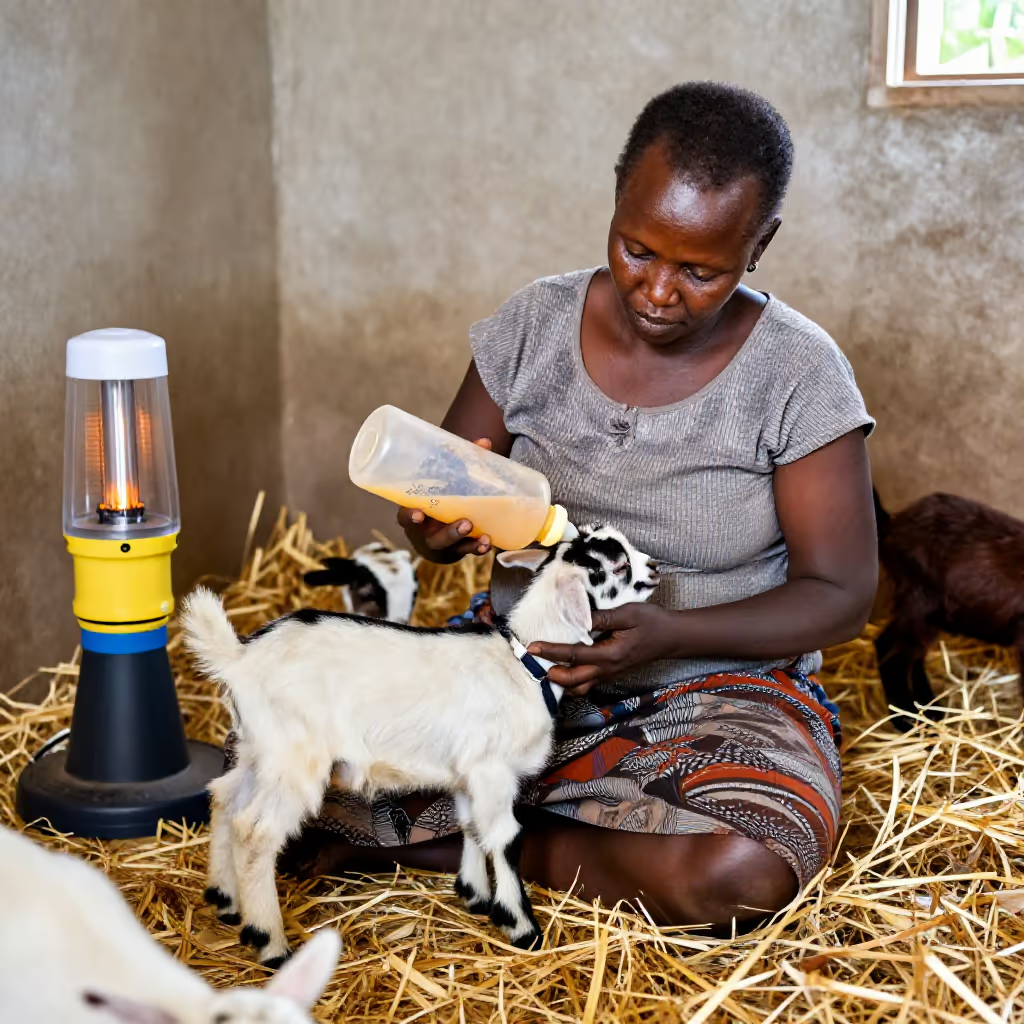
aufziehen
to raise
To bring up a child or a young animal, caring for it and educating or training it.
EXAMPLE
Sie hat ihre drei Kinder alleine aufgezogen.
She raised her three children on her own.
to raise / to tease / to wind up
Loading your saved state.
to raise
To bring up a child or a young animal, caring for it and educating or training it.
Sie hat ihre drei Kinder alleine aufgezogen.
She raised her three children on her own.

to tease someone
To make fun of someone in a playful, teasing way.
Seine Freunde ziehen ihn immer wegen seiner neuen Frisur auf.
His friends always tease him about his new hairstyle.
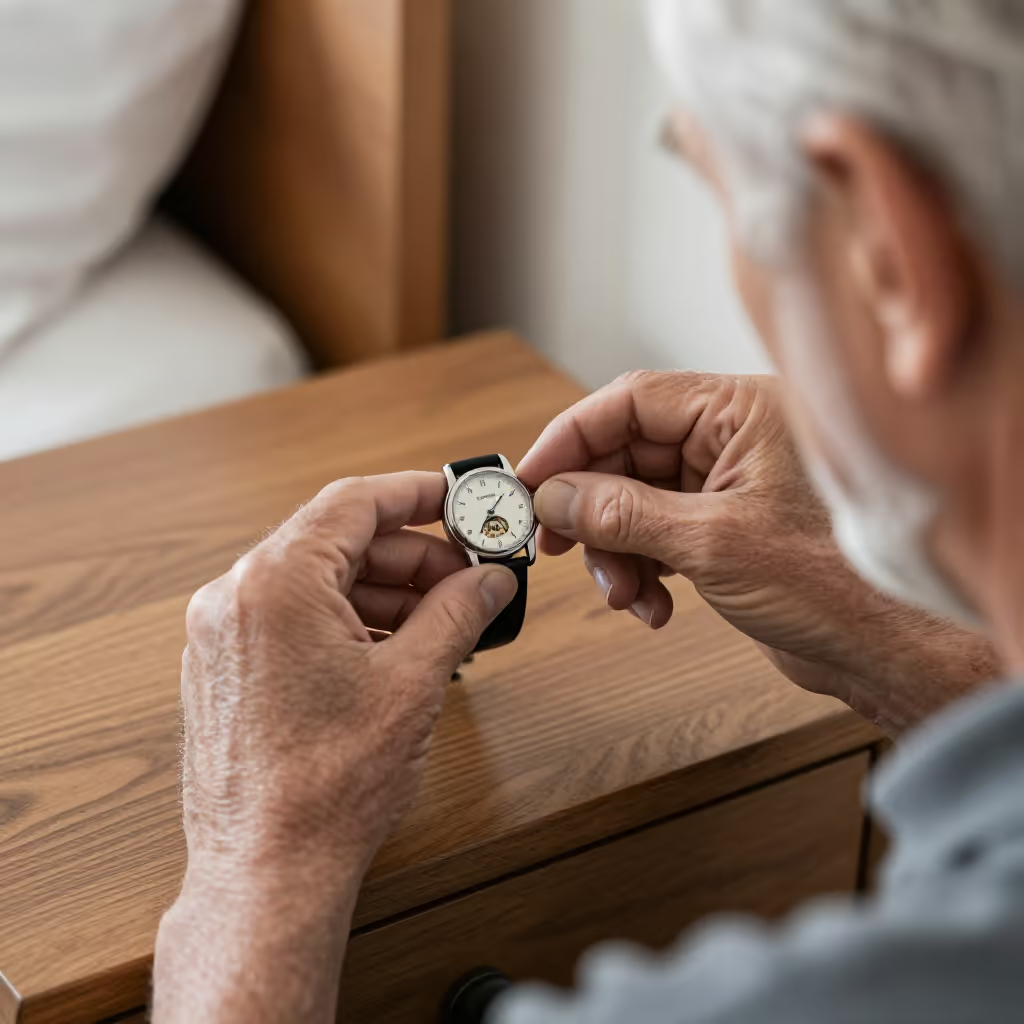
to wind up
To wind a mechanical device, especially a clock or watch, by turning a small wheel so that it works.
Jeden Morgen muss er seine alte Taschenuhr aufziehen.
Every morning he has to wind up his old pocket watch.

to mount
To stretch or mount something onto a base or support, for example a tire onto a rim or a canvas onto a frame.
Die Werkstatt muss erst die neuen Winterreifen aufziehen.
The garage first has to mount the new winter tires.

to pull up
To pull something upward in order to open or tighten it. Often used for shutters, curtains, or flags.
Kannst du bitte die Jalousien aufziehen? Es ist schon hell draußen.
Could you please pull up the blinds? It's already light outside.
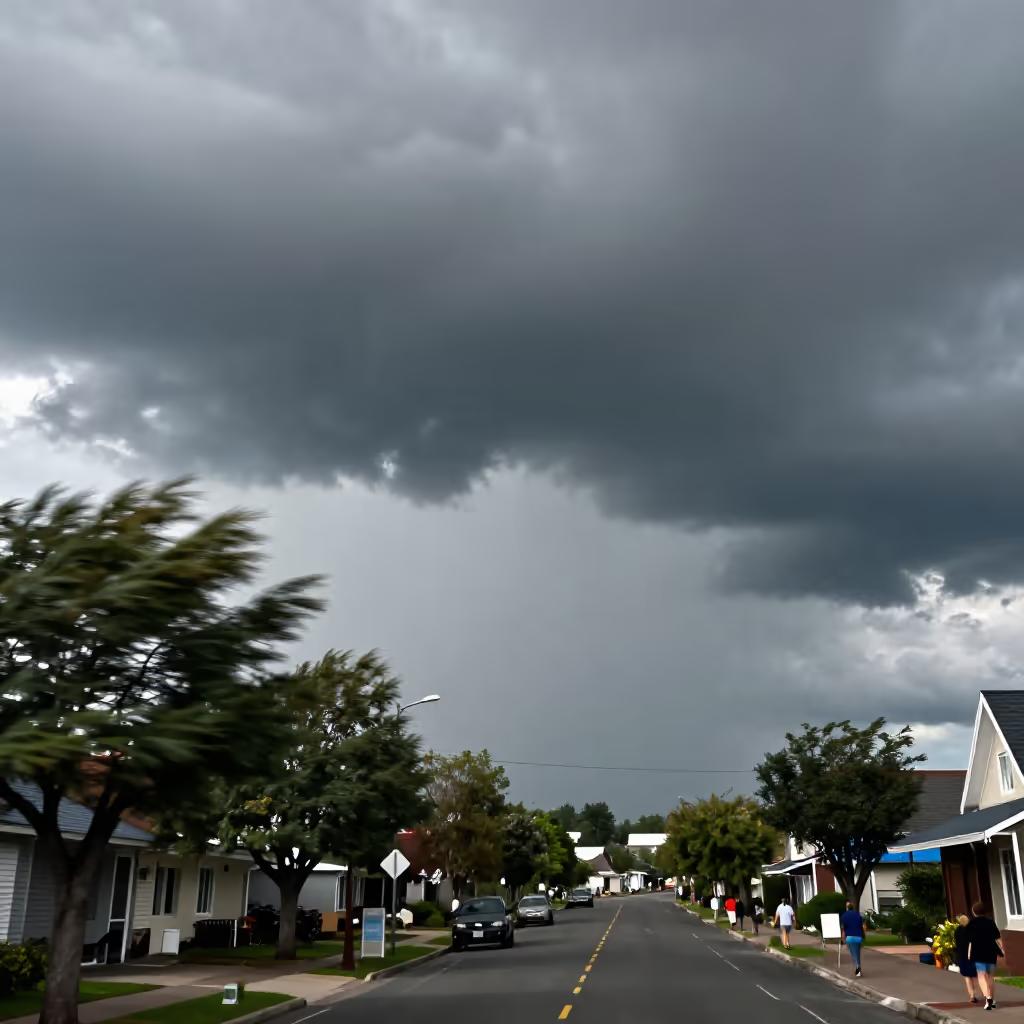
to be coming in
Used for weather phenomena such as storms or thunderstorms, meaning that they are approaching and will begin soon.
Lass uns schnell nach Hause gehen, am Horizont zieht ein Gewitter auf.
Let's go home quickly; a thunderstorm is coming in on the horizon.
'Aufziehen' is a separable verb. In a main clause, the prefix 'auf' comes at the end. In subordinate clauses and infinitive constructions, the verb stays together.
Jeden Abend zieht sie die alte Standuhr auf.
Every evening she winds up the old grandfather clock.
The verb is based on 'ziehen' (to pull). The prefix 'auf' often means 'upward'. This literal meaning, pulling something upward, appears in many of the figurative meanings too, e.g. 'hochziehen' (to pull up / raise) a child or 'aufspannen' (to tension/wind) a clock.
Kannst du bitte den Reißverschluss an meinem Kleid aufziehen?
Could you please pull up the zipper on my dress?
In this meaning, the object is always a living being that needs care and upbringing. Typical objects are 'Kinder' (children), 'ein Baby' (a baby), or young animals such as 'Welpen' (puppies) or 'Kätzchen' (kittens).
Meine Großeltern haben fünf Kinder aufgezogen.
My grandparents raised five children.
When 'aufziehen' means 'necken' (to tease), the object is a person in the accusative. It is often supplemented with 'mit' + dative to indicate what someone is being made fun of for.
Er zieht seinen kleinen Bruder immer mit seiner Angst vor Spinnen auf.
He always teases his little brother about his fear of spiders.
You can recognize this meaning from the object: it is always a mechanical device that has a spring that must be wound. Typical phrases are 'eine Uhr aufziehen' (to wind a watch/clock) or 'eine Spieluhr aufziehen' (to wind up a music box).
Mein Opa hat mir gezeigt, wie man seine alte Taschenuhr aufzieht.
My grandpa showed me how to wind up his old pocket watch.
Here the object is something that you pull upward in order to open something or make it visible. Typical objects are 'Rollläden' (shutters), 'Jalousien' (blinds), 'Vorhänge' (curtains), or 'eine Flagge' (a flag).
Jeden Morgen wird vor dem Rathaus die Flagge aufgezogen.
Every morning the flag is raised in front of city hall.
In this meaning, the verb is used without an object. The subject is always a weather event such as 'ein Gewitter' (a thunderstorm), 'ein Sturm' (a storm), or 'ein Unwetter' (severe weather).
Wir sollten reingehen, dunkle Wolken ziehen auf.
We should go inside; dark clouds are coming in.
to arise / to cover
Both words can be used for wind, storms, or thunderstorms. aufkommen emphasizes that the weather phenomenon begins, while aufziehen highlights that it is approaching and will begin soon. Use aufkommen for the onset and aufziehen when observing the approaching weather.
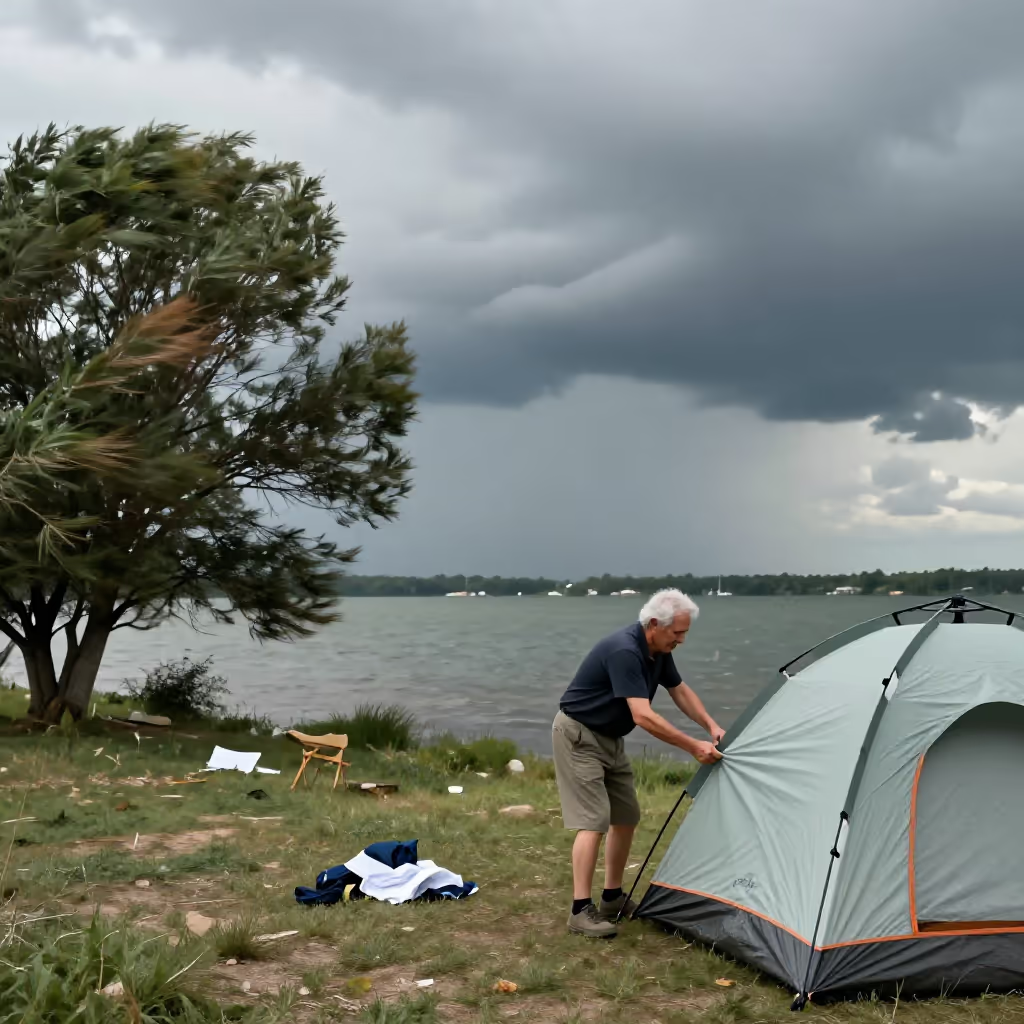
Am Nachmittag zog an der Küste ein Gewitter auf.
A thunderstorm moved in along the coast in the afternoon.
Am Nachmittag kam an der Küste starker Wind auf.
Strong winds picked up along the coast in the afternoon.