


aufkommen
to arise
To arise, develop, or rise up. Often used for feelings, thoughts, moods, or trends.
EXAMPLE
Langsam kam Panik in der Menge auf.
Panic slowly arose in the crowd.
to arise / to cover
Loading your saved state.
to arise
To arise, develop, or rise up. Often used for feelings, thoughts, moods, or trends.
Langsam kam Panik in der Menge auf.
Panic slowly arose in the crowd.
to pick up
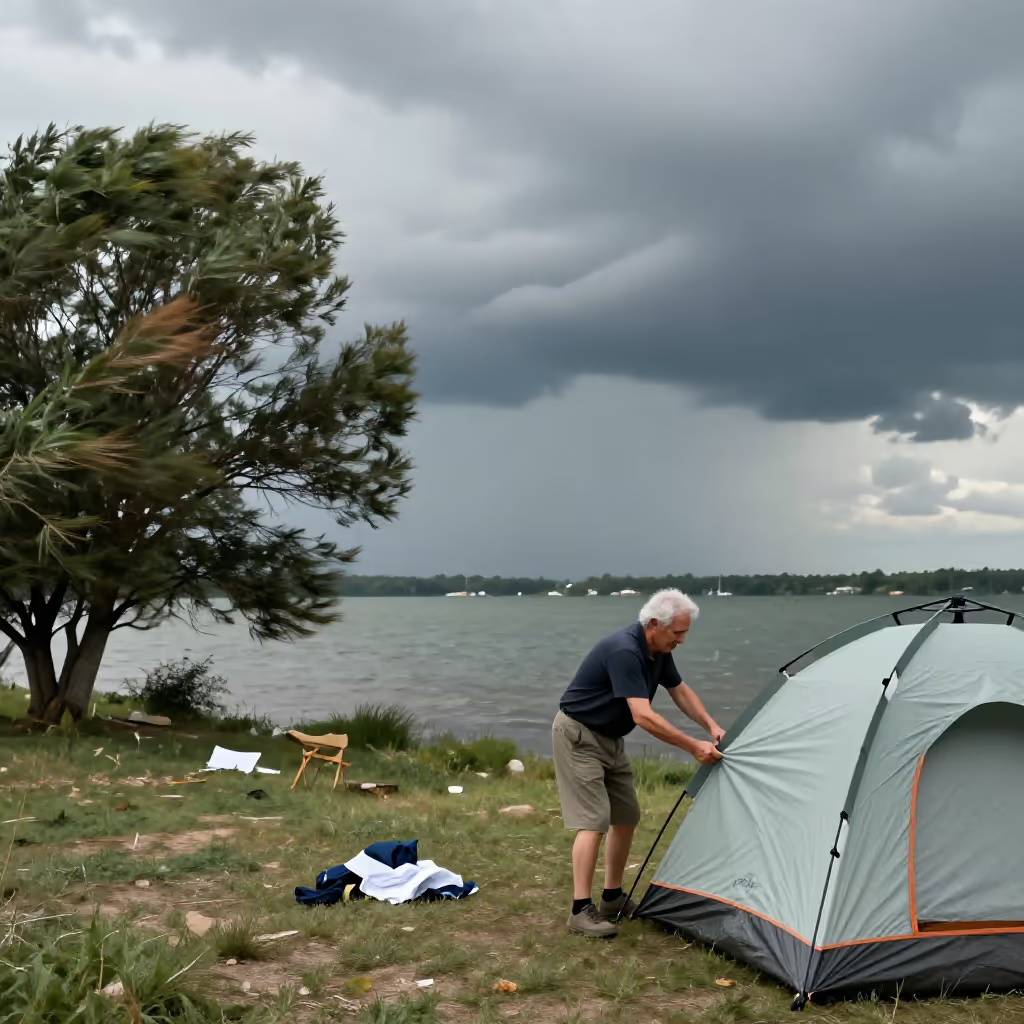
To approach or begin, often in reference to weather phenomena such as wind, fog, or a storm.
Am Nachmittag wird starker Wind aufkommen.
Strong winds will pick up in the afternoon.

to cover
To cover the costs of something or be financially responsible for damage.
Die Versicherung wird für den Schaden aufkommen.
The insurance company will cover the damage.

to recover
To become healthy again after an illness and regain strength.
Nach der schweren Grippe ist sie nur langsam wieder aufgekommen.
After the severe flu, she recovered only slowly.
'Aufkommen' (to arise/to cover) is a separable verb. In a main clause, the prefix 'auf' goes at the end. In subordinate clauses and in the infinitive with 'zu', the verb stays together.
Ein starker Wind kam am Abend auf.
A strong wind picked up in the evening.
The prefix 'auf-' in combination with 'kommen' (to come) often conveys the idea of a beginning or upward movement. Something begins to exist or appears, like rising smoke.
Plötzlich kam eine seltsame Stimmung auf.
Suddenly, a strange mood arose.
In the meaning 'entstehen' (to arise), the subjects are usually abstract nouns. Typical combinations are: 'Zweifel kommen auf' (doubts arise), 'ein Verdacht kommt auf' (a suspicion arises), 'Freude kommt auf' (joy arises), or 'eine Frage kommt auf' (a question arises).
Bei seiner Erzählung kamen mir erste Zweifel auf.
As he told his story, my first doubts arose.
When 'aufkommen' is used in connection with the weather, it describes the approach or beginning of a weather phenomenon. Typical subjects are 'Wind' (wind), 'Sturm' (storm), 'Nebel' (fog), or 'Gewitter' (thunderstorm).
Laut Wetterbericht soll morgen ein Sturm aufkommen.
According to the weather forecast, a storm is supposed to pick up tomorrow.
In the meaning 'bezahlen' (to pay), 'aufkommen' is always used with the preposition 'für' and the accusative. The structure is: 'jemand kommt für etwas auf' (someone covers something).
Wer kommt für den entstandenen Schaden auf?
Who will cover the damage that occurred?
to wear / carry
Tragen and aufkommen can both mean that someone covers costs. The main difference is the sentence structure: with tragen, the costs are a direct object, whereas with aufkommen, you use für before the costs.

Die Stadt kommt für die Kosten der Reparatur auf.
The city covers the cost of the repairs.
Die Stadt trägt die Kosten für die Reparatur.
The city bears the cost of the repairs.