

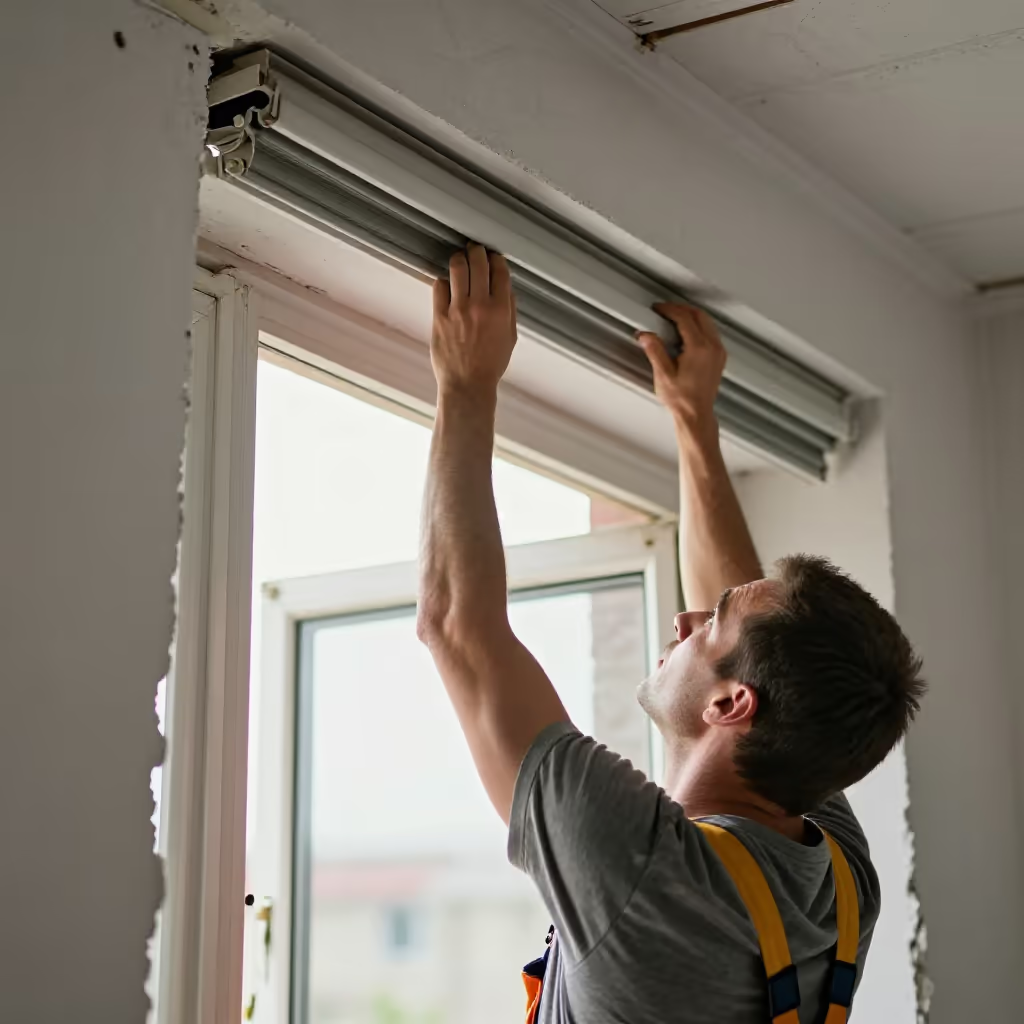
hochziehen
to pull up
To physically move or pull something upward.
EXAMPLE
Er zog die schwere Kiste mit einem Seil hoch.
He pulled the heavy box up with a rope.
to pull up / tease
Loading your saved state.
to pull up
To physically move or pull something upward.
Er zog die schwere Kiste mit einem Seil hoch.
He pulled the heavy box up with a rope.
to put up
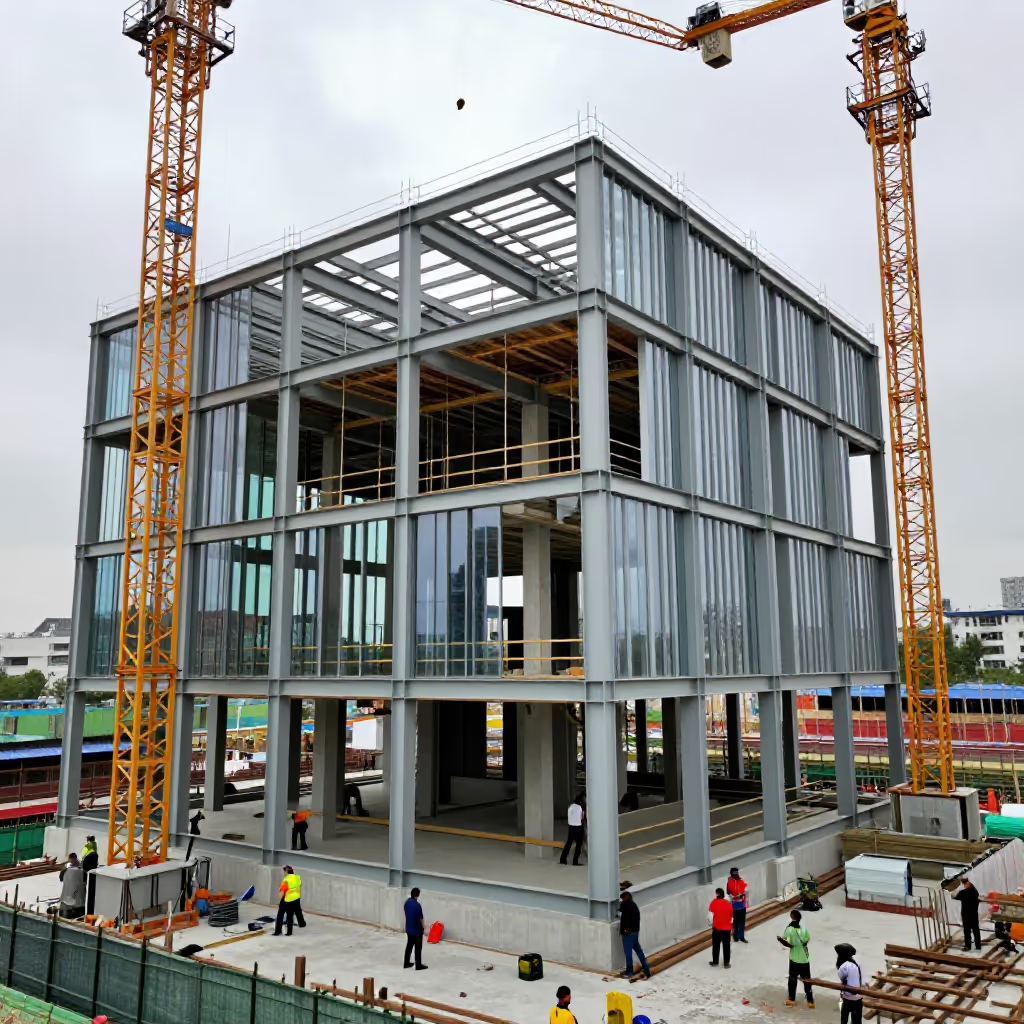
To erect or build a building or another large structure.
Innerhalb weniger Monate haben sie das neue Bürogebäude hochgezogen.
Within a few months, they put up the new office building.

to tease someone
Colloquial for teasing someone, ribbing them, or making fun of them.
Seine Freunde ziehen ihn immer wegen seiner alten Krawatte hoch.
His friends are always teasing him about his old tie.

to pull oneself up
To move upward by holding on to something using one's own physical strength.
Der Kletterer konnte sich gerade noch an dem Felsvorsprung hochziehen.
The climber was just barely able to pull himself up on the rock ledge.

to sniffle
Colloquial for noisily drawing mucus up through the nose instead of blowing one's nose.
Hör auf, ständig die Nase hochzuziehen, und nimm ein Taschentuch!
Stop constantly sniffling and take a tissue!
'Hochziehen' (to pull up) is a separable verb. In main clauses, the prefix 'hoch' goes at the end. In subordinate clauses and in the infinitive with 'zu', the verb stays together.
Er zieht die schwere Tasche hoch.
He pulls the heavy bag up.
The verb consists of the direction 'hoch' (up) and the verb 'ziehen' (to pull). Most meanings can be derived from this basic idea of 'pulling upward', including the figurative ones.
Die Bauarbeiter ziehen die Mauer Stein für Stein hoch.
The construction workers are putting up the wall brick by brick.
The many meanings can often be distinguished by the object or the grammar. A physical object (box, flag), a building, a person ('jemanden'), a reflexive pronoun ('sich'), or 'die Nase' (the nose) point to the respective meaning.
Sie zog die Augenbrauen hoch. (Körperteil)
She raised her eyebrows. (body part)
When 'hochziehen' means 'necken' (to tease), it always needs a person in the accusative. An explanation often follows with 'mit' (dative) or 'wegen' (genitive/colloquially dative), naming the reason for the teasing.
Die Kollegen ziehen ihn immer mit seiner bunten Krawatte hoch.
The colleagues are always teasing him about his colorful tie.
In the meaning of 'sich nach oben bewegen' (to move upward), the verb is reflexive and is used with the preposition 'an' + dative. The structure is: 'sich an etwas (Dativ) hochziehen' (to pull oneself up on something).
Das Kind zog sich am Tisch hoch und machte seine ersten Schritte.
The child pulled itself up on the table and took its first steps.
When you say that someone 'hochzieht' (puts up) a building, this is a rather colloquial and vivid way of saying 'bauen' (to build) or 'errichten' (to erect). It often emphasizes speed or impressive height.
Die haben das neue Einkaufszentrum in nur einem Jahr hochgezogen.
They put up the new shopping center in just one year.
to build
Bauen is the general expression for erecting a building or another structure. In this context, hochziehen refers to erecting a building or a large structure and therefore tends to suggest a larger construction project. Bauen works more broadly for a neutral statement.
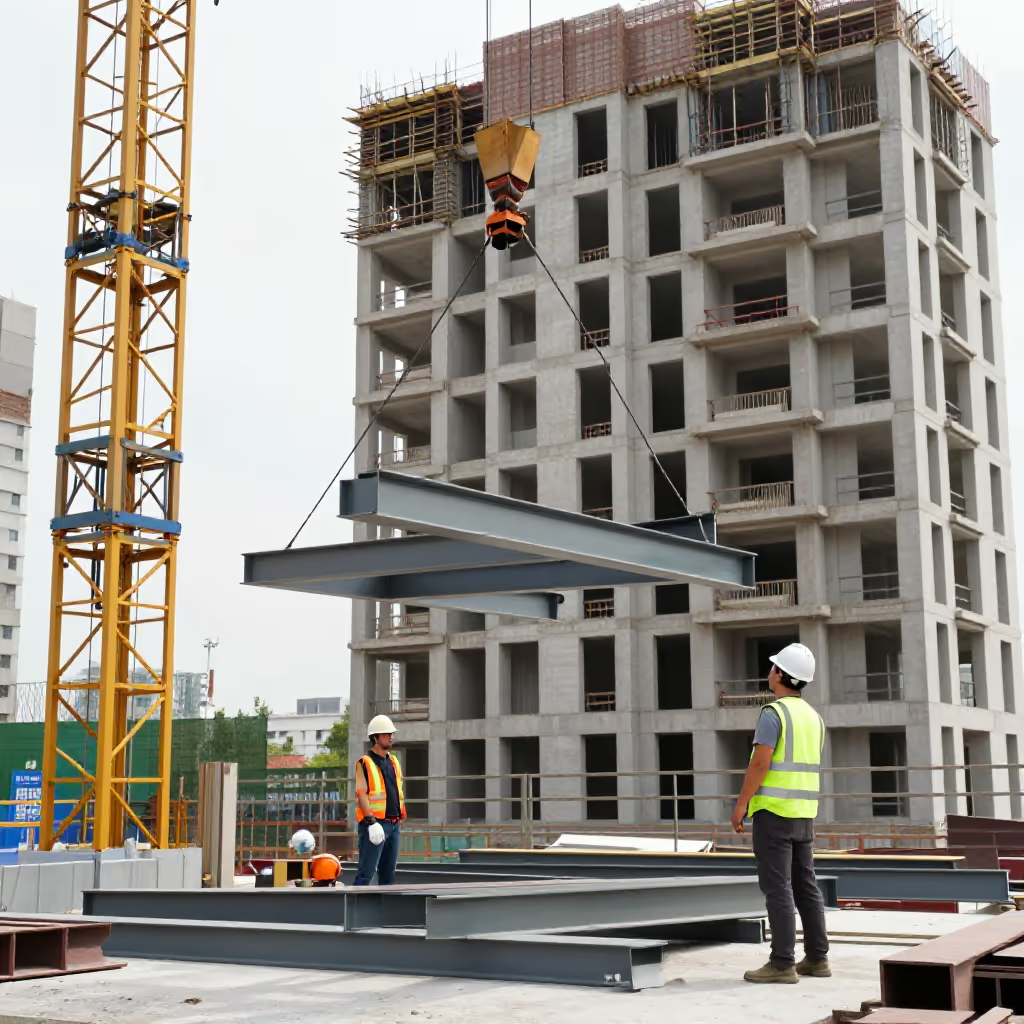
Auf dem freien Grundstück ziehen sie einen großen Wohnblock hoch.
They are putting up a large apartment block on the vacant plot of land.
Auf dem freien Grundstück bauen sie ein kleines Haus.
They are building a small house on the vacant plot of land.