


das Auge
eye
The sensory organ with which humans and animals can see.
EXAMPLE
Er hat strahlend blaue Augen.
He has bright blue eyes.
eye
Loading your saved state.
eye
The sensory organ with which humans and animals can see.
Er hat strahlend blaue Augen.
He has bright blue eyes.
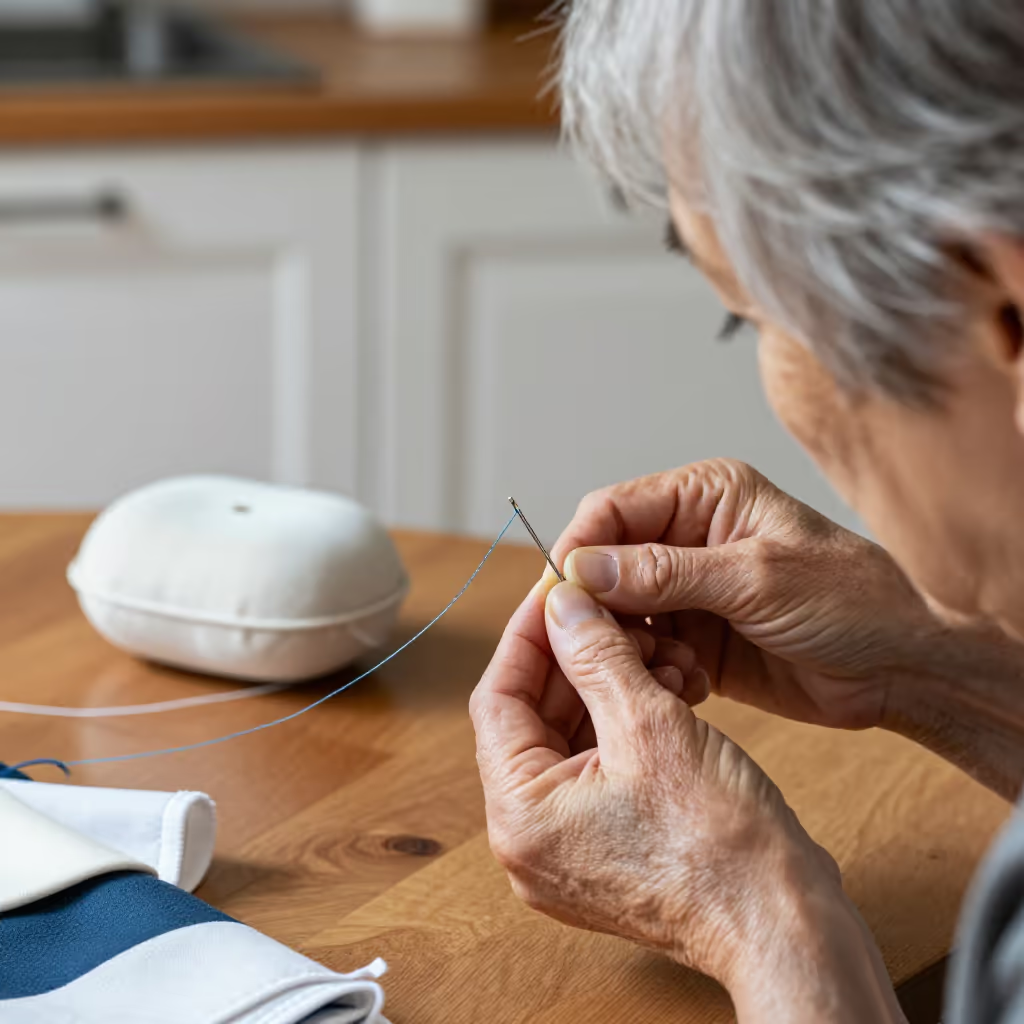
eye
The small opening at the end of a needle through which the thread is passed. Also referred to as 'Nadelöhr' (eye of the needle).
Ich bin zu müde, um den Faden durch das Auge der Nadel zu bekommen.
I'm too tired to get the thread through the eye of the needle.
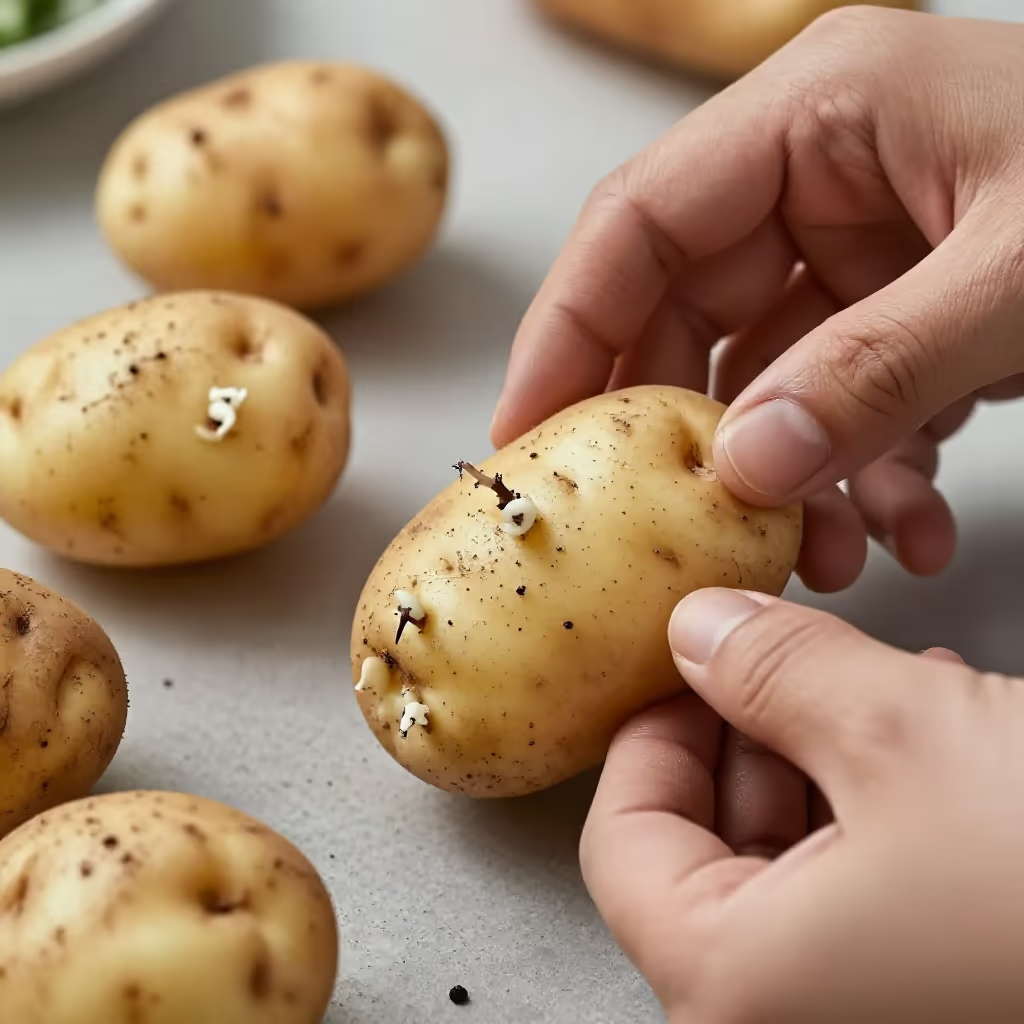
eye
A bud on a plant from which a new shoot can grow, especially on potatoes.
Die Kartoffel hat schon mehrere Augen ausgetrieben und muss bald gepflanzt werden.
The potato has already sprouted several eyes and needs to be planted soon.

eye
The windless center of a cyclone or hurricane.
Als wir uns im Auge des Hurrikans befanden, war es für einen Moment unheimlich ruhig.
When we were in the eye of the hurricane, it was eerily calm for a moment.
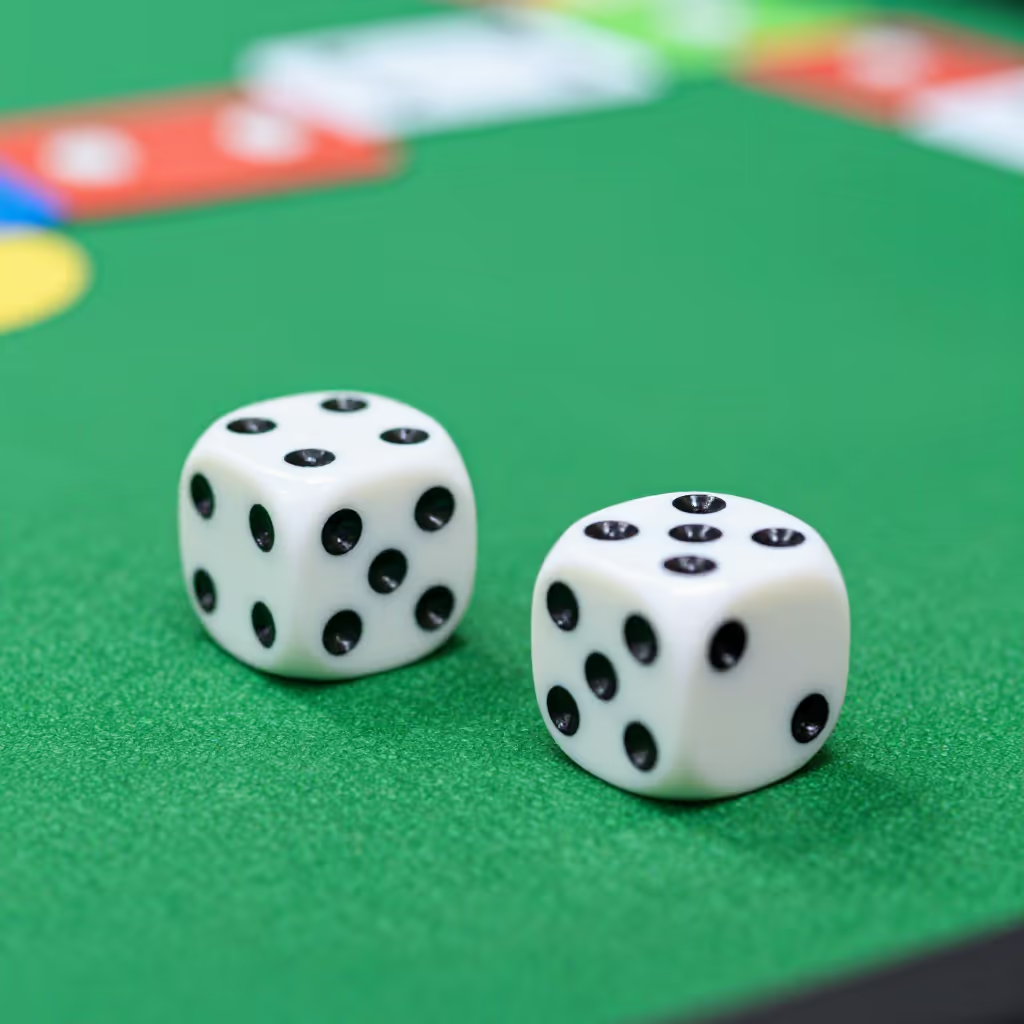
pip / point
The dots on a die that indicate a numerical value.
Er würfelte eine Sechs, das sind die meisten Augen.
He rolled a six; that's the highest number of pips.

to have one's eye on
To begin to be interested in someone or something, often with the intention of owning it or starting a relationship.
Sie hat ein Auge auf das rote Kleid im Schaufenster geworfen.
She has her eye on the red dress in the shop window.
Many figurative meanings of 'Auge' (eye) derive from the idea of a small, round opening or a central point. Examples include the 'Auge' (eye) of a needle or the 'Auge' (eye) of a storm.
Im Auge des Orkans war es plötzlich windstill.
In the eye of the storm, it was suddenly windless.
'Auge' (eye) is a very productive word in compound nouns. Very common examples include 'Augenblick' (moment), 'Augenarzt' (eye doctor), and 'Augenbraue' (eyebrow).
Warte bitte einen Augenblick, ich bin gleich fertig.
Please wait a moment; I'll be finished in a second.
The word 'Auge' (eye) is part of many idioms. 'Ein Auge zudrücken' means to deliberately overlook a mistake, and 'jemanden aus den Augen verlieren' means to lose contact with someone.
Der Lehrer hat bei dem kleinen Fehler ein Auge zugedrückt.
The teacher turned a blind eye to the small mistake.
There are fixed verb-preposition combinations with 'Auge' (eye). 'Etwas im Auge behalten' means to keep an eye on something, and 'etwas ins Auge fassen' means to seriously consider something.
Wir sollten die Kosten für das Projekt genau im Auge behalten.
We should keep a close eye on the costs for the project.
You can always recognize the meaning 'Nadelöhr' (eye of the needle) from the context. The word is used almost exclusively together with 'Nadel' (needle) or 'Faden' (thread).
Meine Großmutter kann ohne Brille den Faden nicht mehr durchs Auge der Nadel fädeln.
My grandmother can no longer thread the thread through the eye of the needle without glasses.
The meaning 'Punkte auf einem Würfel' (dots on a die) is used only in the context of games. You will often hear it together with the verb 'würfeln' (to roll dice).
Du brauchst mindestens vier Augen, um zu gewinnen.
You need at least four points to win.
The idiom 'ein Auge auf jemanden/etwas werfen' (to have one's eye on someone/something) always uses the accusative for the person or thing one is interested in.
Mein Kollege hat ein Auge auf die neue Abteilungsleiterin geworfen.
My colleague has his eye on the new department manager.
point
On a die, both words can refer to the small, round markings. „Die Augen“ is the conventional counting unit and shows the numerical value, while „die Punkte“ describes the visible form of the markings more directly. Use „Augen“ for the result of a die roll and „Punkte“ for the appearance.
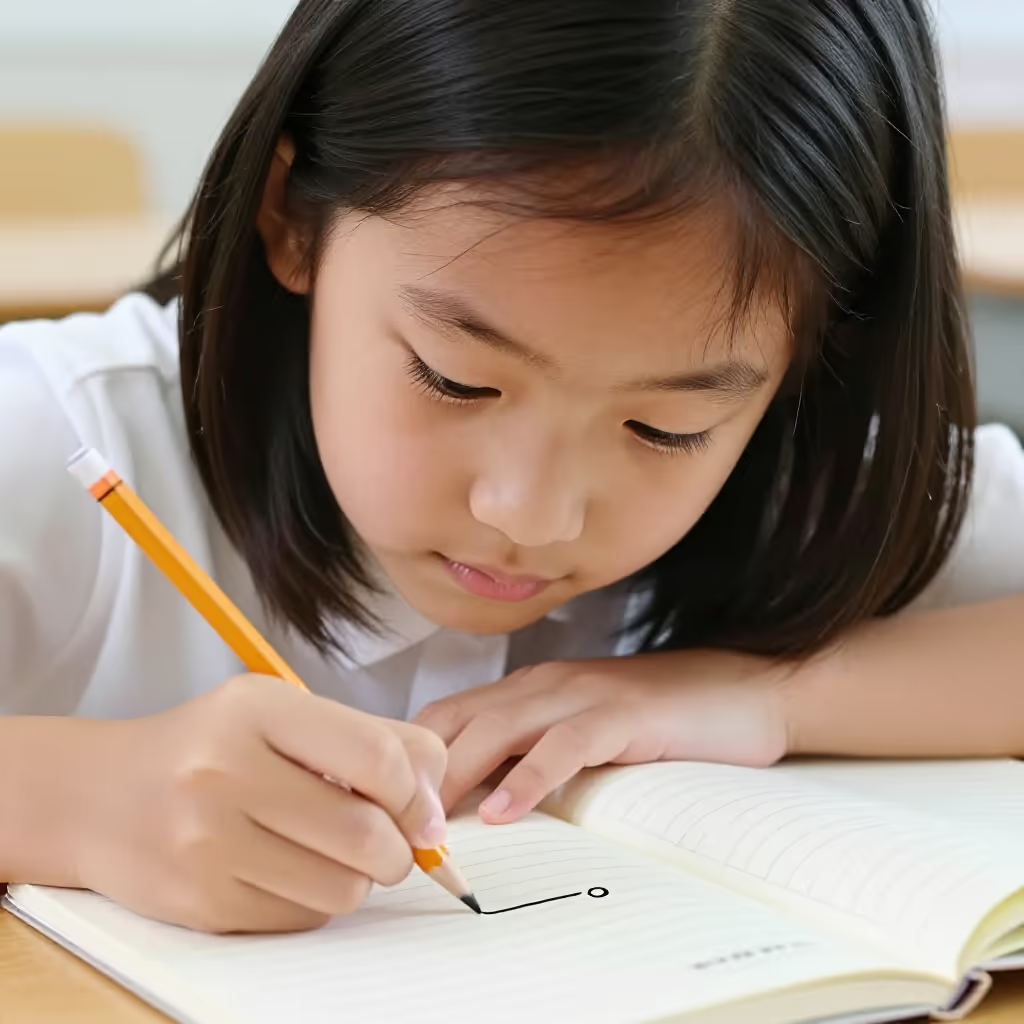
Der Würfel zeigt drei Augen, also habe ich drei gewürfelt.
The die shows three pips, so I rolled a three.
Auf der Würfelseite sind drei schwarze Punkte zu sehen.
There are three black dots on the side of the die.