

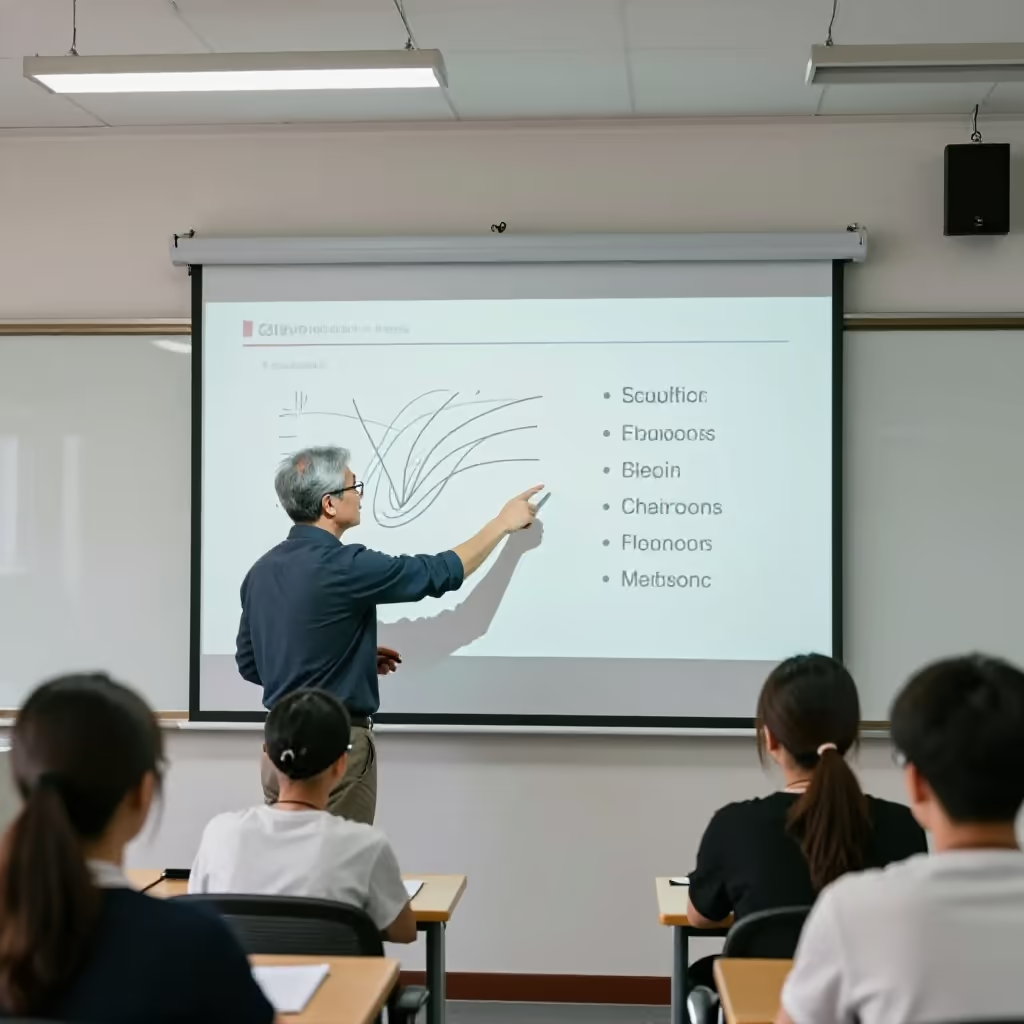
der Punkt
point
A single topic, aspect, or argument in a discussion, presentation, or on a list.
EXAMPLE
Lass uns zum nächsten Punkt auf der Tagesordnung kommen.
Let's move on to the next point on the agenda.
point
Loading your saved state.
point
A single topic, aspect, or argument in a discussion, presentation, or on a list.
Lass uns zum nächsten Punkt auf der Tagesordnung kommen.
Let's move on to the next point on the agenda.

dot / period
A small, round mark or spot. Also the punctuation mark that ends a sentence.
Am Ende eines Satzes steht ein Punkt.
At the end of a sentence, there is a period.

point
A counting unit awarded in games, competitions, or evaluations in order to measure performance.
Unsere Mannschaft hat das Spiel mit 20 Punkten Vorsprung gewonnen.
Our team won the game by a margin of 20 points.
point
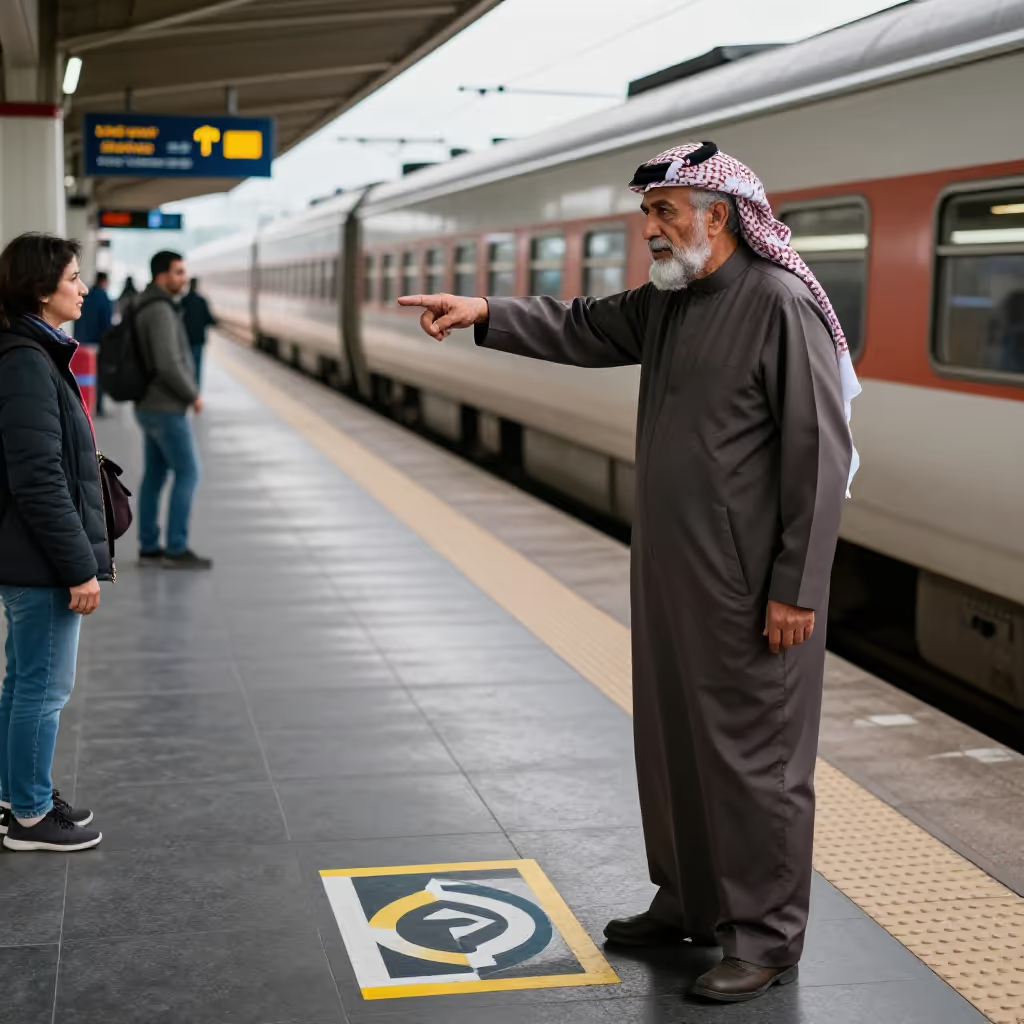
A specific spot, place, or point in time.
Wir treffen uns an dem Punkt, wo sich die beiden Wege kreuzen.
We'll meet at the point where the two paths cross.

to get to the point
To formulate or summarize something precisely and aptly.
In ihrer Rede hat sie das Problem genau auf den Punkt gebracht.
In her speech, she got exactly to the point about the problem.

the crucial point
The decisive and most important aspect of a matter.
Der springende Punkt ist, dass wir uns das Projekt finanziell nicht leisten können.
The crucial point is that we can't afford the project financially.
The noun 'der Punkt' (point) is the root of the adjective 'pünktlich' (punctual). To be punctual means to be there exactly at the right time, literally 'auf den Punkt' (on the point).
In Deutschland ist Pünktlichkeit sehr wichtig.
In Germany, punctuality is very important.
In German, the comma is used as the decimal separator, not the period. The period is often used to separate thousands. So it is written '3,14' and '1.000'.
Der Preis beträgt 99,95 Euro.
The price is 99.95 euros.
In discussions or presentations, you often hear: 'Das ist ein wichtiger Punkt' (That is an important point), 'Kommen wir zum nächsten Punkt' (Let's move on to the next point), or 'Ich stimme Ihnen in diesem Punkt zu' (I agree with you on this point).
Das ist ein guter Punkt, darüber habe ich noch nicht nachgedacht.
That's a good point; I hadn't thought about that yet.
In the context of games or sports, the verbs 'Punkte sammeln' (to collect points), 'Punkte bekommen' (to get points), or 'Punkte machen' (to score points) are often used.
Für jede richtige Antwort bekommen Sie zehn Punkte.
For every correct answer, you get ten points.
To describe an exact place or point in time, 'Punkt' (point) is often used with the preposition 'an': 'an diesem Punkt' (at this point), 'am höchsten Punkt' (at the highest point).
An diesem Punkt der Geschichte wird es spannend.
At this point in the story, it gets exciting.
In the fixed expression 'etwas auf den Punkt bringen' (to get something to the point), the object (what is being summarized) comes between 'auf den' and 'Punkt'.
Er kann komplexe Themen sehr gut auf den Punkt bringen.
He is very good at getting complex topics to the point.
The idiom 'der springende Punkt' (the crucial point) often comes at the beginning of a sentence and introduces an explanation, frequently with 'ist, dass ...' (is that ...).
Der springende Punkt ist, dass wir die Frist einhalten müssen.
The crucial point is that we have to meet the deadline.
topic / theme
Thema refers to the subject matter of a conversation or event. Punkt refers to a single item in a structured list, discussion, or agenda. The overarching Thema can therefore include several Punkte.

Der erste Punkt der Sitzung ist die Musik für das Sommerfest.
The first item on the meeting’s agenda is the music for the summer festival.
Das Thema der Sitzung ist die Planung des Sommerfestes.
The topic of the meeting is planning the summer festival.