

ausfahren
to extend
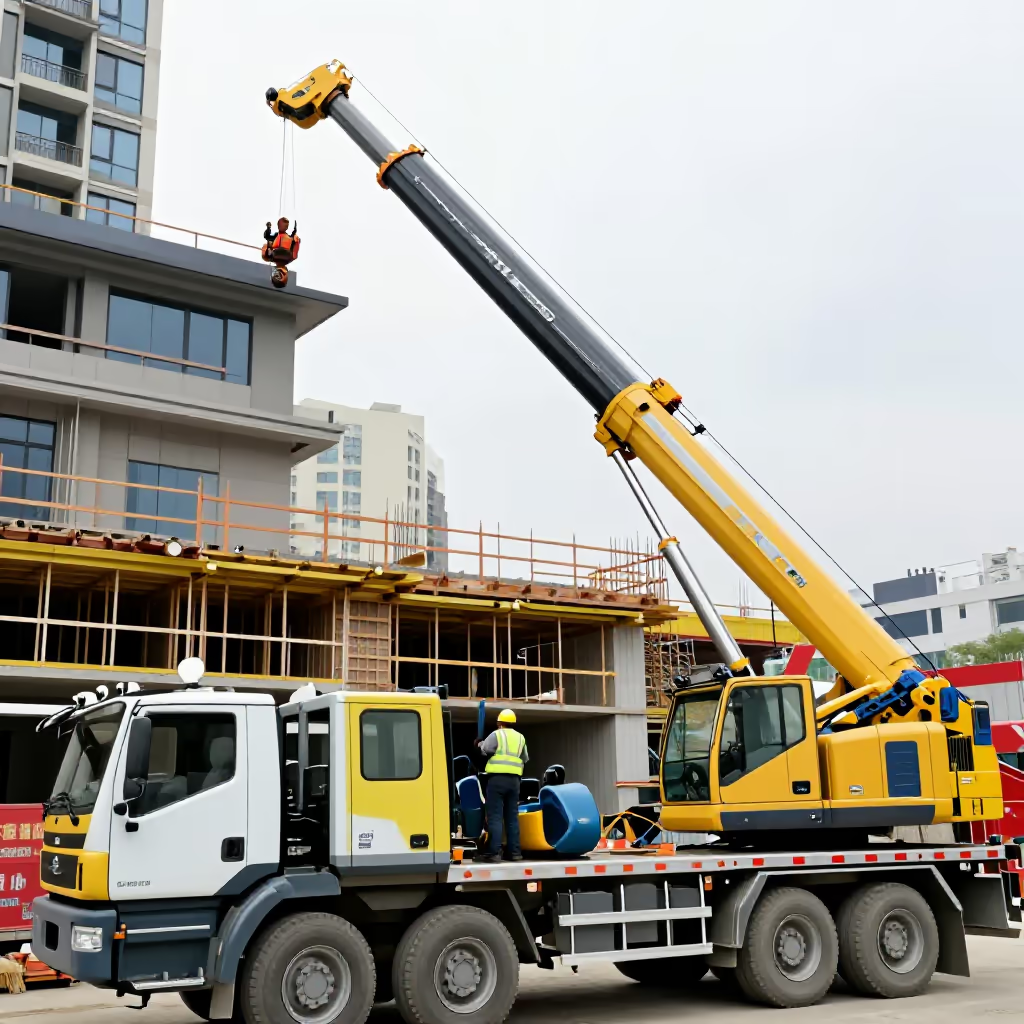
To move a movable part from its resting position into an extended or stretched-out position.
EXAMPLE
Kurz vor der Landung fährt der Pilot das Fahrwerk aus.
Shortly before landing, the pilot extends the landing gear.
to extend / drive out / deliver
Loading your saved state.
to extend
To move a movable part from its resting position into an extended or stretched-out position.
Kurz vor der Landung fährt der Pilot das Fahrwerk aus.
Shortly before landing, the pilot extends the landing gear.
to drive out
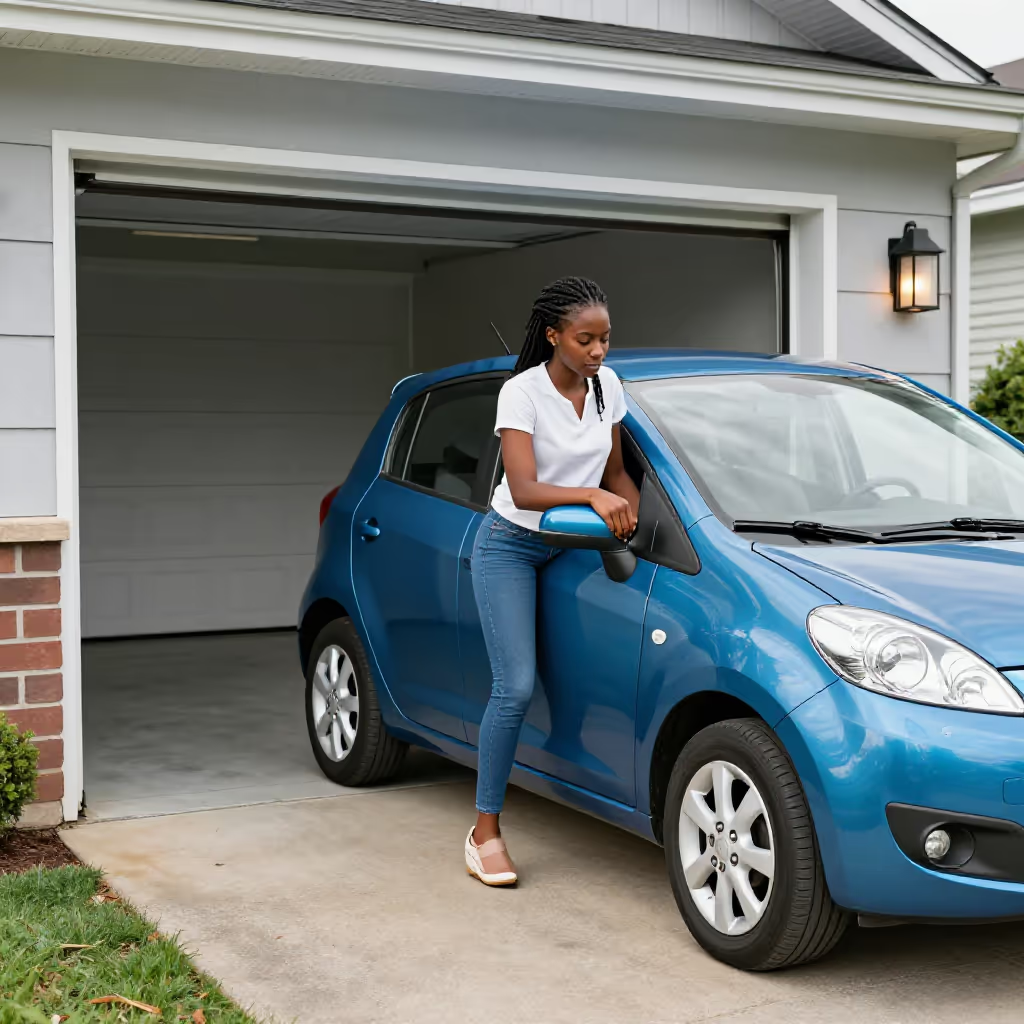
To leave a place such as a garage, parking space, or driveway with a vehicle.
Er musste vorsichtig aus der engen Parklücke ausfahren.
He had to drive carefully out of the narrow parking space.

to go for a drive
To take a drive or trip with a vehicle, usually for pleasure.
Am Sonntag fahren wir oft mit dem Cabrio ins Grüne aus.
On Sundays we often go for a drive in the convertible out into the countryside.

to show one's claws
In a conflict, to take an aggressive or defensive stance; to show one's combative side.
Als sie kritisiert wurde, hat sie sofort die Krallen ausgefahren.
When she was criticized, she immediately showed her claws.
to deliver
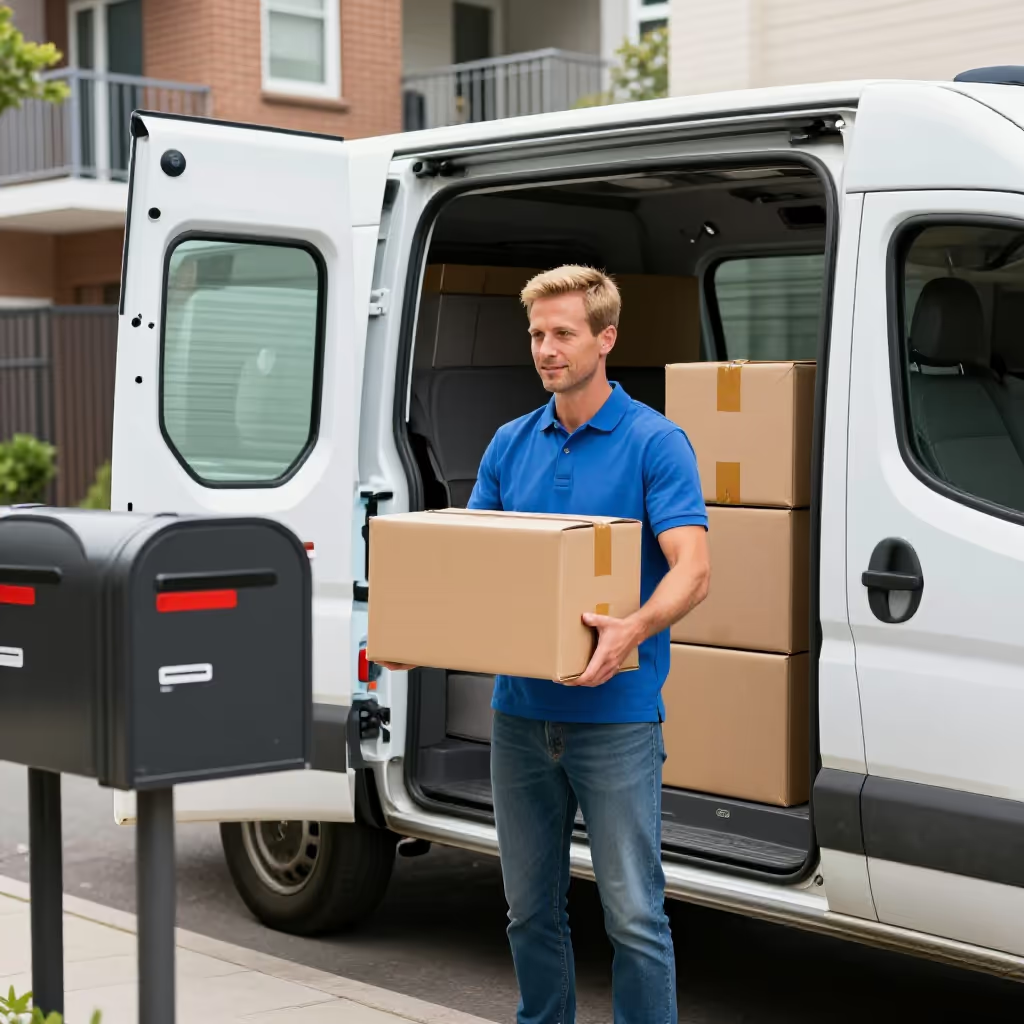
To deliver goods, mail, or other items to various recipients.
Der Lieferdienst fährt die Pakete bis 20 Uhr aus.
The delivery service delivers the packages by 8 p.m.
'Ausfahren' (to extend / drive out / deliver) is a separable verb. The prefix 'aus' goes at the end in a main clause. In the infinitive with 'zu', 'zu' is placed between the prefix and the verb.
Der LKW fährt die Rampe langsam aus.
The truck slowly extends the ramp.
The verb combines 'aus' (out) and 'fahren' (to drive/move). This basic idea of 'moving out' appears in almost all meanings, whether with technical parts, vehicles, or deliveries.
Bitte fahren Sie langsam aus der Tiefgarage aus.
Please drive slowly out of the underground garage.
The perfect tense is formed with 'sein' (to be) when it involves a change of location, for example taking a drive or driving out of a parking space. It is formed with 'haben' (to have) when an action is performed on an object, for example extending a technical part or delivering goods.
Wir sind am Wochenende mit dem Motorrad ausgefahren.
We went for a drive on the motorcycle at the weekend.
In this technical meaning, the objects are often mechanical or movable parts. Typical phrases are: 'eine Antenne ausfahren' (to extend an antenna), 'eine Markise ausfahren' (to extend an awning), 'eine Leiter ausfahren' (to extend a ladder), or 'ein Teleskop ausfahren' (to extend a telescope).
Der Feuerwehrmann fuhr die lange Leiter des Wagens aus.
The firefighter extended the vehicle's long ladder.
When you leave a place with a vehicle, the preposition 'aus' is used with the dative. Typical formulations are 'aus der Garage ausfahren' (to drive out of the garage) or 'aus der Einfahrt ausfahren' (to drive out of the driveway).
Schau nach links und rechts, bevor du aus der Einfahrt ausfährst.
Look left and right before you drive out of the driveway.
The expression 'die Krallen ausfahren' (to show one's claws) is a fixed idiom. It is used metaphorically and means that a person suddenly becomes aggressive, defensive, or quarrelsome.
Zuerst war sie ganz ruhig, aber bei der Kritik fuhr sie sofort die Krallen aus.
At first she was completely calm, but when criticized, she immediately showed her claws.
to deliver / extradite
Both verbs can describe delivering goods. Ausfahren usually emphasizes the trip during which goods are distributed to various recipients. Ausliefern focuses more on delivering the goods to the respective customer or recipient.

Der Paketdienst fährt heute die Pakete im ganzen Stadtteil aus.
The parcel service is delivering packages throughout the neighborhood today.
Der Paketdienst liefert die bestellten Bücher heute an die Kundin aus.
The parcel service is delivering the ordered books to the customer today.