

ausgedehnt
extensive
Describes something that extends over a large spatial area; expansive, widespread.
EXAMPLE
Hinter dem Haus erstreckt sich ein ausgedehnter Park.
An extensive park stretches out behind the house.
extensive / extended
Loading your saved state.
extensive
Describes something that extends over a large spatial area; expansive, widespread.
Hinter dem Haus erstreckt sich ein ausgedehnter Park.
An extensive park stretches out behind the house.

extended
Describes something that lasts a long time; long-lasting.
Nach dem Mittagessen machten wir einen ausgedehnten Spaziergang.
After lunch, we took an extended walk.
'Ausgedehnt' (extensive/extended) is the past participle of the verb 'ausdehnen' (to expand/extend). 'Dehnen' means 'to stretch'. The prefix 'aus-' reinforces this. Literally, it therefore describes something that has been 'stretched out' or expanded, which applies to both space and time.
Die Wüste dehnt sich immer weiter aus.
The desert is expanding farther and farther.
You can tell whether 'ausgedehnt' (extensive/extended) is meant spatially or temporally from the noun. If it refers to a place (e.g., forest, area, beach), it is about area. If it refers to an activity (e.g., breakfast, conversation, trip), it is about duration.
Wir wanderten durch ein ausgedehntes Waldgebiet.
We hiked through an extensive forest area.
In its spatial meaning, 'ausgedehnt' (extensive) is often used to describe large natural areas or landscapes. Typical combinations are 'ausgedehnte Wälder' (extensive forests), 'ein ausgedehntes Gebiet' (an extensive area), or 'ausgedehnte Felder' (extensive fields).
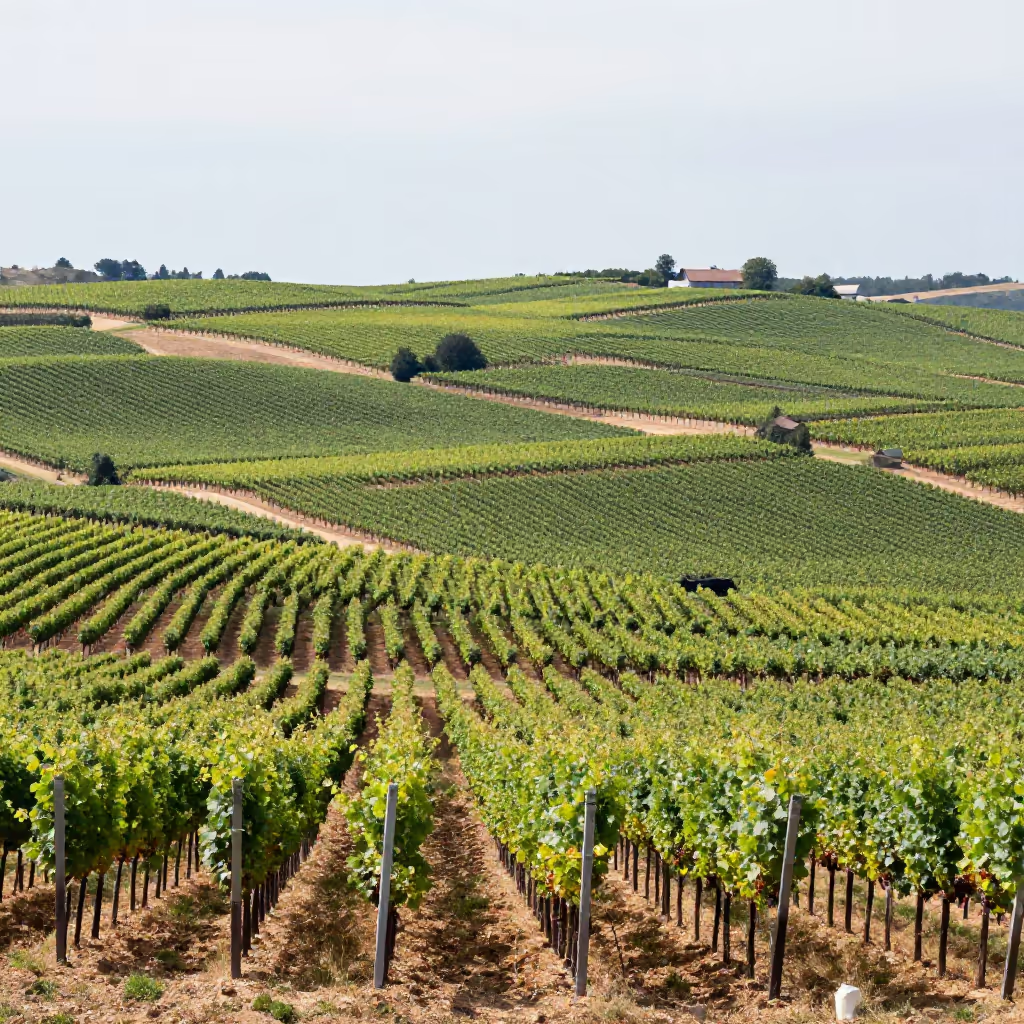
Die Region ist bekannt für ihre ausgedehnten Weinberge.
The region is known for its extensive vineyards.
When it is about time, 'ausgedehnt' (extended) often describes pleasant or intensive activities. Common phrases include 'ein ausgedehntes Frühstück' (an extended breakfast), 'ein ausgedehnter Spaziergang' (an extended walk), or 'eine ausgedehnte Reise' (an extended trip).
Am Sonntag genießen wir immer ein ausgedehntes Frühstück mit der ganzen Familie.
On Sundays we always enjoy an extended breakfast with the whole family.
far / wide
Weit and ausgedehnt can both describe the large spatial extent of an area. Weit often emphasizes the impression of open or generously expansive space, while ausgedehnt focuses more on the area actually being large. Use weit for the impression and ausgedehnt for the size of the area.
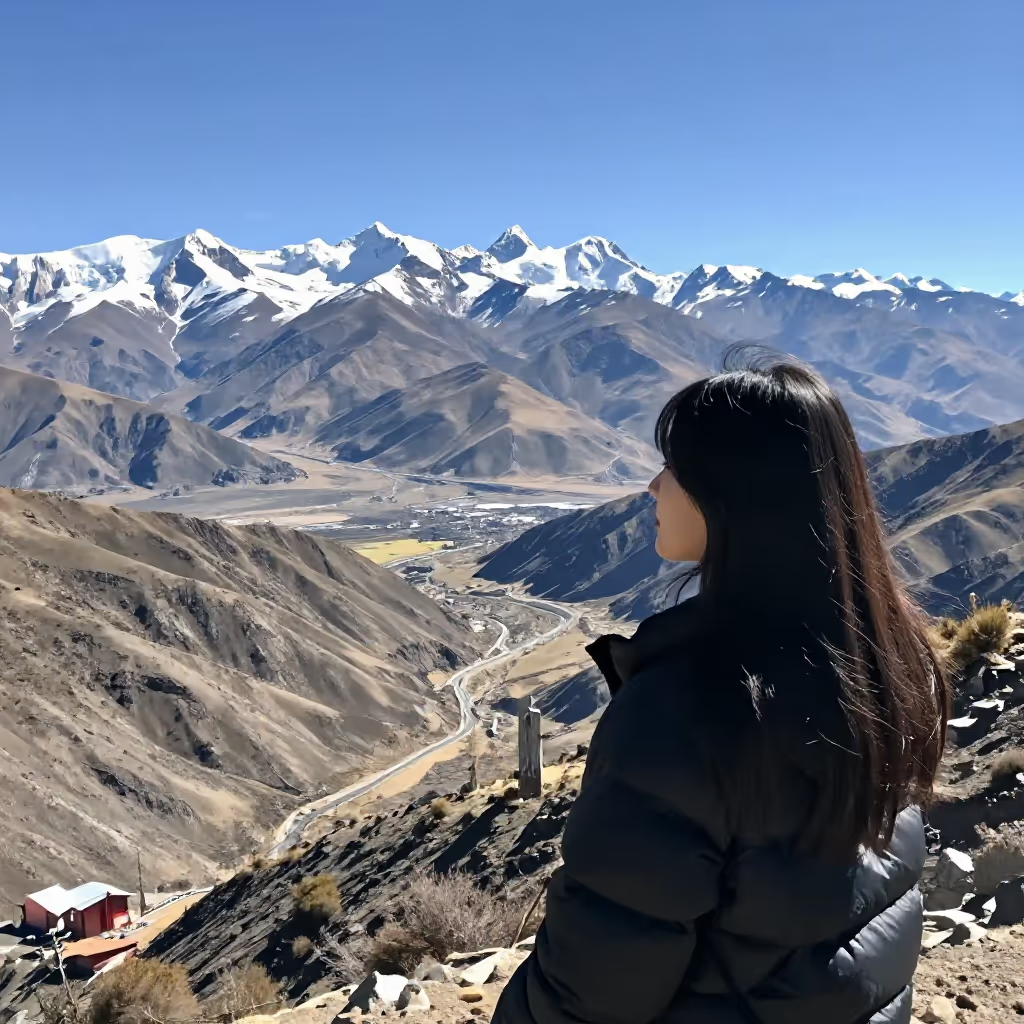
Das Naturschutzgebiet ist über mehrere Täler ausgedehnt.
The nature reserve extends across several valleys.
Die Ebene wirkt weit und offen.
The plain feels wide and open.