

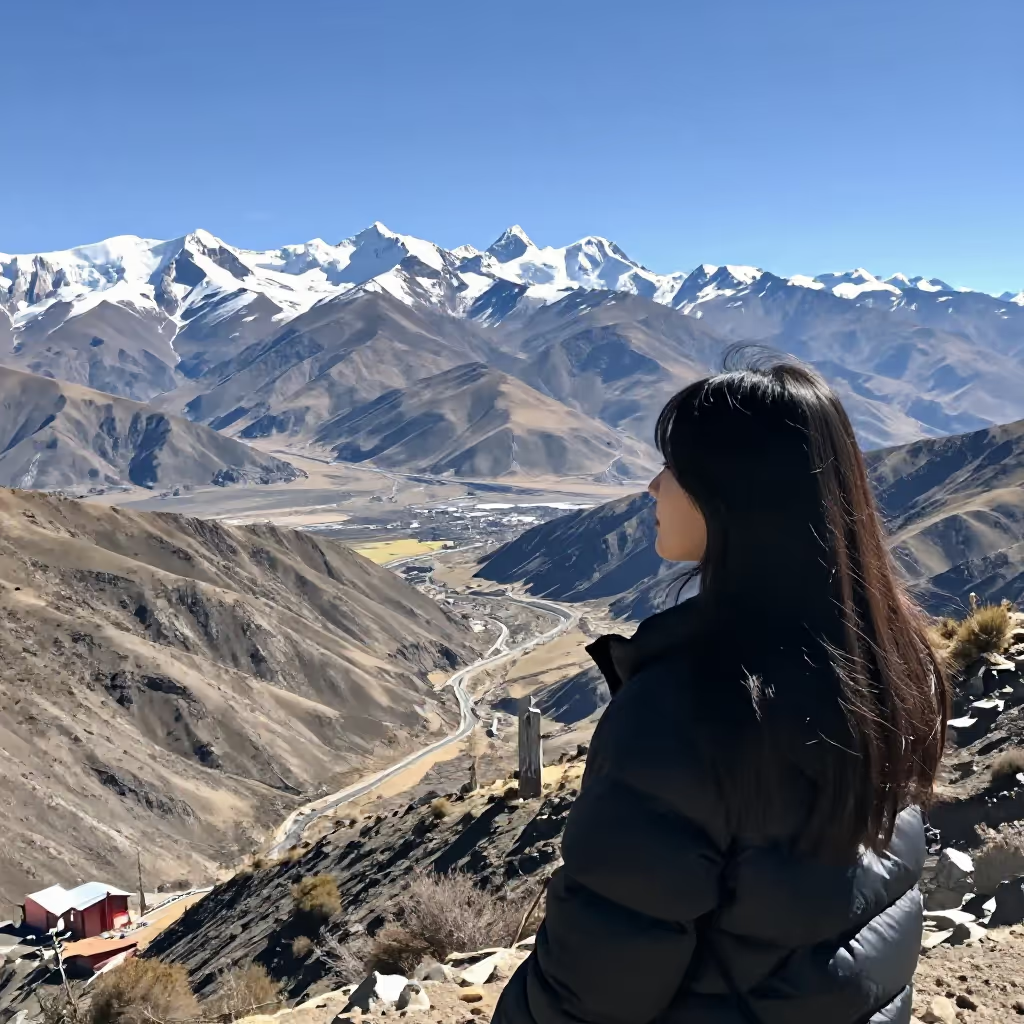
weit
far
Describing a large spatial distance or extent.
EXAMPLE
Von hier bis zum nächsten Dorf ist es ein weiter Weg.
From here to the next village, it's a long way.
far / wide
Loading your saved state.
far
Describing a large spatial distance or extent.
Von hier bis zum nächsten Dorf ist es ein weiter Weg.
From here to the next village, it's a long way.

wide / loose
Loose-fitting or spacious, often in reference to clothing or rooms.
Diese Hose ist mir an der Taille zu weit.
These pants are too loose for me at the waist.
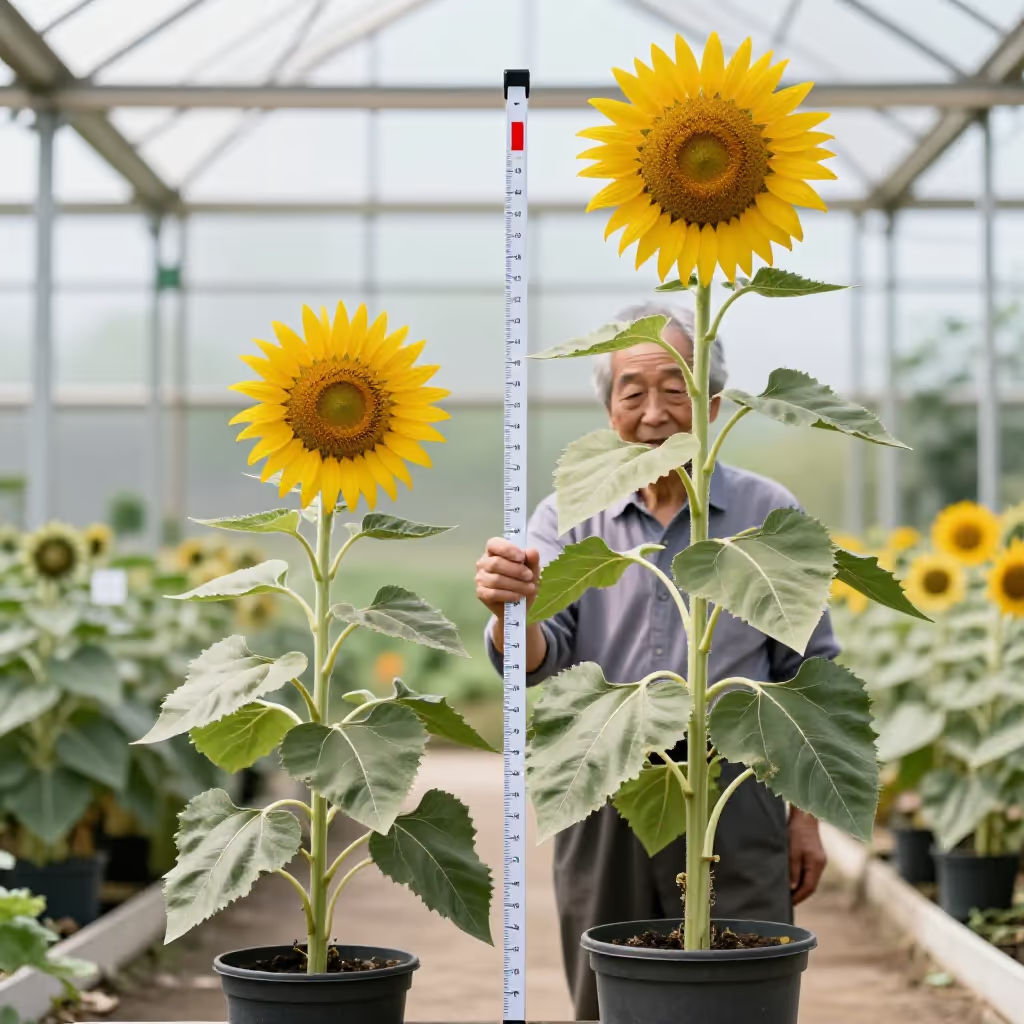
much / far
As an adverb to intensify a comparison, in the sense of 'much' or 'significantly'.
Das neue Modell ist weit besser als das alte.
The new model is far better than the old one.

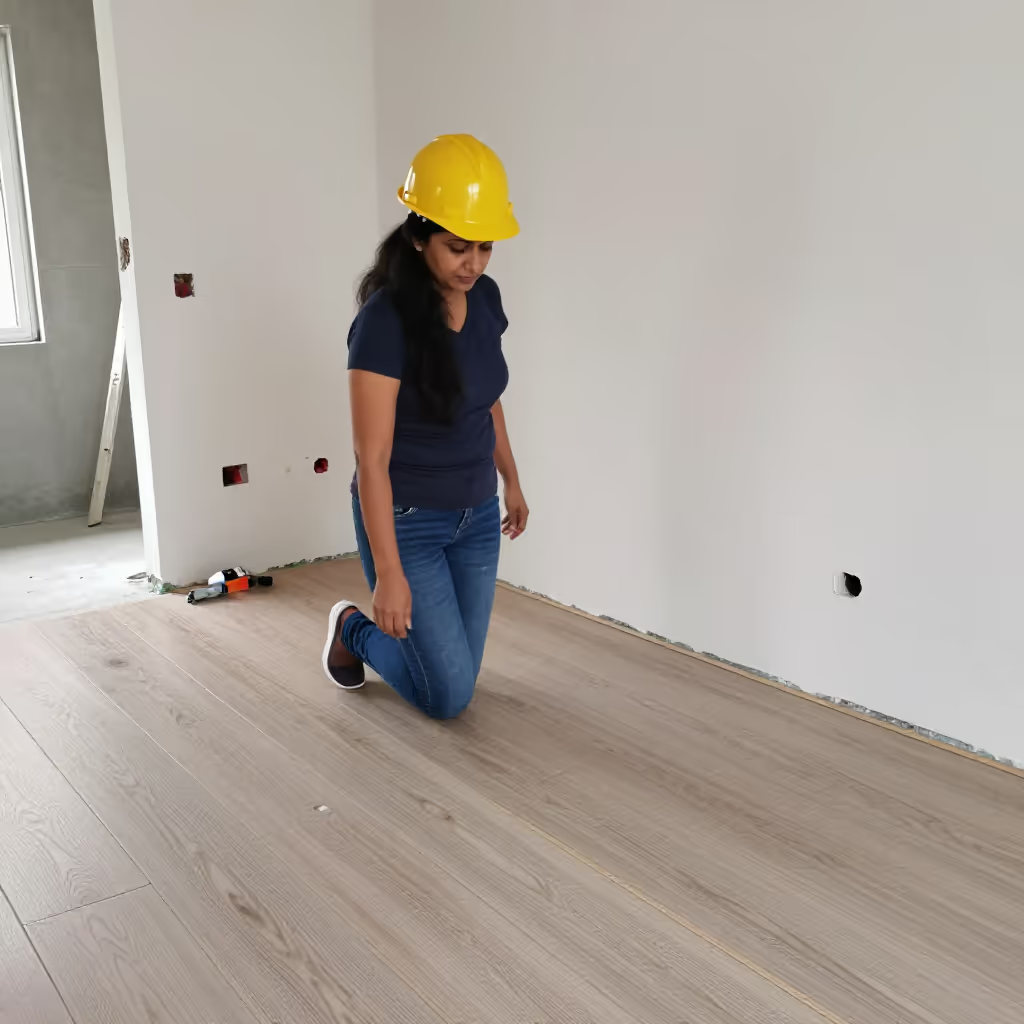
to go too far
To cross a boundary of what is acceptable, decent, or reasonable.
Mit dieser persönlichen Beleidigung bist du eindeutig zu weit gegangen.
With that personal insult, you clearly went too far.

by far
Expresses a large gap or difference; in a comparison, in the sense of 'by a wide margin' or 'significantly'.
Sie ist bei weitem die klügste Person, die ich kenne.
She is by far the smartest person I know.
so far
Expresses a state up to the present point or is used to give a general assessment.
Ist so weit alles in Ordnung bei dir?
Is everything okay with you so far?
To ask about a distance, you use the fixed question construction 'Wie weit ist es ...?' (How far is it ...?). The prepositions 'von' (from) and 'bis' (to/until) or 'nach' (to) help define the starting and ending point.
Wie weit ist es von hier bis zum Bahnhof?
How far is it from here to the train station?
In reference to clothing, 'weit' (wide/loose) means the opposite of 'eng' (tight). It describes that a piece of clothing fits loosely and offers a lot of freedom of movement.
Im Sommer trage ich gerne weite Kleider.
In summer, I like wearing loose dresses.
As an adverb, 'weit' can stand before a comparative (e.g., better, bigger, faster) to emphasize the difference. It then means 'much' or 'significantly'.
Ein E-Book ist oft weit günstiger als ein gedrucktes Buch.
An e-book is often much cheaper than a printed book.
The idiom 'zu weit gehen' (to go too far) means to cross a social, moral, or personal boundary. It expresses that a behavior is no longer acceptable.
Seine Witze waren nicht mehr lustig, damit ist er zu weit gegangen.
His jokes weren't funny anymore; with that, he went too far.
The expression 'bei weitem' (by far) is used to emphasize a large difference. It often appears in connection with a comparative or superlative and means 'by a wide margin'.
Das war bei weitem der schwierigste Test, den wir je hatten.
That was by far the most difficult test we have ever had.
The expression 'so weit' (so far) is used to ask about the state of things or to describe an interim status. It means 'up to now' or 'in general'.
So weit ist alles gut gelaufen mit dem Projekt.
So far, everything has gone well with the project.
long
Weit and lang can both describe a path with a large spatial extent. Weit mainly emphasizes the distance to a destination or starting point, while lang focuses more on the length of the path itself. Use weit for the distance and lang for the extent.
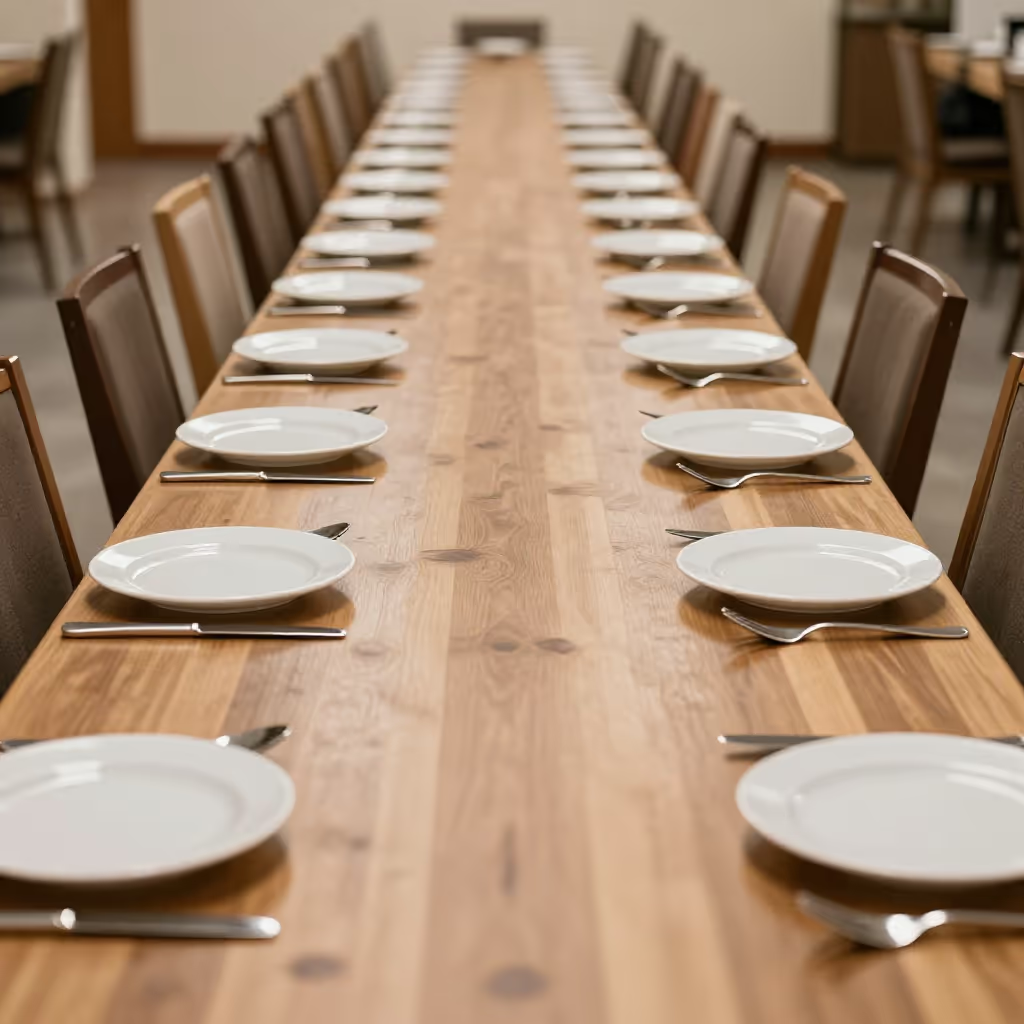
Bis zum nächsten Dorf ist der Weg weit.
The next village is a long way from here.
Der Weg durch den Wald ist mehrere Kilometer lang.
The path through the forest is several kilometers long.