

lang
long
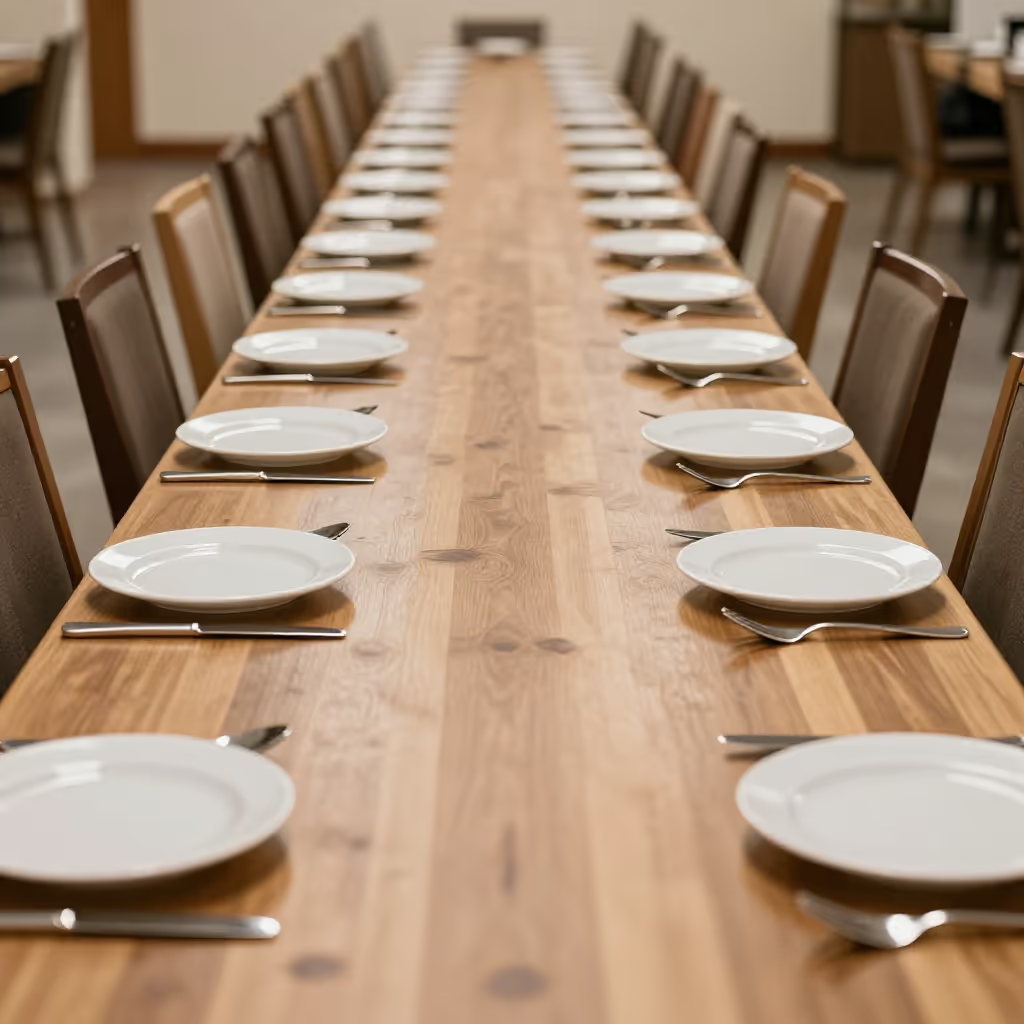
Having a large spatial extent in one dimension.
EXAMPLE
Der Nil ist ein sehr langer Fluss.
The Nile is a very long river.
long
Loading your saved state.
long
Having a large spatial extent in one dimension.
Der Nil ist ein sehr langer Fluss.
The Nile is a very long river.
long
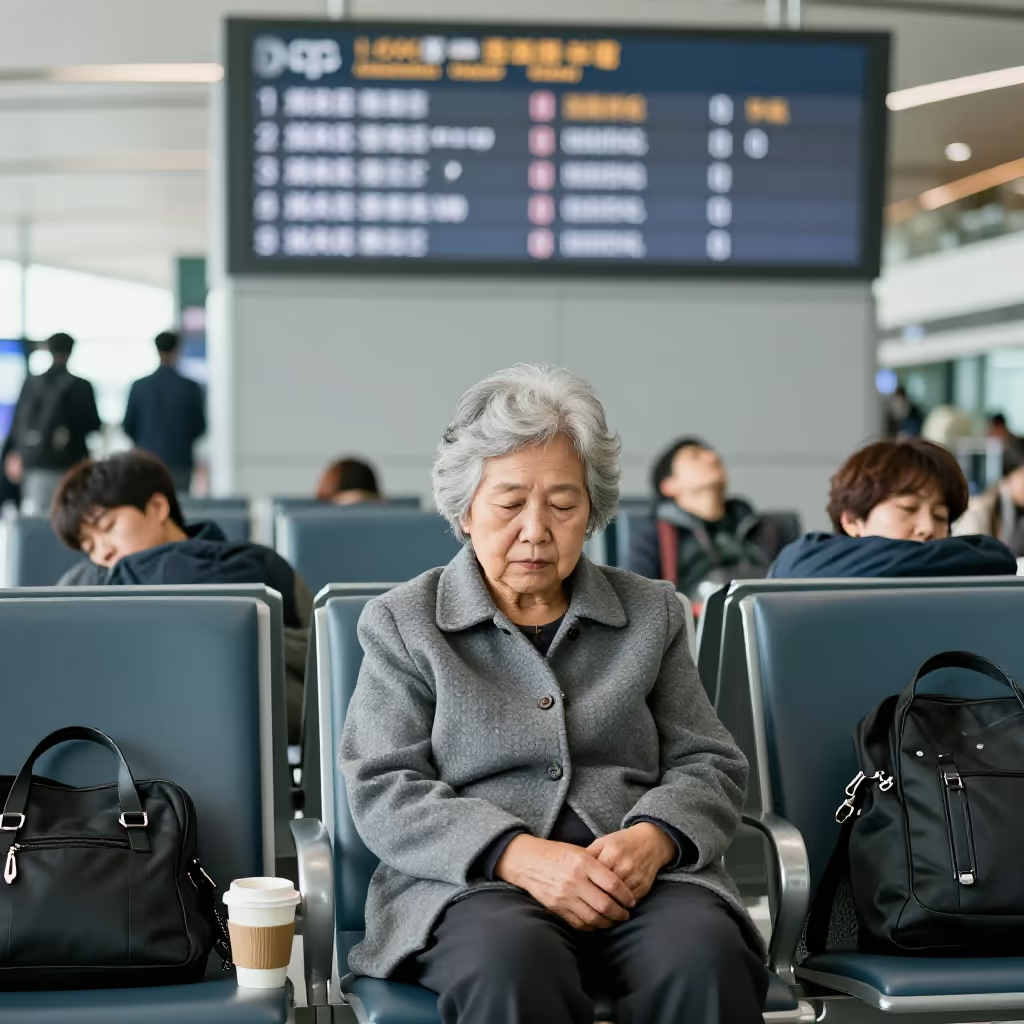
Having a long duration in time.
Der Winter fühlte sich dieses Jahr besonders lang an.
The winter felt especially long this year.

along
As an adverb that comes after a noun to express movement along something.
Wir sind den ganzen Strand lang spaziert.
We walked along the entire beach.

at great length
An idiom meaning 'very extensively and in detail'.
Er musste mir die ganze Geschichte lang und breit erzählen.
He had to tell me the whole story at great length.

to stretch out
Colloquial for falling down or lying down to rest.
Nach der langen Wanderung habe ich mich erst mal auf dem Sofa lang gemacht.
After the long hike, I first stretched out on the sofa.
To describe movement along a route, 'lang' can stand after the noun. In this case, the noun is in the accusative. This word order is a special feature.
Wir sind die ganze Straße lang gelaufen.
We walked all along the street.
Whether 'lang' describes a spatial distance or a duration of time can be recognized from the noun. Words like 'Weg' (path/way), 'Schlange' (line/queue), or 'Hals' (neck) point to a spatial meaning. Words like 'Zeit' (time), 'Tag' (day), or 'Woche' (week) point to a time-related meaning.
Die Warteschlange vor dem Kino war sehr lang.
The line in front of the movie theater was very long.
In connection with time, 'lang' is often combined with verbs like 'warten' (to wait), 'dauern' (to last/take), or 'suchen' (to search). A common expression is also 'ein Leben lang' (for a lifetime), to express that something applies forever.
Wie lange dauert der Flug von Berlin nach New York?
How long does the flight from Berlin to New York take?
The idiom 'lang und breit' means 'very extensively' or 'in all details'. It is often used with verbs like 'erzählen' (to tell), 'erklären' (to explain), or 'diskutieren' (to discuss).
Sie hat mir lang und breit von ihrem Urlaub erzählt.
She told me about her vacation at great length.
The expression 'sich lang machen' is a colloquial and reflexive phrase. Depending on the context, it can mean 'hinfallen' (to fall down) or 'sich zum Ausruhen hinlegen' (to lie down to rest).
Pass auf, dass du auf dem Eis nicht hinfällst und dich lang machst!
Be careful not to fall and go sprawling on the ice!
since
„Seit“ and „lang“ can link a period of time to an activity. „Seit“ anchors its beginning in the past and normally shows that it continues up to now; „lang“ only states the duration and says nothing about whether it continues. Choose „seit“ for ongoing activities and „lang“ for completed periods of time.

Ich lernte zwei Jahre lang Deutsch und machte danach eine Pause.
I studied German for two years and then took a break.
Ich lerne seit zwei Jahren Deutsch und übe jeden Tag.
I have been learning German for two years and practice every day.