To eliminate a difference, deficit, or inequality so that equilibrium or balance is created.
example
Er versucht, seine schlechten Noten in Mathe durch gute Leistungen in anderen Fächern auszugleichen.
He is trying to balance out his bad grades in math with good performance in other subjects.
Usage tips
Separable verb
'Ausgleichen' (to balance/equalize/settle) is a separable verb. The prefix 'aus-' comes at the end in a main clause. In subordinate clauses and in the infinitive with 'zu', the verb stays together.
EXAMPLE
Ein Tor gleicht das Spiel wieder aus.
A goal balances the game out again.
Word structure
The word consists of the prefix 'aus-' and the verb 'gleichen' (to be similar, to be equal). Here, the prefix 'aus-' reinforces the idea of eliminating an imbalance and creating balance.
EXAMPLE
Mit dem neuen Job konnte er seine finanziellen Probleme ausgleichen.
With the new job, he was able to balance out his financial problems.
Sentence structure and usage
A very typical construction is 'etwas (Akkusativ) durch etwas (Akkusativ) ausgleichen' (to balance something out with something). This expresses how a deficiency or disadvantage is compensated for.
EXAMPLE
Der Sportler gleicht seine fehlende Erfahrung durch großen Ehrgeiz aus.
The athlete balances out his lack of experience with great ambition.
Reflexive use
The reflexive form 'sich ausgleichen' (to balance each other out) means that two opposing things cancel each other out. The subject is often plural or describes one thing with two sides.
EXAMPLE
Die Stärken und Schwächen des Kandidaten gleichen sich ungefähr aus.
The candidate's strengths and weaknesses roughly balance each other out.
Sports context
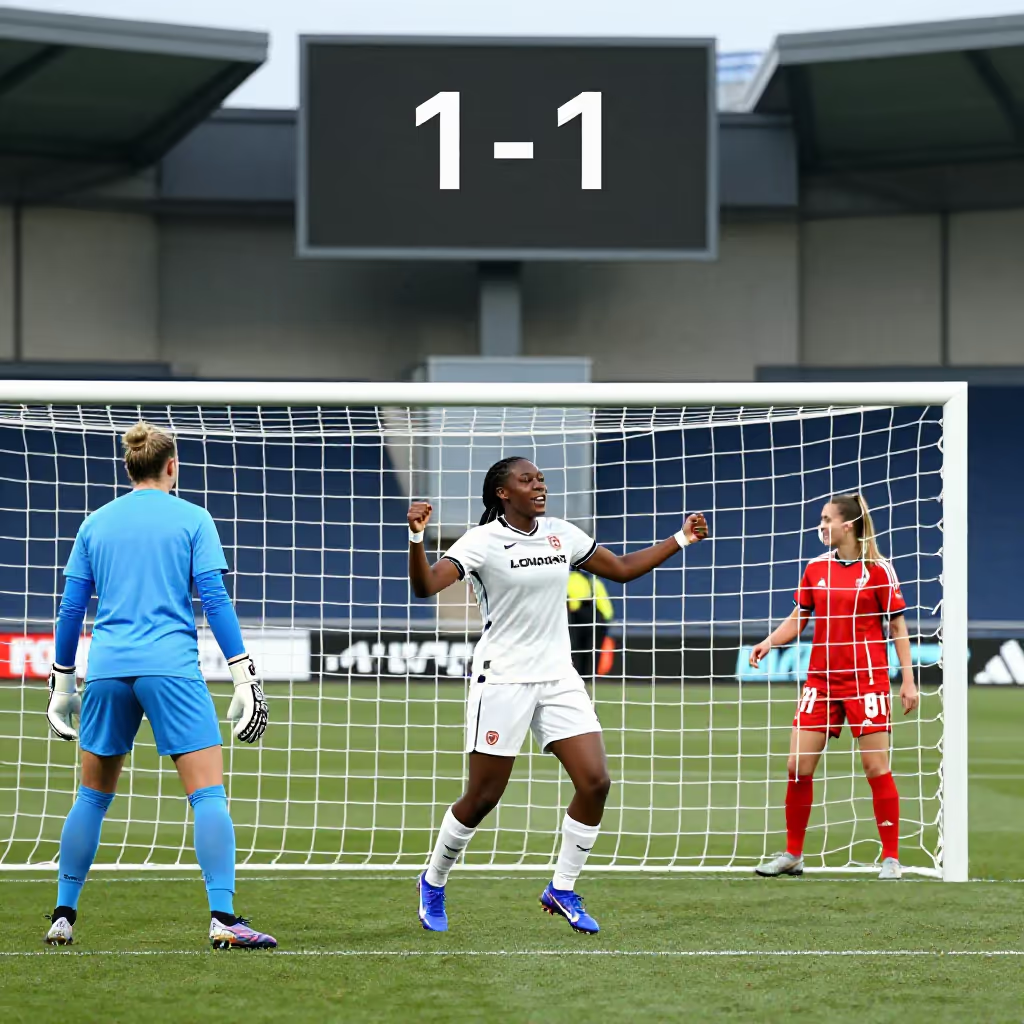
In sports, 'ausgleichen' (to equalize) is the standard verb for creating a tie. It is often used with the preposition 'zu' and the new score.
EXAMPLE
Die Heimmannschaft konnte kurz vor der Pause zum 1:1 ausgleichen.
The home team was able to equalize at 1–1 shortly before halftime.
Compare with
near_synonym · confusable
ausgleichen vs bezahlen
to pay
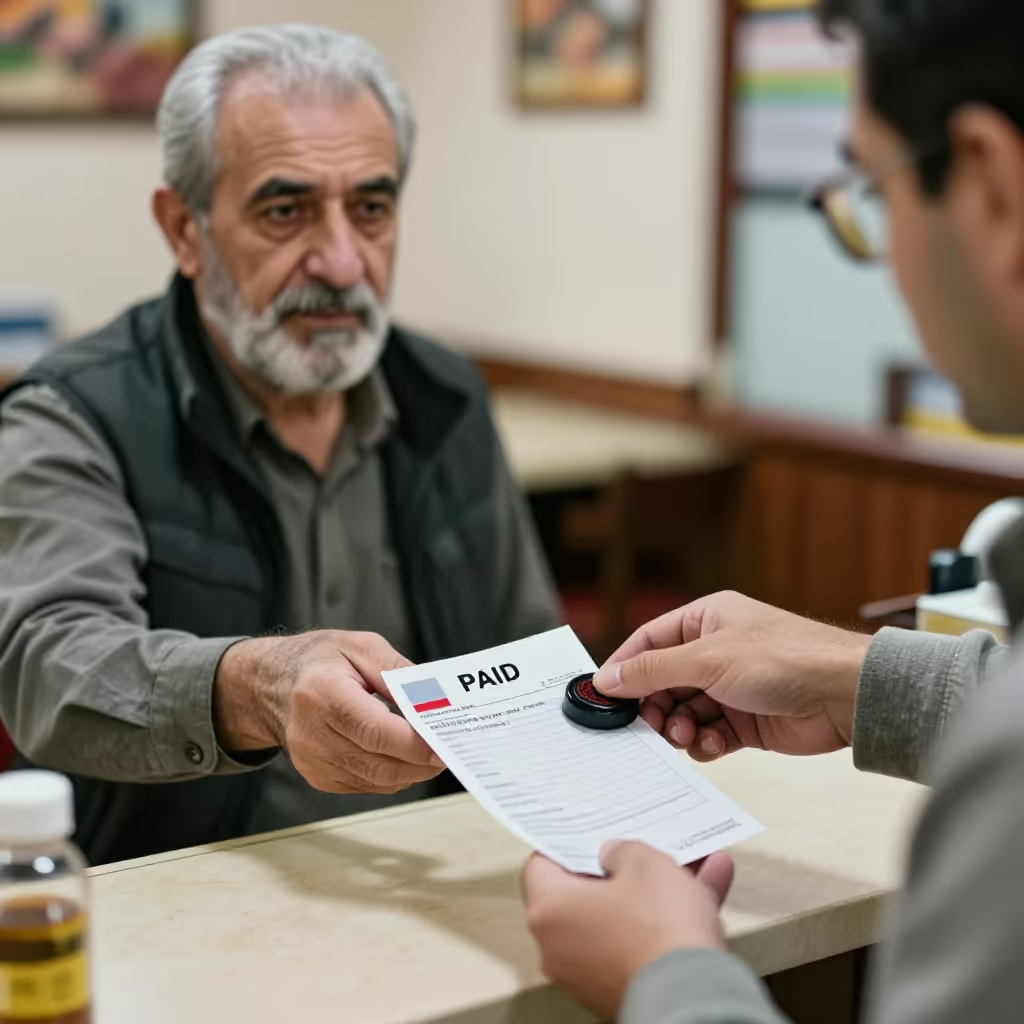
'bezahlen' and 'ausgleichen' can both mean that an outstanding money matter is dealt with. 'bezahlen' is more general and fits almost any situation in which you give money. 'ausgleichen' is used especially for a debt, an outstanding amount, or a bill that has not yet been dealt with. The word emphasizes that nothing is left outstanding afterward. The words can be confused when talking about bills. If you are simply giving money, 'bezahlen' fits; if you bring an outstanding debt down to zero, 'ausgleichen' works well.
ausgleichen
Herr Wolf gleicht die offene Rechnung noch vor dem Wochenende aus.
Mr. Wolf settles the outstanding bill before the weekend.
bezahlen
Morgen bezahlt meine Nachbarin die Reparatur in der Werkstatt.
Tomorrow my neighbor will pay for the repair at the garage.