

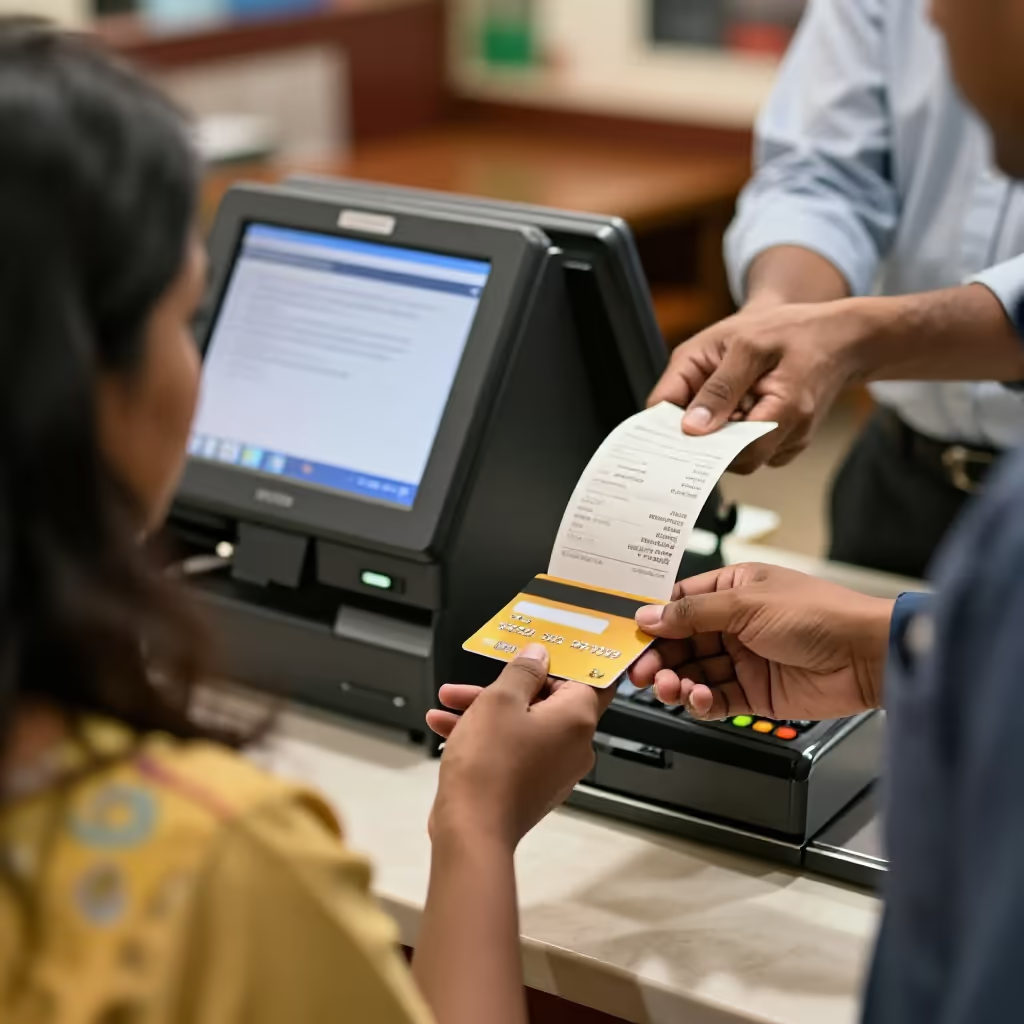
begleichen
to settle
To pay an outstanding debt, such as a bill or a claim, and thereby take care of it.
EXAMPLE
Ich muss noch die Rechnung für die Autoreparatur begleichen.
I still have to settle the bill for the car repair.
to settle
Loading your saved state.
to settle
To pay an outstanding debt, such as a bill or a claim, and thereby take care of it.
Ich muss noch die Rechnung für die Autoreparatur begleichen.
I still have to settle the bill for the car repair.
The verb 'begleichen' (to settle) has the prefix 'be-' and is therefore inseparable. The prefix remains firmly attached to the verb in all sentence forms and is not placed at the end of the sentence.
Er beglich die offene Summe sofort.
He settled the outstanding amount immediately.
The word 'begleichen' (to settle) contains the adjective 'gleich' (equal). To settle a debt means to make the situation 'gleich' (equal) or balanced again by paying what you owe.
Nachdem ich die Schulden beglichen hatte, war alles wieder in Ordnung.
After I had settled the debts, everything was all right again.
'Begleichen' (to settle) is almost always used with financial obligations. Typical objects are: 'eine Rechnung begleichen' (to settle a bill), 'Schulden begleichen' (to settle debts), 'eine Forderung begleichen' (to settle a claim), or 'einen Betrag begleichen' (to settle an amount).
Bitte begleichen Sie den fälligen Betrag innerhalb von 14 Tagen.
Please settle the due amount within 14 days.
This word belongs to formal or business language. You often find it in invoices, contracts, or official correspondence.
Der Kunde wurde aufgefordert, die ausstehende Summe umgehend zu begleichen.
The customer was asked to settle the outstanding amount immediately.
to pay
Bezahlen generally describes the act of paying for goods, a service, or a debt. Begleichen refers to an outstanding monetary debt and emphasizes that it is thereby settled; the word also sounds more formal. „Bezahlen“ fits a normal payment, while „begleichen“ can also be used for settling an outstanding bill.

Ich muss die offene Rechnung für den Einkauf heute begleichen.
I have to settle the outstanding bill for the shopping today.
Ich muss die Rechnung für den Einkauf heute bezahlen.
I have to pay the bill for the shopping today.