


ausrutschen
to slip
To lose your footing on a smooth or slippery surface and fall or start sliding.
EXAMPLE
Vorsicht, der Boden ist nass, damit du nicht ausrutschst!
Careful, the floor is wet, so you don't slip!
to slip
Loading your saved state.
to slip
To lose your footing on a smooth or slippery surface and fall or start sliding.
Vorsicht, der Boden ist nass, damit du nicht ausrutschst!
Careful, the floor is wet, so you don't slip!

to slip out
Colloquial for making an unintended mistake, especially saying something you did not mean to say.
In dem Interview ist ihm leider eine unbedachte Bemerkung ausgerutscht.
Unfortunately, a thoughtless remark slipped out during the interview.
'Ausrutschen' (to slip) is a separable verb; the prefix 'aus-' comes at the end in a main clause. Since it describes movement or a sudden change of state, the perfect tense is formed with the auxiliary verb 'sein' (to be).
Ich bin auf dem nassen Laub ausgerutscht.
I slipped on the wet leaves.
In the literal meaning, the slippery surface is usually indicated with the preposition 'auf' and the dative.
Der Postbote ist auf dem vereisten Gehweg ausgerutscht.
The mail carrier slipped on the icy sidewalk.
When someone accidentally says something wrong, a dative construction is used. The person is in the dative, while the thoughtless statement is the subject of the sentence.
Entschuldigung, diese Bemerkung ist mir nur so ausgerutscht.
Sorry, that remark just slipped out.
to slip / slide
Rutschen describes a gliding movement on a smooth surface without particularly emphasizing the initial moment. Ausrutschen, by contrast, emphasizes that a person loses secure footing and consequently starts sliding or falls. Use “rutschen” for the movement and “ausrutschen” when someone loses their footing.
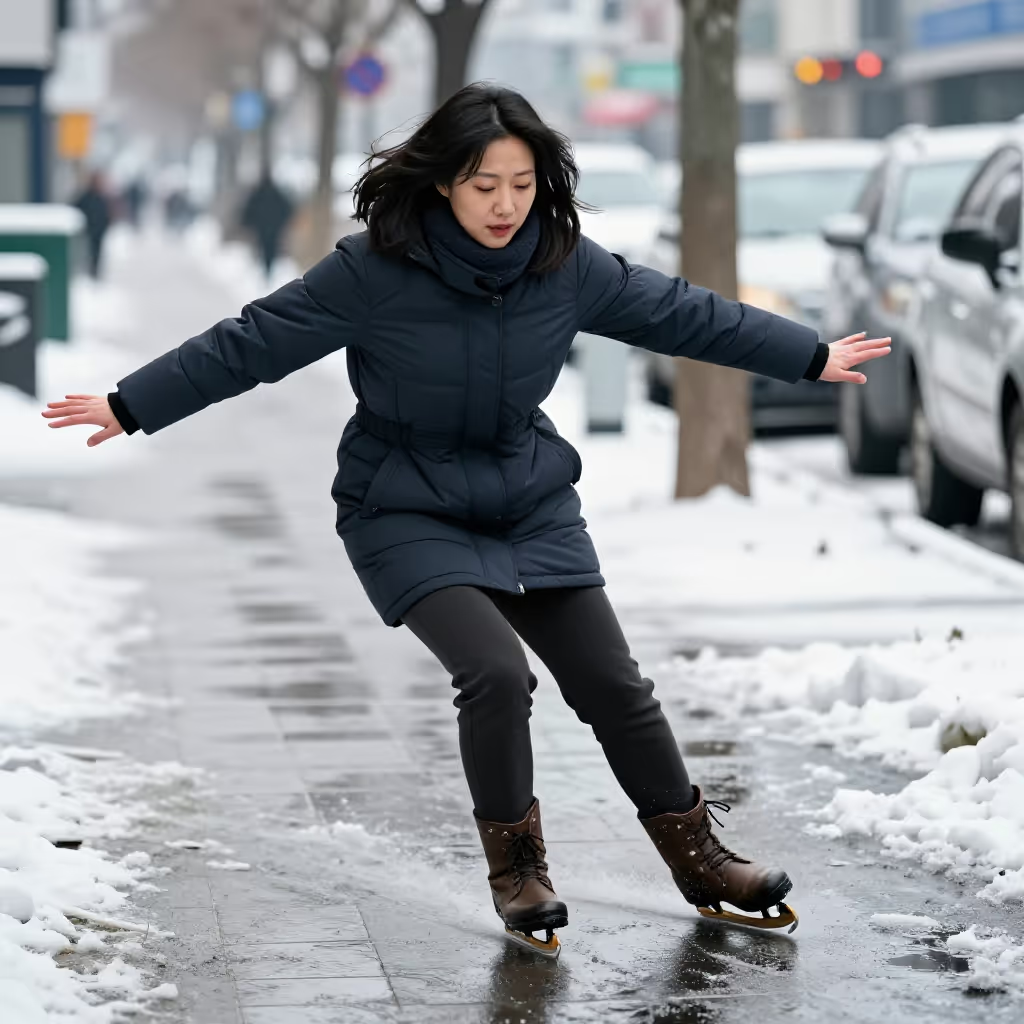
Auf dem eisigen Weg rutschte die Person aus und fiel hin.
On the icy path, the person slipped and fell.
Auf dem eisigen Weg rutschte die Person langsam ein Stück nach vorn.
On the icy path, the person slowly slid forward a short distance.