

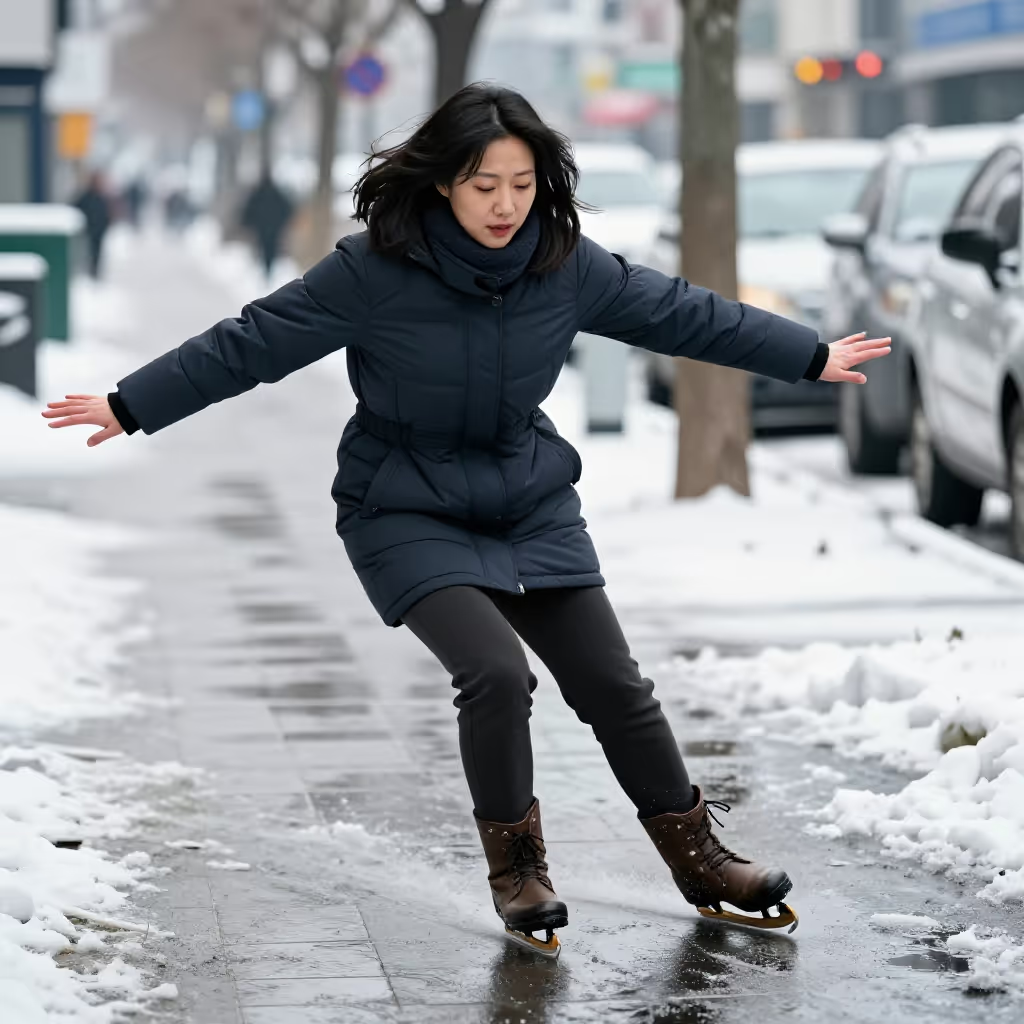
rutschen
to slip / slide
To move unintentionally and uncontrollably on a smooth surface; to glide.
EXAMPLE
Vorsicht, der Boden ist nass, man kann leicht rutschen!
Careful, the floor is wet; you can easily slip!
to slip / slide
Loading your saved state.
to slip / slide
To move unintentionally and uncontrollably on a smooth surface; to glide.
Vorsicht, der Boden ist nass, man kann leicht rutschen!
Careful, the floor is wet; you can easily slip!
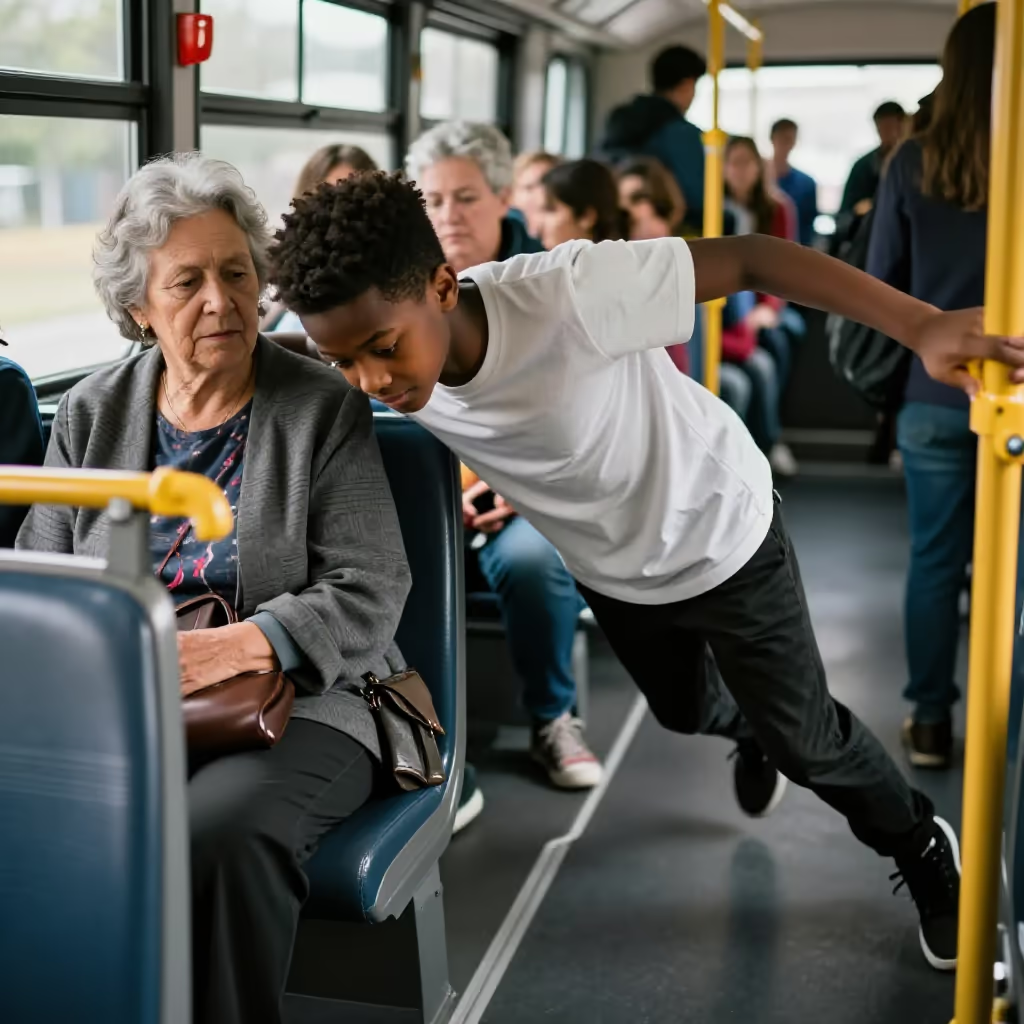
to scoot over
To change one's sitting position by shifting on the seat, often to make room.
Kannst du bitte ein Stück rutschen, damit ich mich auch noch hinsetzen kann?
Could you please scoot over a bit so I can sit down too?
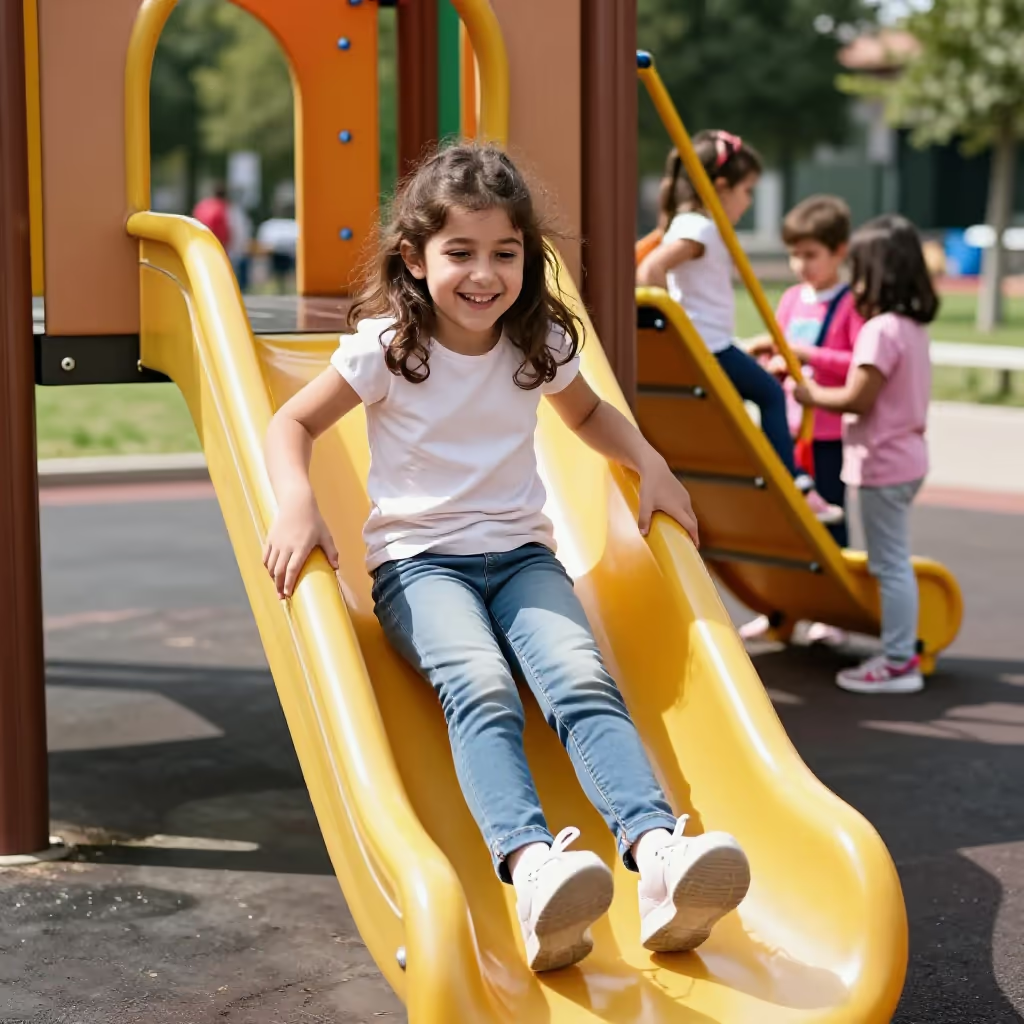
to slide
To move downward for fun on a track designed for this purpose (a slide).
Die Kinder lieben es, auf dem Spielplatz die große Wellenrutsche zu rutschen.
The children love sliding down the big wave slide at the playground.

to slip
Refers to clothing or objects that lose their position and slide downward.
Meine Brille rutscht mir ständig von der Nase.
My glasses keep slipping off my nose.

to slip into
To get into a negative situation or a bad state.
Nach dem Jobverlust ist er in eine tiefe Krise gerutscht.
After losing his job, he slipped into a deep crisis.

Happy New Year
A fixed expression used to wish someone a good transition into the new year.
Wir sehen uns erst nächstes Jahr wieder – bis dahin einen guten Rutsch!
We won't see each other again until next year—until then, Happy New Year!
As a verb of movement or change of state, 'rutschen' (to slip/slide) generally forms the perfect tense with the auxiliary verb 'sein' (to be).
Er ist auf der nassen Treppe gerutscht.
He slipped on the wet stairs.
'Rutschen' (to slip/slide) has a literal meaning (to glide on a surface) and a figurative meaning (to get into a state). The figurative meaning is almost always used for negative states.
Das Kind ist die nasse Wiese hinuntergerutscht.
The child slid down the wet meadow.
To ask someone to make room on a bench or sofa, the colloquial request 'Rutsch mal ein Stück!' (Scoot over a bit!) is often used.
Rutsch mal ein bisschen, dann passen wir alle auf das Sofa.
Scoot over a little, then we'll all fit on the sofa.
This meaning is often used for things that do not stay in place. Typical subjects are 'die Brille' (glasses), 'die Hose' (pants), or 'die Socken' (socks).
Die Träger meines Rucksacks rutschen immer von den Schultern.
The straps of my backpack always slip off my shoulders.
To express that someone gets into a negative situation, 'rutschen' (to slip) is used with the preposition 'in' and the accusative.
Ohne feste Arbeit ist er schnell in finanzielle Probleme gerutscht.
Without steady work, he quickly slipped into financial problems.
The expression 'einen guten Rutsch' is a fixed greeting used only shortly before New Year's Eve. It wishes someone a good transition into the new year.
Wir wünschen euch allen einen guten Rutsch!
We wish you all a Happy New Year!
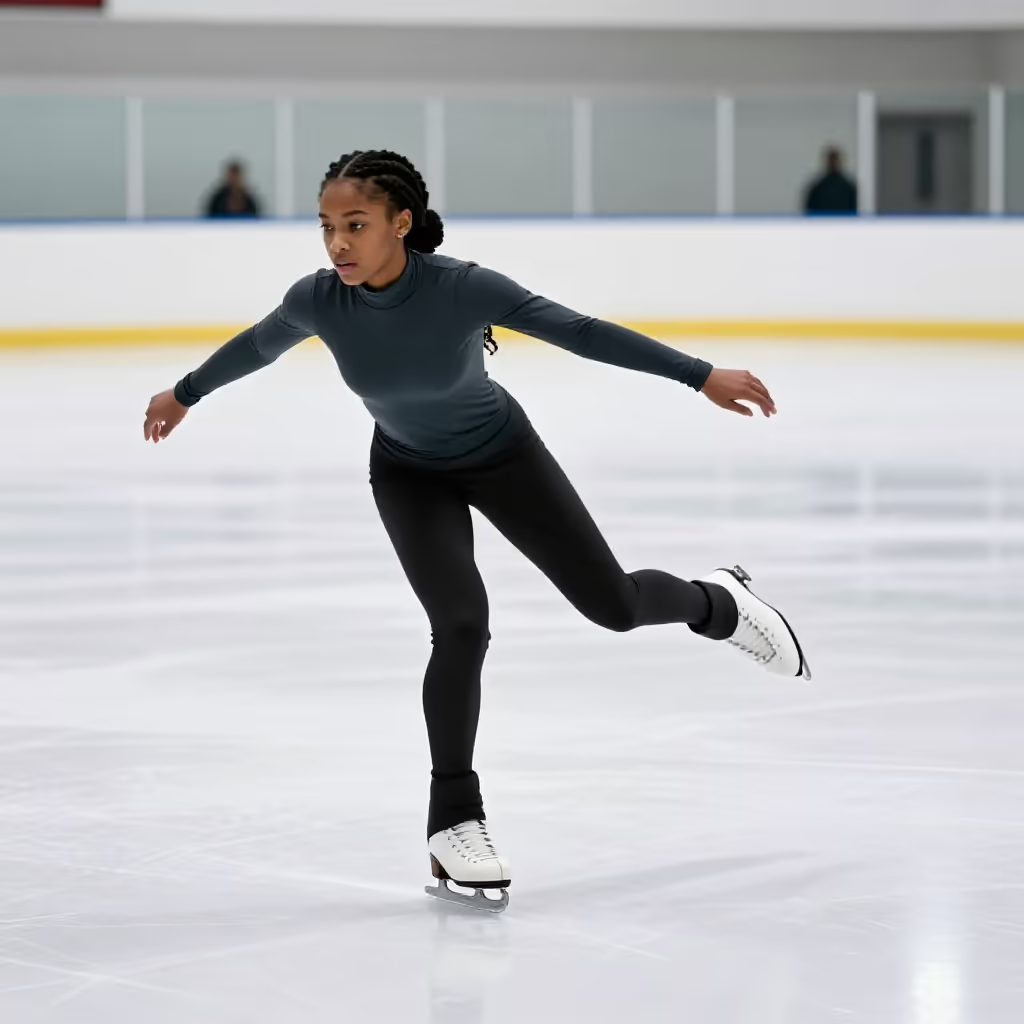
to glide
Rutschen and gleiten both describe movement across a surface. Gleiten usually sounds smooth, steady, and controlled, whereas rutschen generally refers to an unintended movement caused by a lack of traction. Use “gleiten” for a smooth movement and “rutschen” for an unintended shift.
Auf dem nassen Boden rutschte der Karton langsam zur Seite.
On the wet floor, the box slowly slid to the side.
Auf dem glatten Eis glitt der Karton langsam zur Seite.
On the smooth ice, the box slowly glided to the side.