

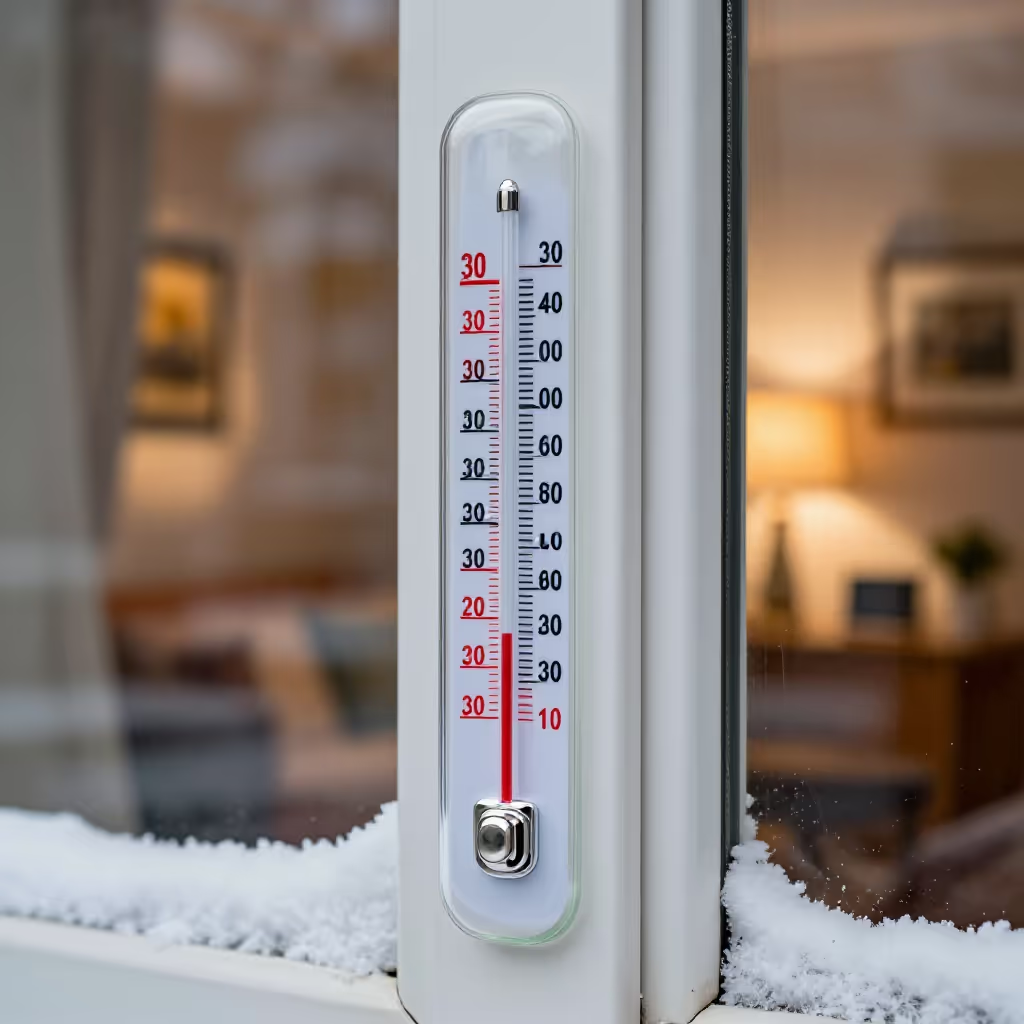
The temperature of the air outdoors, as opposed to the temperature inside an enclosed room.
example
Die Außentemperatur ist heute Nacht auf minus fünf Grad gesunken.
The outside temperature dropped to minus five degrees tonight.
Usage tips
Word composition
The word is clearly composed of 'außen' (outside) and 'Temperatur' (temperature). The 's' in the middle is a linking -s, which connects the two parts of the word.
EXAMPLE
Die Anzeige im Auto zeigt die aktuelle Außentemperatur.
The display in the car shows the current outside temperature.
Typical verbs
Common verbs used in connection with 'Außentemperatur' (outside temperature) are 'steigen' (to rise), 'sinken' (to drop), 'fallen' (to fall), and 'betragen' (to be / amount to). You can also 'messen' (measure) the outside temperature.
EXAMPLE
Die Außentemperatur beträgt aktuell 25 Grad Celsius.
The outside temperature is currently 25 degrees Celsius.
Use with 'bei'
To express a condition, the preposition 'bei' is often used. This construction is very typical in weather reports or technical instructions.
EXAMPLE
Bei einer Außentemperatur von über 30 Grad sollte man viel trinken.
At an outside temperature of over 30 degrees, you should drink plenty of fluids.
Compare with
antonym · confusable
Außentemperatur vs Raumtemperatur
room temperature
'Raumtemperatur' and 'Außentemperatur' are both temperatures, but they refer to different places. 'Raumtemperatur' means the temperature in an enclosed room, for example in an apartment or office. 'Außentemperatur' means the air temperature outside. So the words stand in clear contrast: inside and outside. They can be confused because both may have to do with weather, heating, or clothing. Just ask yourself: if it is about a room, use 'Raumtemperatur'; if it is about outdoors, use 'Außentemperatur'.
Außentemperatur
Im Winter zeigt das Auto oft eine sehr niedrige Außentemperatur an.
In winter, the car often shows a very low outside temperature.
Raumtemperatur
Die Schokolade soll bei Raumtemperatur weich werden.