

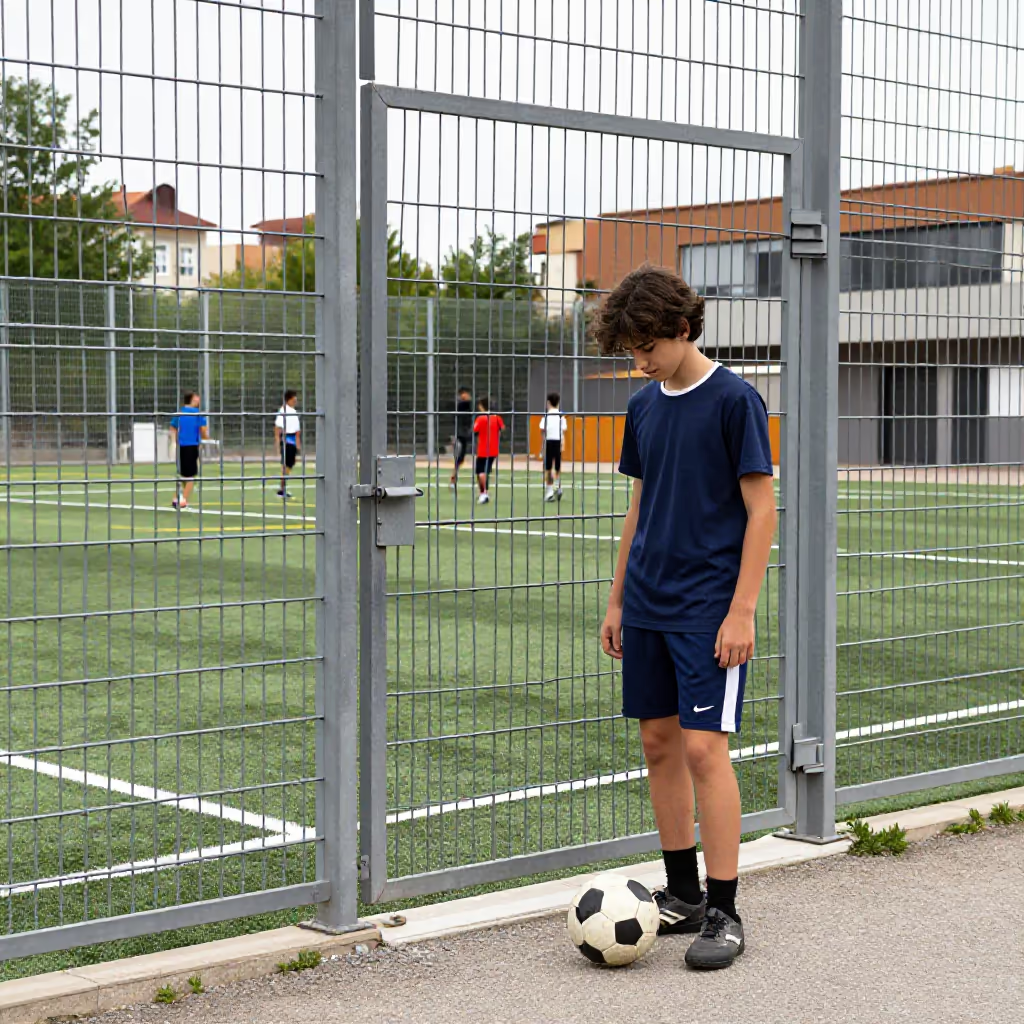
außerhalb
outside / outside of
Describes a position or place that is not within the boundaries of something. Takes the genitive.
EXAMPLE
Wir haben ein kleines Haus außerhalb der Stadt gemietet.
We rented a small house outside the city.
outside / outside of
Loading your saved state.
outside / outside of
Describes a position or place that is not within the boundaries of something. Takes the genitive.
Wir haben ein kleines Haus außerhalb der Stadt gemietet.
We rented a small house outside the city.

outside
Indicates a period of time before or after which something happens. Takes the genitive.
Bitte rufen Sie nicht außerhalb unserer Geschäftszeiten an.
Please do not call outside our business hours.

from outside
Used as an adverb to refer to the outside of something.
Das Schloss kann man nur von außerhalb besichtigen.
The castle can only be viewed from outside.
The word is composed of `außen` (outside) and `halb` (half/side). It describes the area 'around the outside', which makes the meaning 'not inside of' logical.
Der Parkplatz befindet sich außerhalb des Firmengeländes.
The parking lot is located outside the company premises.
`außerhalb` (outside/outside of) is a preposition that requires the genitive. The noun that follows `außerhalb` must be in the genitive.
Wir treffen uns außerhalb des Kinos.
We'll meet outside the cinema.
Especially in spoken language, the genitive after `außerhalb` (outside/outside of) is often replaced by the combination `von` + dative. This form is widespread, but less common in formal texts.
Sein Büro liegt außerhalb von der Innenstadt.
His office is outside the city center.
When `außerhalb` (from outside) is used as an adverb, it appears without a noun in the genitive. It then means 'on the outside' or 'outside' and refers to a place.
Von außerhalb sieht man nicht, wie groß das Haus wirklich ist.
From outside, you can't see how big the house really is.
except / besides
Außer and außerhalb can both exclude a period of time. Außer names an exception within a stated timeframe, while außerhalb places the action temporally beyond that timeframe. Use außer for individual excluded times and außerhalb for the period before or after a given timeframe.

Außerhalb der Öffnungszeiten können Kunden das Büro nicht betreten.
Customers cannot enter the office outside opening hours.
Außer sonntags ist das Büro täglich von neun bis fünf geöffnet.
Except on Sundays, the office is open daily from nine to five.