


draußen
outside
Refers to a place outside an enclosed space, such as a house or a vehicle.
EXAMPLE
Die Kinder spielen draußen im Garten.
The children are playing outside in the garden.
outside / outdoors
Loading your saved state.
outside
Refers to a place outside an enclosed space, such as a house or a vehicle.
Die Kinder spielen draußen im Garten.
The children are playing outside in the garden.

outdoors
Describes a place out in nature, away from cities and buildings.
Am Wochenende sind wir gerne draußen in den Bergen unterwegs.
On the weekend, we like to be outdoors in the mountains.
'Draußen' (outside) is an adverb of place and answers the question 'Wo?' (where?). It describes a position, not movement in a direction.
Wo ist der Hund? – Er ist draußen im Garten.
Where is the dog? – He is outside in the garden.
The word 'draußen' (outside) is an old contraction of 'da' (there) and 'außen' (outside). It literally means 'at this place that is outside.'
Es ist so schön heute, lass uns draußen essen.
It's so beautiful today; let's eat outside.
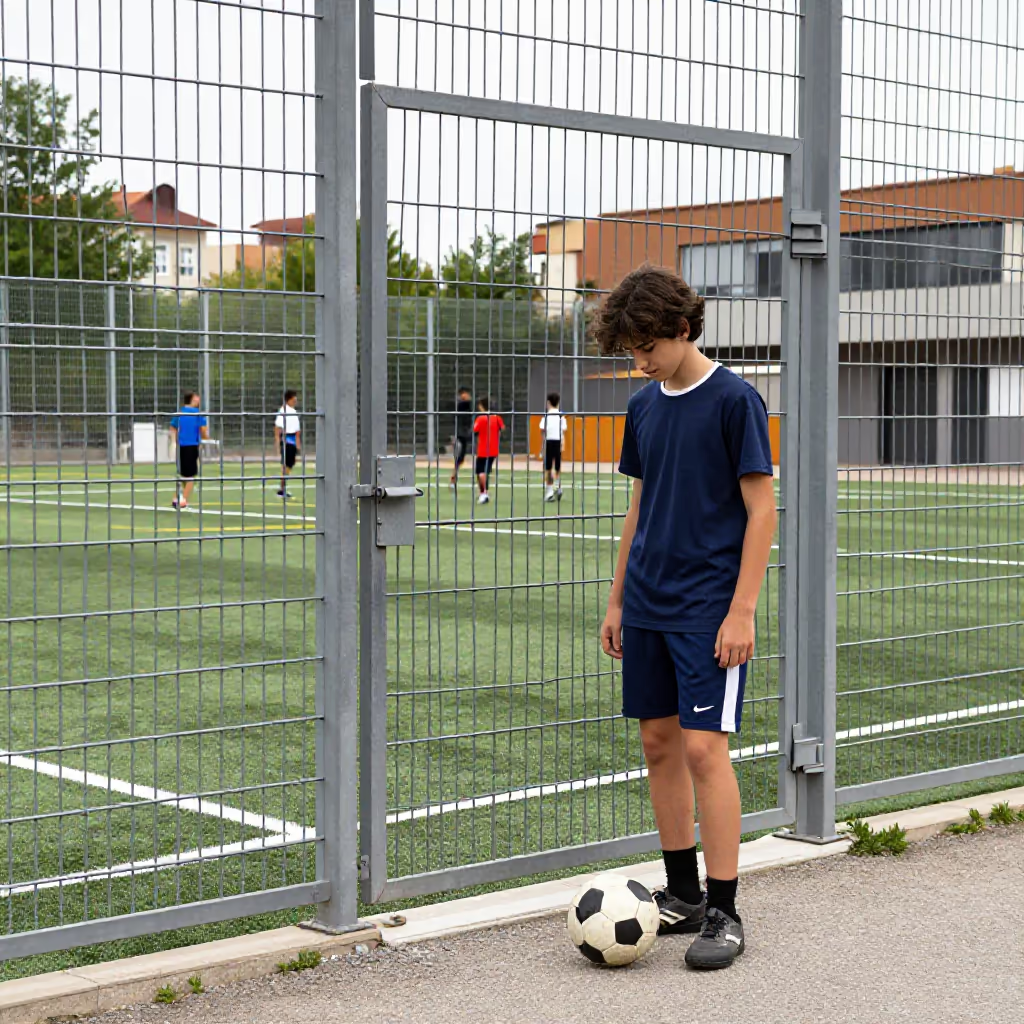
In everyday language, 'draußen' (outside) is often used with verbs of being or waiting. Typical phrases are 'draußen bleiben' (to stay outside), 'draußen warten' (to wait outside), or 'draußen vor der Tür stehen' (to stand outside in front of the door).
Bitte warten Sie einen Moment draußen, der Arzt kommt gleich.
Please wait outside for a moment; the doctor will be here shortly.
When 'draußen' (outside/outdoors) is used in the context of hobbies, nature, or leisure activities like hiking or camping, it often means 'out in nature.' Additions like 'in den Bergen' (in the mountains) or 'im Wald' (in the forest) make this clear.
Ich liebe es, am Wochenende einfach nur draußen zu sein und die Natur zu genießen.
I love just being outdoors on the weekend and enjoying nature.
outside / outside of
Außerhalb and draußen can both refer to a place outdoors. Außerhalb names the specific boundary, using the genitive, beyond which someone is located. Draußen refers to the outside space based on the situation at hand and does not need to state this boundary explicitly.
Mia wartet draußen vor dem Bahnhofsgebäude auf ihre Freundin.
Mia is waiting outside in front of the station building for her friend.
Mia wartet außerhalb des Bahnhofsgebäudes auf ihre Freundin.
Mia is waiting for her friend outside the station building.