


austreten
to leave
To officially end membership in an organization, association, party, or religious community.
EXAMPLE
Sie hat beschlossen, aus der Kirche auszutreten.
She decided to leave the church.
to leave / to leak / to stamp out
Loading your saved state.
to leave
To officially end membership in an organization, association, party, or religious community.
Sie hat beschlossen, aus der Kirche auszutreten.
She decided to leave the church.
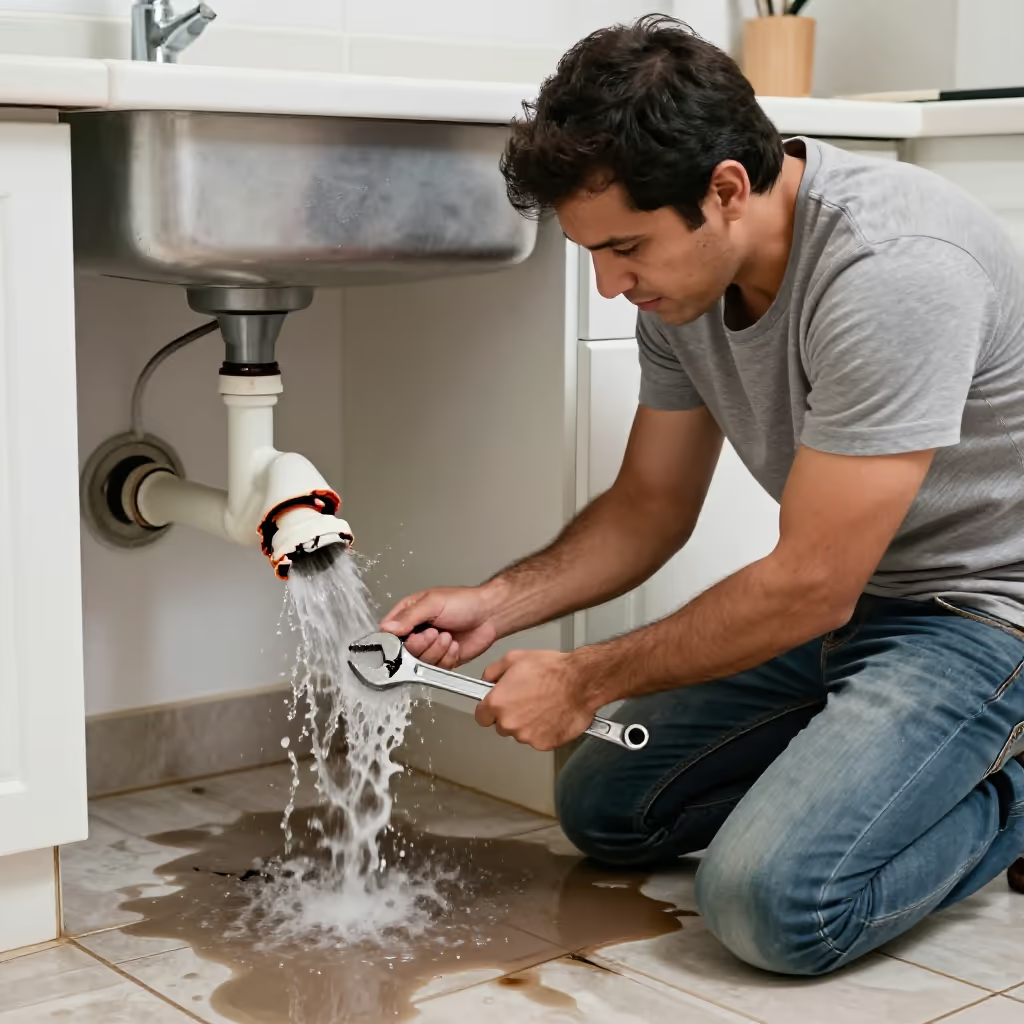
to leak
The uncontrolled escape of liquids or gases from a container or pipe.
Aus dem beschädigten Rohr ist Gas ausgetreten.
Gas leaked from the damaged pipe.

to step out
A colloquial, euphemistic expression for going to the toilet.
Entschuldigen Sie mich bitte kurz, ich muss mal austreten.
Please excuse me for a moment, I need to step out.

to stamp out
To extinguish something that is burning or glowing, such as a cigarette or a small fire, with one's feet.
Bitte treten Sie Ihre Zigarette sorgfältig aus, bevor Sie den Wald betreten.
Please stamp out your cigarette carefully before entering the forest.

to overflow
The overflowing of a river or stream over its banks, usually because of heavy rain or melting snow.
Nach den heftigen Regenfällen ist der Fluss an mehreren Stellen ausgetreten.
After the heavy rainfall, the river overflowed in several places.

to kick out
The action of a horse or similar animal striking forcefully backward with its hind legs.
Geh nicht zu nah hinter das Pferd, es könnte austreten.
Don't go too close behind the horse; it could kick out.
'Austreten' (to leave/leak/stamp out) is a separable verb. The prefix 'aus-' stands at the end of the sentence in main clauses. In subordinate clauses and in the infinitive, the verb stays together.
Er tritt morgen aus dem Verein aus.
He is leaving the club tomorrow.
The perfect tense of 'austreten' is almost always formed with the auxiliary verb 'sein', because it describes a change of state or movement. For example: 'Das Wasser ist ausgetreten.' (The water has leaked out/overflowed.)
Nach dem starken Regen ist der Bach ausgetreten.
After the heavy rain, the stream overflowed.
When ending a membership, you use the structure 'aus etwas (Dativ) austreten' (to leave something, with the dative after aus). Typical organizations are 'die Kirche' (the church), 'ein Verein' (an association/club), or 'eine Partei' (a party).
Mein Bruder ist letztes Jahr aus dem Fußballverein ausgetreten.
My brother left the football club last year.
When the subject of the sentence is a liquid (oil, water) or a gas, 'austreten' means 'entweichen' (to escape) or 'auslaufen' (to leak out). The subject here is always impersonal.
Achtung, aus dem Fass tritt eine unbekannte Flüssigkeit aus.
Careful, an unknown liquid is leaking from the barrel.
In the meaning 'zur Toilette gehen' (to go to the toilet), 'austreten' is a euphemism, meaning a nicer indirect expression. It sounds somewhat more polite and formal, but it is rather rare in everyday use.
Kann ich kurz austreten, bevor der Film anfängt?
Can I step out briefly before the film starts?
Only in the meaning 'etwas mit den Füßen löschen' (to put something out with one's feet) is 'austreten' transitive and requires an accusative object. You stamp *something* out.
Er hat das kleine Lagerfeuer mit seinen Stiefeln ausgetreten.
He stamped out the small campfire with his boots.
to extinguish / delete
Löschen generally says that something is no longer burning or glowing, without naming a specific method. Austreten, by contrast, means putting something out with your feet. For a cigarette or a small fire, austreten is therefore appropriate only when a foot is actually used.
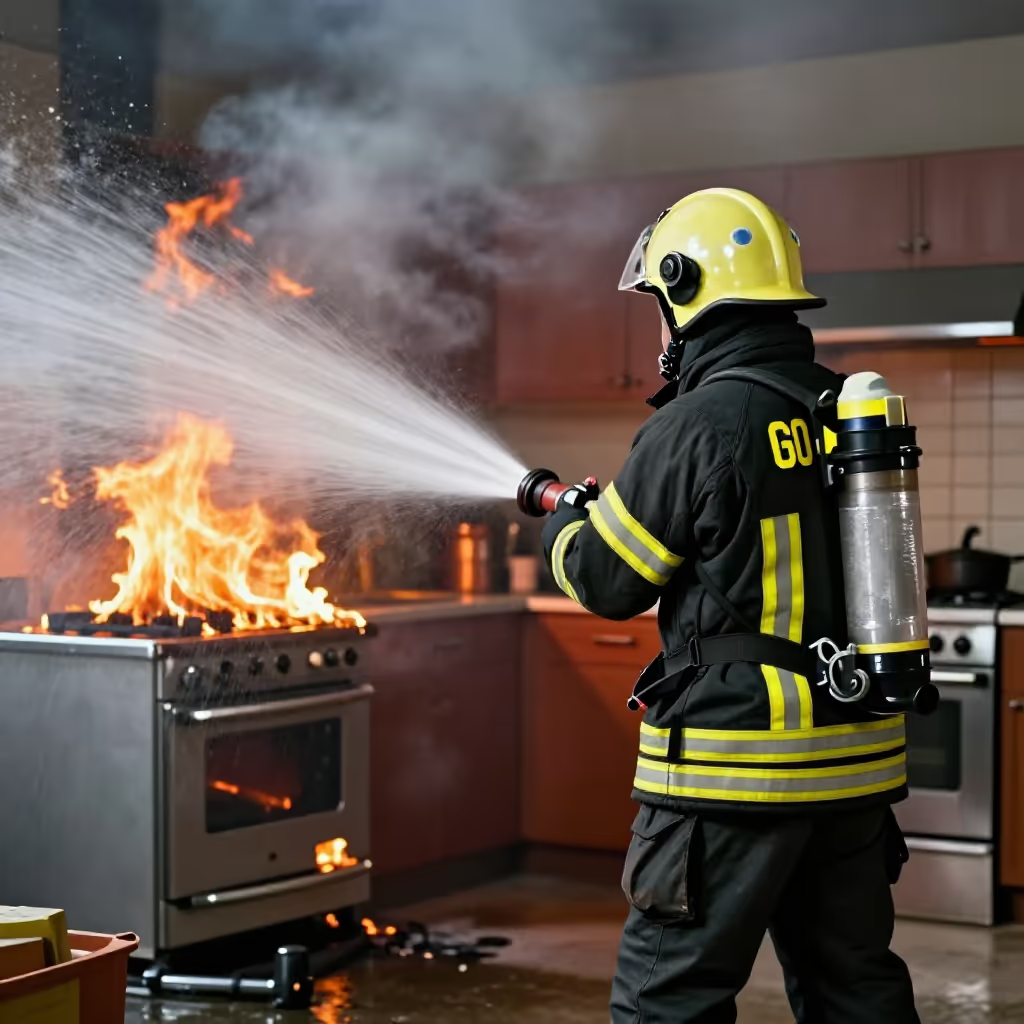
Nina tritt die glühende Zigarette mit dem Schuh aus.
Nina stamps out the glowing cigarette with her shoe.
Nina löscht die glühende Zigarette mit etwas Wasser.
Nina puts out the glowing cigarette with some water.