

löschen
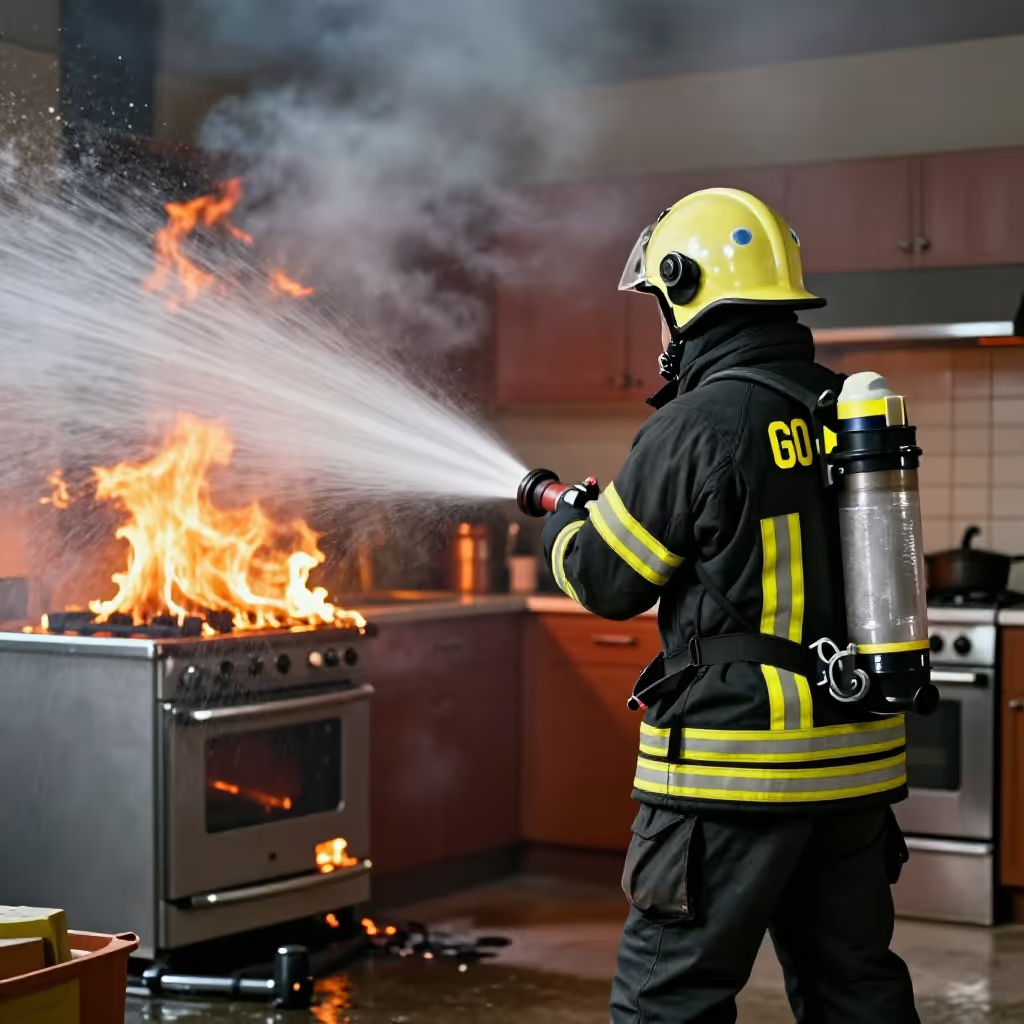
to extinguish
To put out a fire or blaze, usually with water or a fire extinguisher.
EXAMPLE
Die Feuerwehr rückte aus, um den Wohnungsbrand zu löschen.
The fire department was called out to extinguish the apartment fire.
to extinguish / delete
Loading your saved state.
to extinguish
To put out a fire or blaze, usually with water or a fire extinguisher.
Die Feuerwehr rückte aus, um den Wohnungsbrand zu löschen.
The fire department was called out to extinguish the apartment fire.

to delete
To remove data, files, or information from a digital storage medium.
Ich muss dringend ein paar alte Fotos löschen, mein Speicher ist voll.
I urgently need to delete a few old photos; my storage is full.

to quench
To satisfy thirst by drinking something.
Nach der Wanderung löschten wir unseren Durst mit einer kalten Limonade.
After the hike, we quenched our thirst with a cold lemonade.
to delete
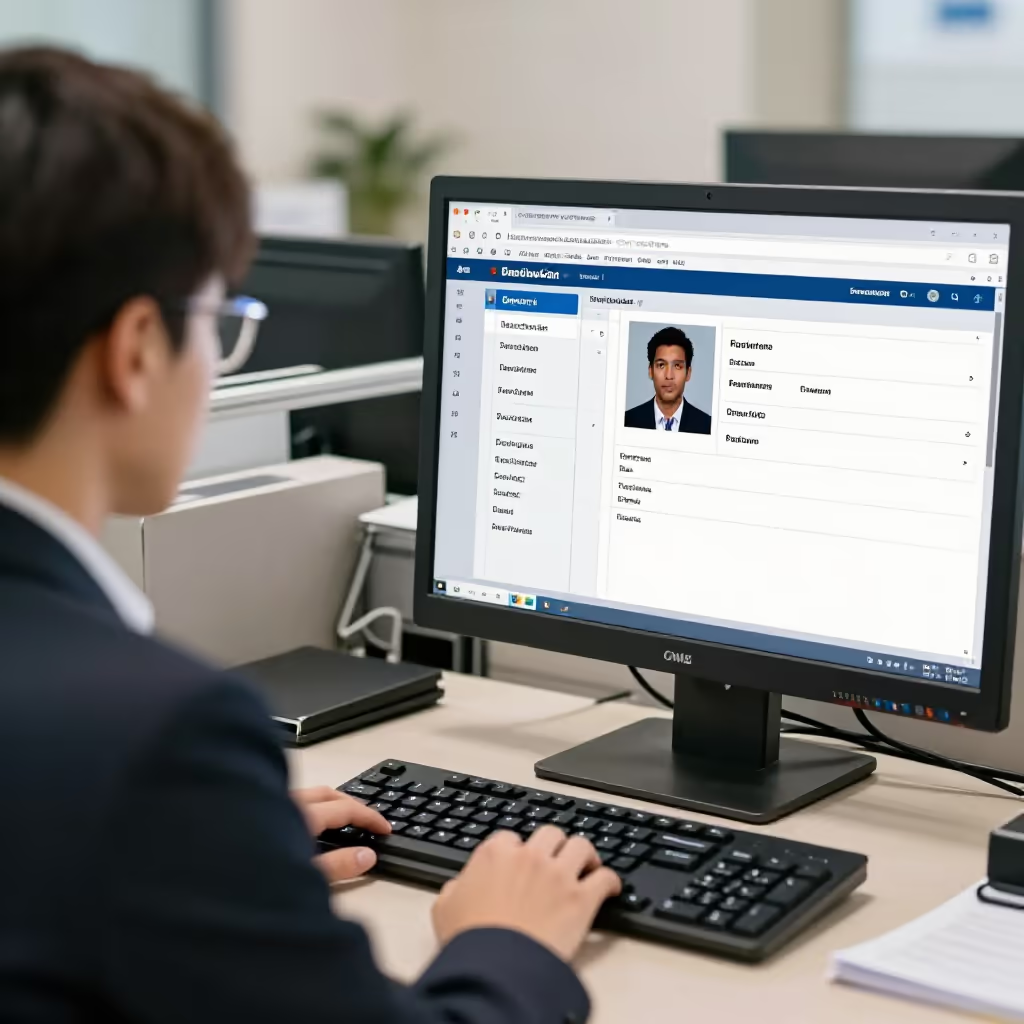
To cancel an entry, registration, or account and remove it from a directory.
Wenn Sie den Newsletter nicht mehr erhalten möchten, können Sie hier Ihre E-Mail-Adresse löschen lassen.
If you no longer wish to receive the newsletter, you can have your email address deleted here.

to erase
To remove something written or drawn, for example from a board.
Der Lehrer bat einen Schüler, die Tafel zu löschen.
The teacher asked a student to erase the board.
The exact meaning of 'löschen' (to extinguish/delete/erase) almost always depends on the object. Pay attention to what is being 'gelöscht' (extinguished/deleted/erased): a fire, a file, thirst, or an account.
Die Feuerwehr musste den Brand löschen.
The fire department had to extinguish the blaze.
In the context of fire, 'löschen' (to extinguish) is often used with the nouns 'Brand' (fire/blaze), 'Feuer' (fire), or 'Kerze' (candle). The typical subject performing this action is the fire department.
Die Anwohner versuchten, das kleine Feuer selbst zu löschen.
The residents tried to extinguish the small fire themselves.
When it comes to computers or mobile phones, 'löschen' (to delete) always means removing digital information. Typical objects are 'Datei' (file), 'Foto' (photo), 'Nachricht' (message), or 'App' (app).
Bitte lösche die Nachricht, nachdem du sie gelesen hast.
Please delete the message after you have read it.
The combination 'den Durst löschen' (to quench one's thirst) is a fixed expression. It is almost always used exactly in this form and sounds somewhat elevated.
Nach der langen Radtour mussten wir dringend unseren Durst löschen.
After the long bike ride, we urgently needed to quench our thirst.
On the internet or with services, 'löschen' (to delete) is used to remove an 'Konto' (account), a 'Profil' (profile), or an 'Eintrag' (entry) from a system.
Du kannst dein Benutzerkonto jederzeit in den Einstellungen löschen.
You can delete your user account at any time in the settings.
to remove
Entfernen is general and can mean that a file is only taken out of a list or view. For digital files, Löschen normally means that the stored data is removed. The key question is therefore whether only the display or the file itself is supposed to disappear.
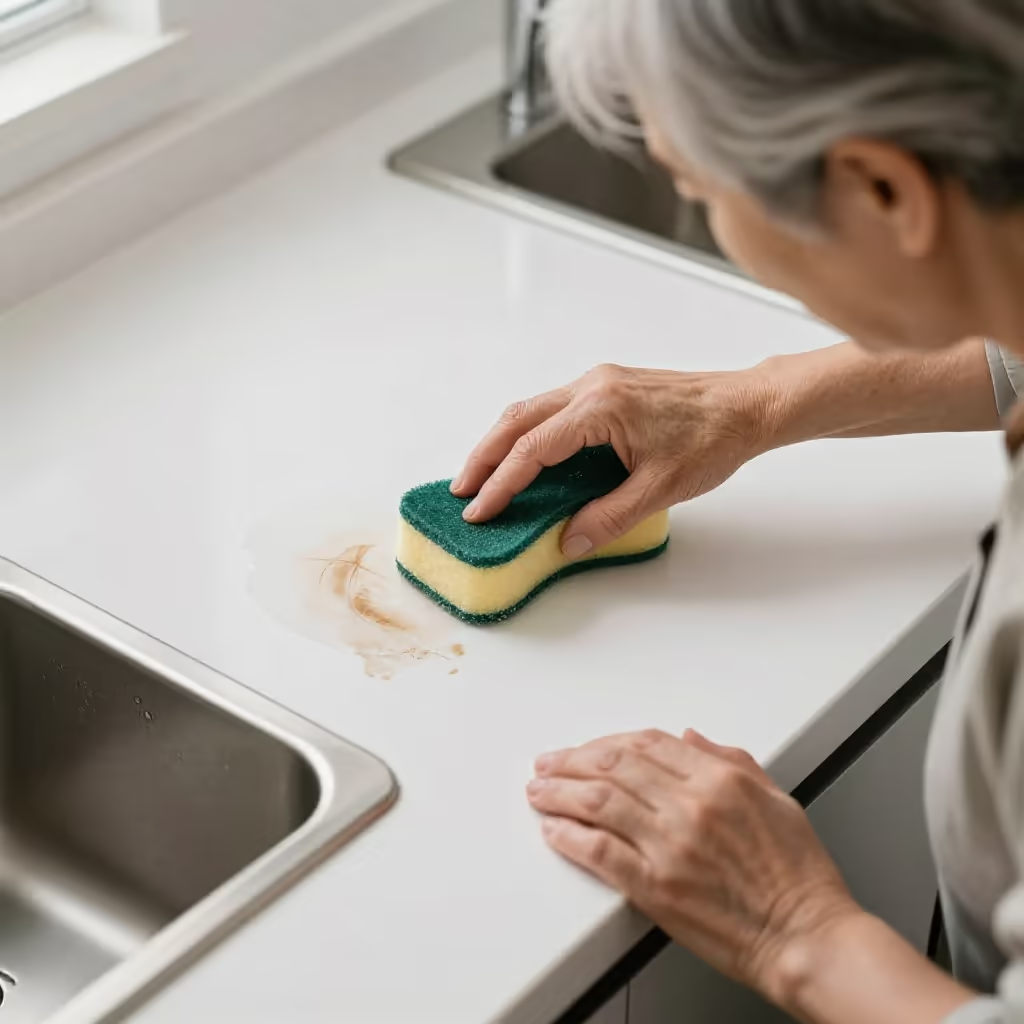
Ich lösche die Datei endgültig vom Laptop.
I am permanently deleting the file from the laptop.
Ich entferne die Datei nur aus der Favoritenliste.
I am only removing the file from the favorites list.