

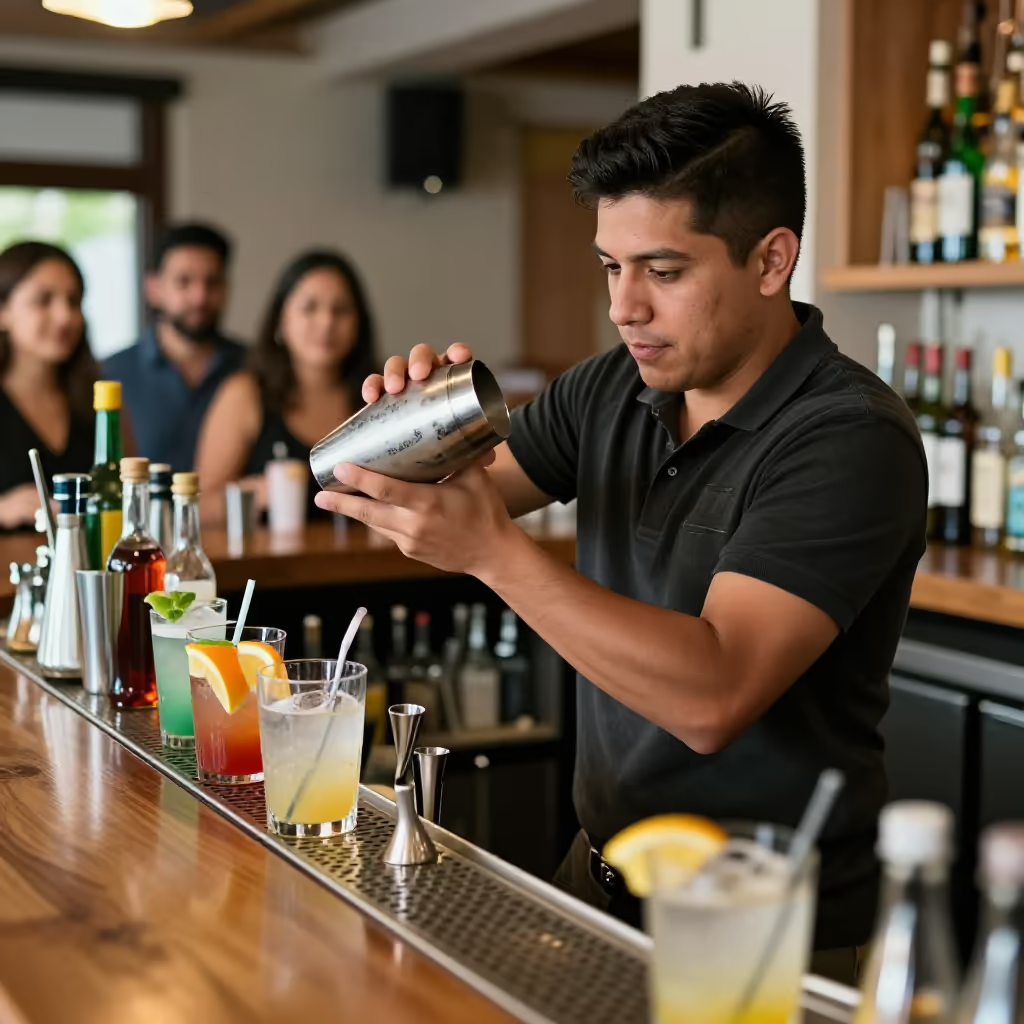
A person who professionally prepares alcoholic and non-alcoholic drinks in a bar or restaurant and serves them to guests.
example
Der Barkeeper mixte uns einen hervorragenden Cocktail nach unserem Geschmack.
The bartender mixed us an excellent cocktail to our taste.
Usage tips
Word origin
'Barkeeper' (bartender) is a word borrowed directly from English (an Anglicism). It is made up of 'Bar' and 'keeper' (guardian, manager).
EXAMPLE
In vielen modernen Bars arbeiten professionelle Barkeeper.
Professional bartenders work in many modern bars.
Typical activities
A bartender is an active role. Typical verbs that describe their work are 'Getränke mixen' (to mix drinks), 'Cocktails zubereiten' (to prepare cocktails), and 'Gäste bedienen' (to serve guests).
EXAMPLE
Der Barkeeper mixt die besten Cocktails der Stadt.
The bartender mixes the best cocktails in the city.
Ordering from the bartender
When you order something from a bartender, you use the preposition 'bei' with the dative. So you order 'beim Barkeeper' (from the bartender).
EXAMPLE
Ich habe beim Barkeeper zwei Bier bestellt.
I ordered two beers from the bartender.
Compare with
near_synonym · confusable
Barkeeper vs Kellner
waiter
'der Kellner' and 'der Barkeeper' both work with guests in a restaurant, café, or bar. The difference lies in the task. A waiter usually serves guests at the table, takes orders, and brings food or drinks. A bartender is more likely to work at the bar and prepare drinks, especially cocktails or other mixed drinks. The words can be confused because both may bring or pour drinks. When it is about table service, 'Kellner' fits better. When it is about mixing and serving drinks at the bar, 'Barkeeper' is more precise.
Barkeeper
Der Barkeeper mixt für die Gäste zwei alkoholfreie Cocktails.
The bartender mixes two non-alcoholic cocktails for the guests.
Kellner
Der Kellner bringt uns die Speisekarte und fragt nach den Getränken.
The waiter brings us the menu and asks about drinks.