

der Bast
bast
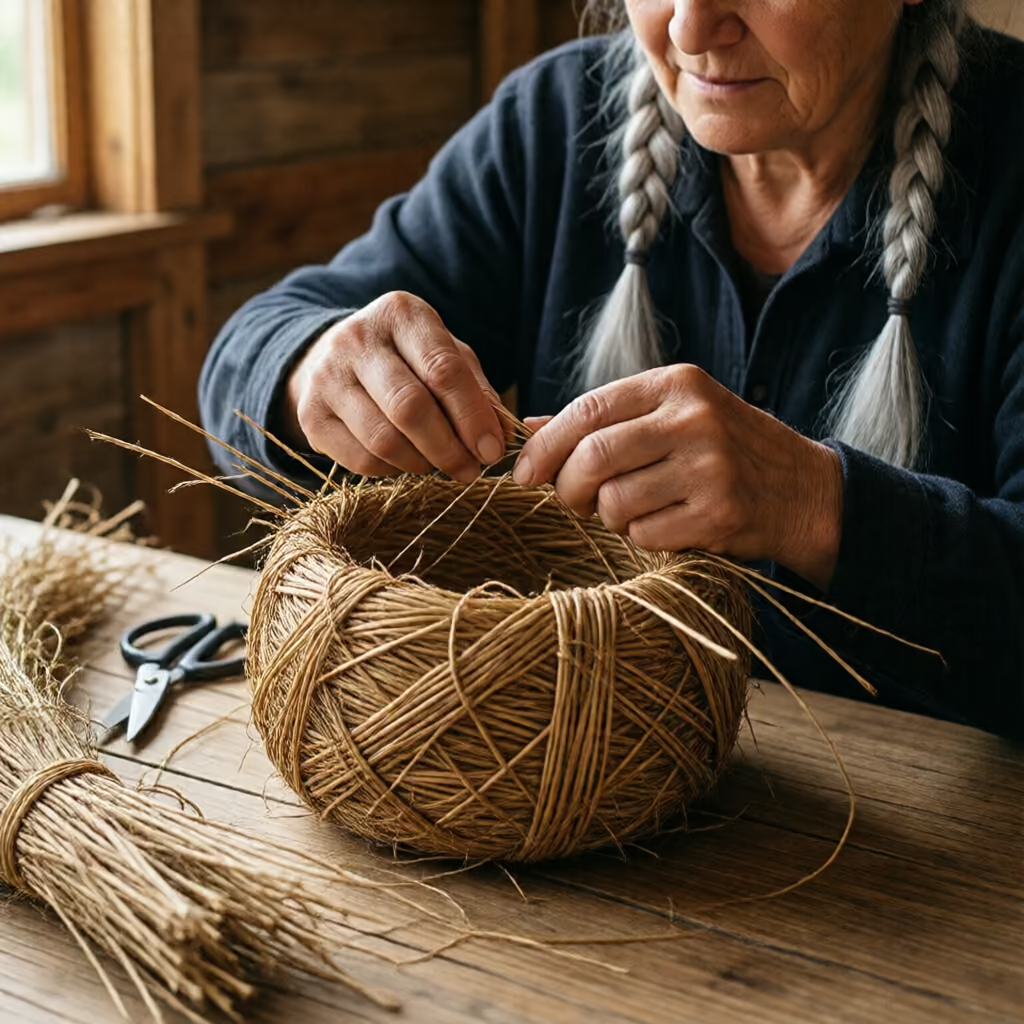
A material made from tough plant fibers, used for tying, weaving, and handicrafts.
EXAMPLE
Sie hat einen kleinen Korb aus Bast geflochten.
She wove a small basket out of bast.
bast
der Bast, die Baste
Loading your saved state.
bast
A material made from tough plant fibers, used for tying, weaving, and handicrafts.
Sie hat einen kleinen Korb aus Bast geflochten.
She wove a small basket out of bast.
bast
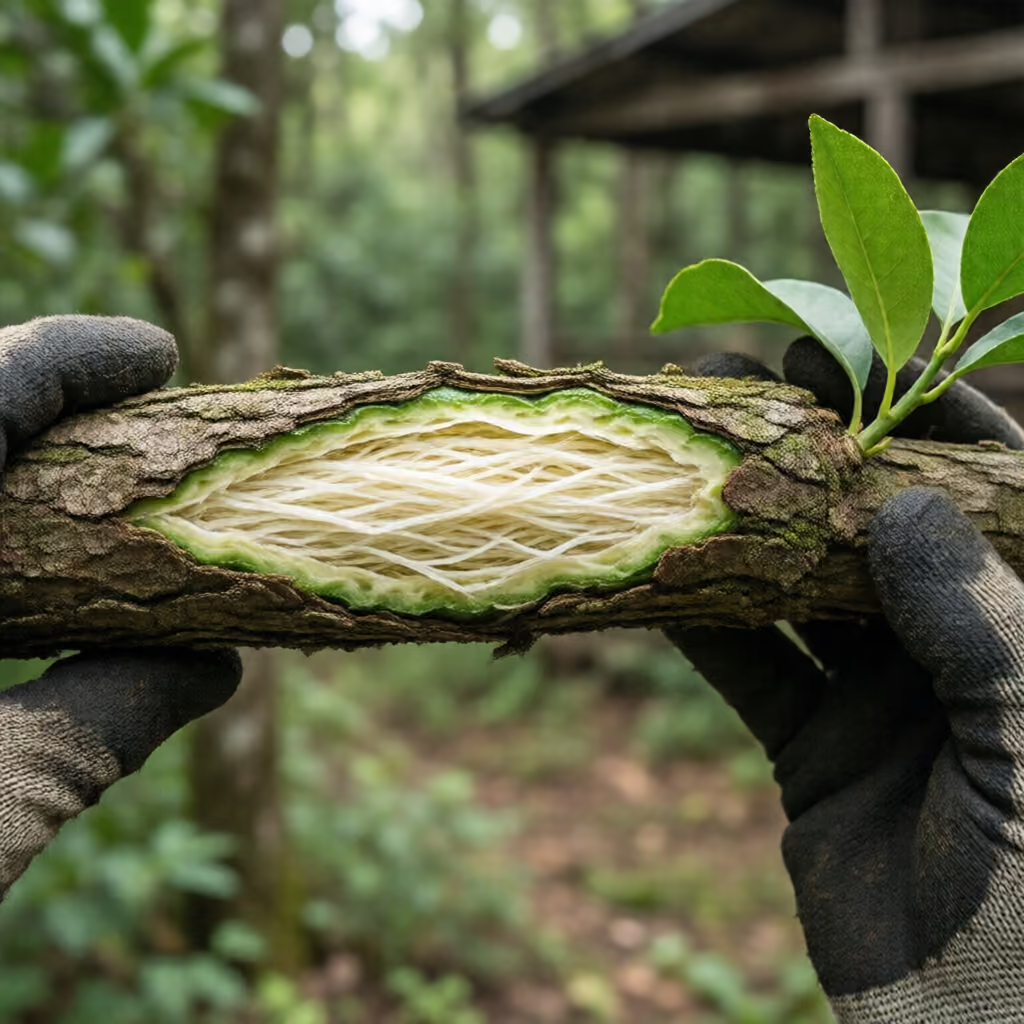
The fibrous inner layer of the bark of trees and other woody plants. It mainly transports nutrients produced in the leaves.
Der Bast der Linde enthält lange, zähe Fasern.
The bast of the lime tree contains long, tough fibers.
velvet
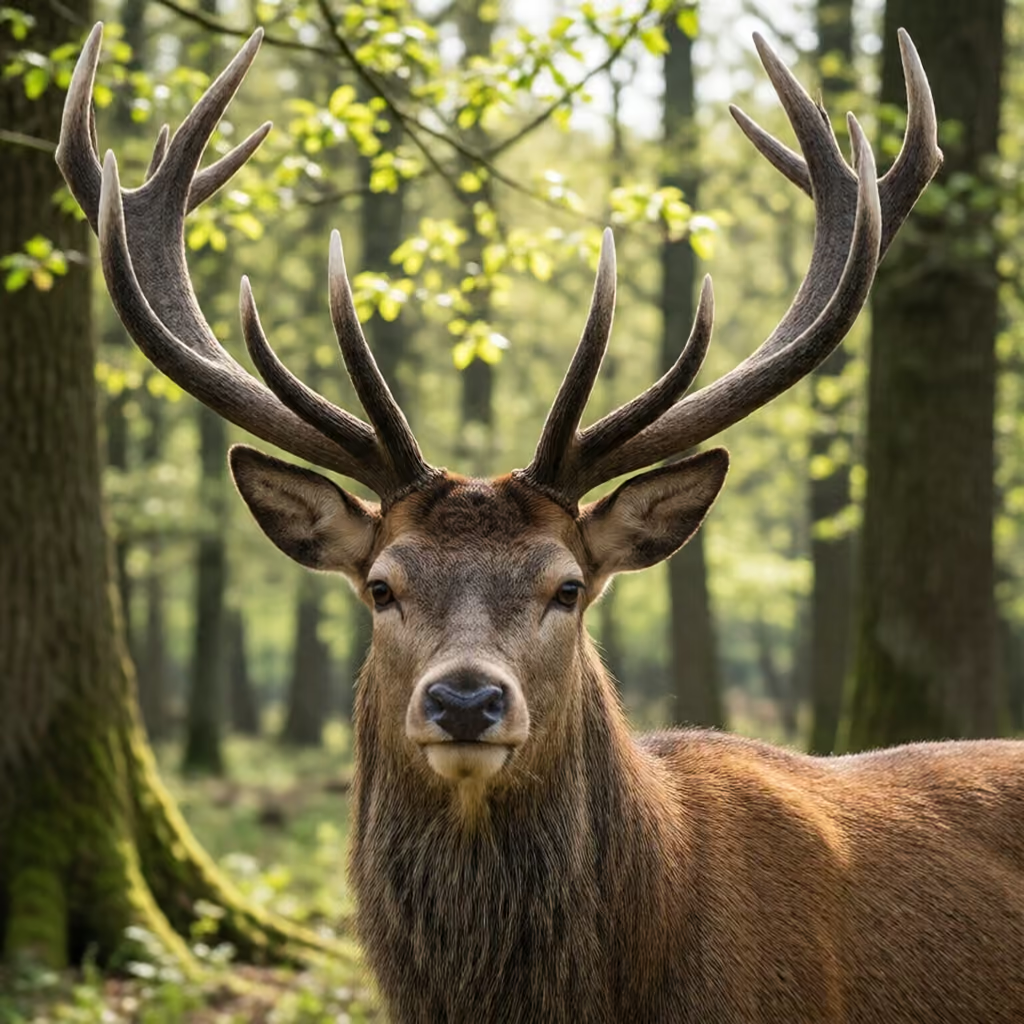
The soft, hairy skin, richly supplied with blood, that covers the growing antlers of deer and related animals.
Während das Geweih wächst, ist es von Bast bedeckt.
While the antlers are growing, they are covered in velvet.
| gender | masculine der |
|---|---|
| plural | die Baste |
| genitive | des Bastes |
| singular | plural | |
|---|---|---|
| nominative | der Bast | die Baste |
| accusative | den Bast | die Baste |
| dative | dem Bast | den Basten |
| genitive | des Bastes des Basts | der Baste |
The article changes with the case; it is shown in colour.
The intended meaning can usually be recognized from the context: in handicrafts, it refers to bast as a material; in botanical texts, to a layer of tree bark; and in texts about deer, to the skin of growing antlers.
Für die Dekoration kaufte sie Bast im Bastelladen.
She bought bast at the craft store for the decoration.
Der Bast transportiert Nährstoffe von den Blättern in andere Pflanzenteile.
The bast transports nutrients from the leaves to other parts of the plant.
Der Hirsch rieb den Bast an einem Baum ab.
The deer rubbed the velvet off against a tree.
In the meaning of a handicraft material, „Bast“ (bast) often occurs with verbs such as „flechten“ (to weave), „binden“ (to tie), and „verarbeiten“ (to process). Typical combinations also include „Bastband“ (bast ribbon) and „aus Bast“ (made of bast) followed by an object.
Die Kinder flochten aus Bast kleine Figuren.
The children wove small figures out of bast.
Für das Geschenk benutzte er einen schmalen Streifen Bast.
He used a narrow strip of bast for the gift.
This meaning is found mainly in texts about trees, plants, and the transport of nutrients. „Bast“ (bast) often occurs with verbs such as „transportieren“ (to transport) and „bilden“ (to form) in this context.
Der Bast transportiert die in den Blättern gebildeten Stoffe durch den Baum.
The bast transports the substances produced in the leaves through the tree.
Unter der Rinde bildet die Pflanze neuen Bast.
Under the bark, the plant forms new bast.
The meaning related to growing antlers belongs mainly to zoological or hunting contexts. Typical combinations include „Bast tragen“ (to be covered in velvet), „Bast abwerfen“ (to shed the velvet), and „den Bast abreiben“ (to rub off the velvet).
Im Frühsommer trägt der junge Hirsch noch Bast.
In early summer, the young deer is still covered in velvet.
Wenn das Geweih fertig gewachsen ist, reibt der Hirsch den Bast an Büschen ab.
When the antlers have finished growing, the deer rubs the velvet off against bushes.