

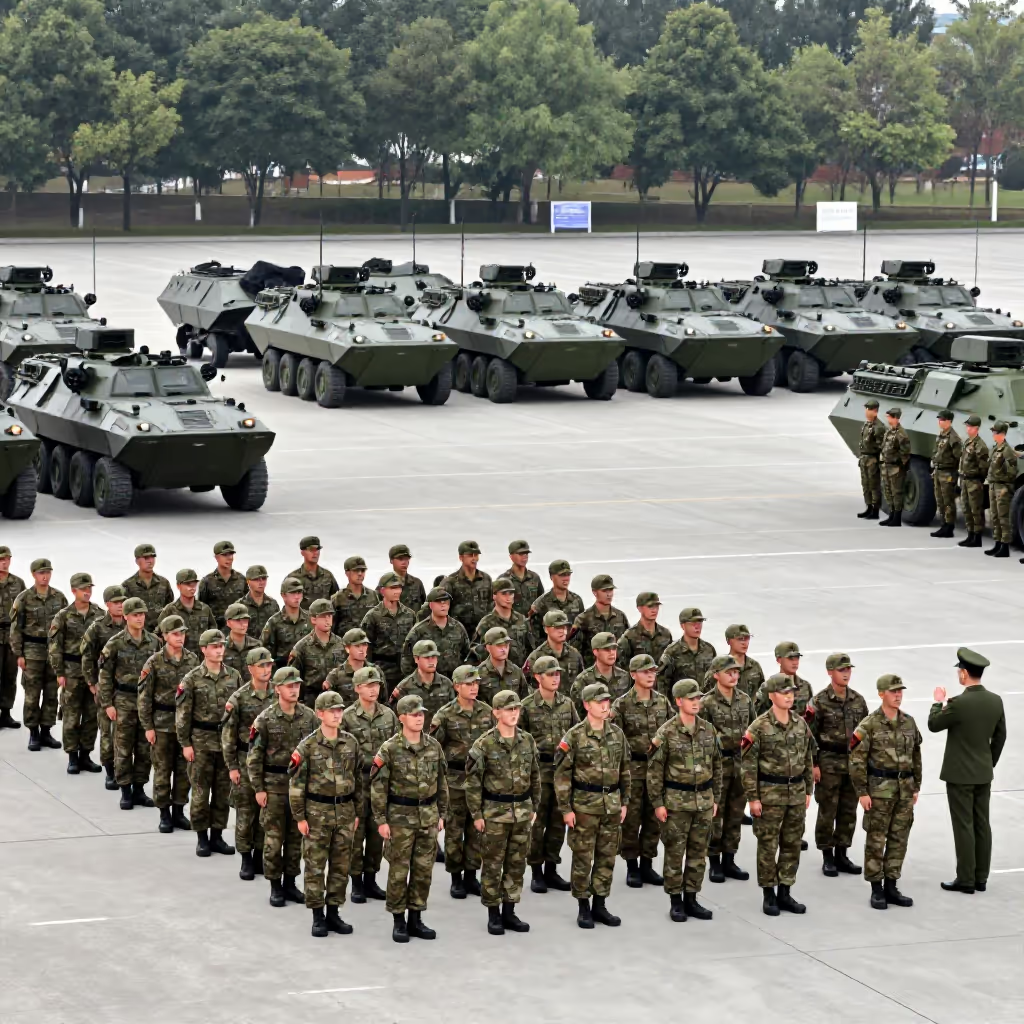
das Bataillon
battalion
A military unit consisting of several companies and forming part of a regiment.
EXAMPLE
Das Bataillon wurde an die Front verlegt.
The battalion was moved to the front.
battalion
Loading your saved state.
battalion
A military unit consisting of several companies and forming part of a regiment.
Das Bataillon wurde an die Front verlegt.
The battalion was moved to the front.

large group
A large group or number of people who appear together or pursue a common goal.
Ein ganzes Bataillon von Journalisten wartete vor dem Gerichtsgebäude.
A whole battalion of journalists was waiting in front of the courthouse.
'Bataillon' is a loanword from French. This explains the ending '-aillon', which is unusual for German, and the stress on the last syllable.
Der General inspizierte das gesamte Bataillon.
The general inspected the entire battalion.
In a figurative sense, 'Bataillon' is used for a large crowd of people that often seems organized. This use often has a slightly exaggerated or humorous undertone.
Ein ganzes Bataillon von Fans wartete am Hoteleingang auf die Band.
A whole battalion of fans was waiting for the band at the hotel entrance.
In the figurative meaning, the word is often used for specific groups, for example 'ein Bataillon Journalisten' (a battalion of journalists), 'ein Bataillon Touristen' (a battalion of tourists), or 'ein Bataillon Anwälte' (a battalion of lawyers).
Zur Eröffnung des neuen Geschäfts kam ein Bataillon von Neugierigen.
A battalion of curious onlookers came to the opening of the new store.