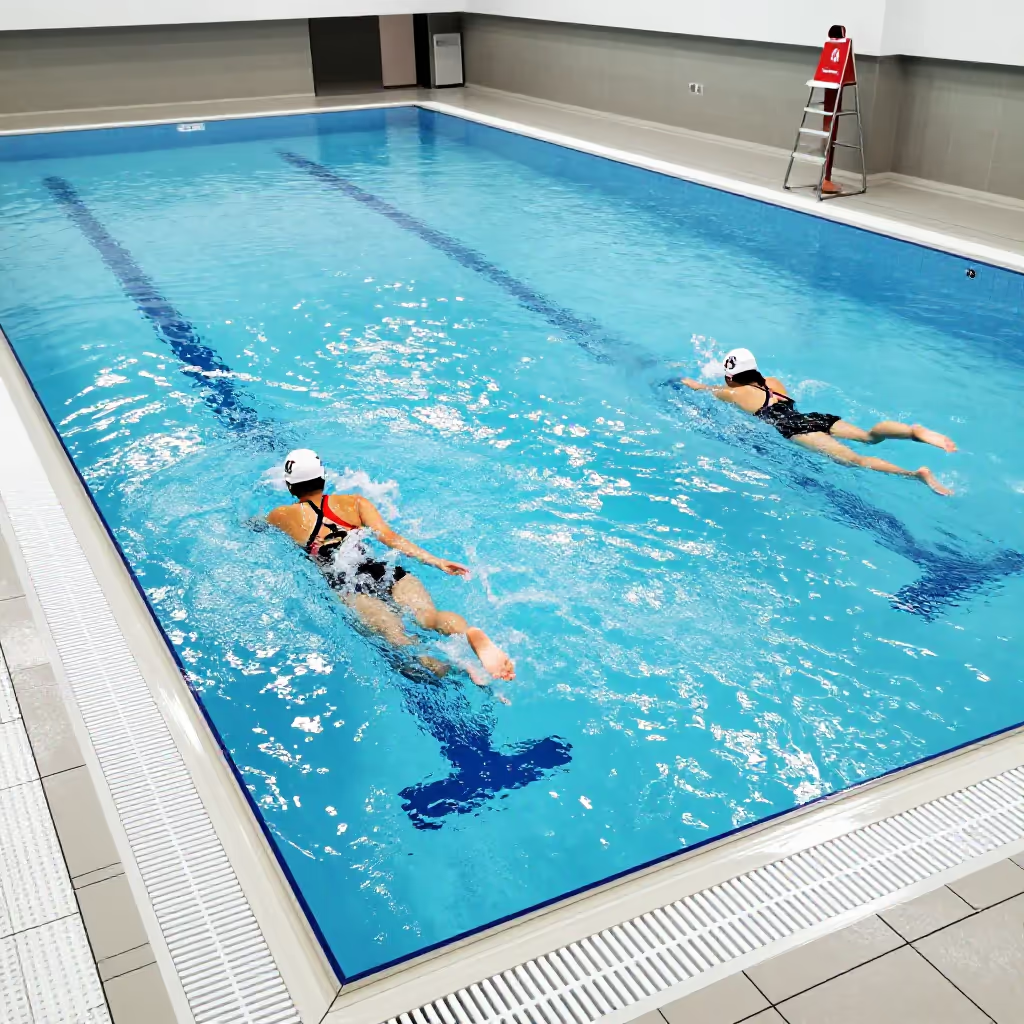
A large, open container used to hold water or other liquids, e.g. a swimming pool or a washbasin.
example
Die Kinder planschen im flachen Becken des Schwimmbads.
The children are splashing around in the shallow pool at the swimming pool.

Usage tips
Shape as a mnemonic
Almost all meanings of 'Becken' describe something with a round, bowl-like, or hollow shape. This idea connects the swimming pool, the bony pelvis in the body, the musical instrument, and even the geological basin in a landscape.
EXAMPLE
Die Katze trinkt Wasser aus einem kleinen Becken im Garten.
The cat drinks water from a small basin in the garden.
Context clues
The meaning of 'Becken' is almost always clearly determined by the context. Pay attention to the surrounding words: water (swimming pool), body/medicine (bones), music (instrument), or landscape/geography (valley).
EXAMPLE
Im Orchester spielt er das Becken.
He plays the cymbals in the orchestra.
Typical compounds
In its most common meaning as a container, 'Becken' is often part of compound words. The best known are 'Schwimmbecken' (swimming pool), 'Waschbecken' (washbasin/sink), and 'Spülbecken' (kitchen sink).
EXAMPLE
Das Wasser im Spülbecken läuft nicht ab.
The water in the kitchen sink is not draining.
Typical collocation
In a medical context, the most common and important collocation is 'sich das Becken brechen' (to break one's pelvis). The verb is reflexive here.
EXAMPLE
Der Radfahrer stürzte und brach sich das Becken.
The cyclist fell and broke his pelvis.
Context: music
As a musical instrument, the 'Becken' (cymbal) is part of a drum kit or orchestra. The typical verb in this context is 'schlagen' (to strike/hit).
EXAMPLE
Der Schlagzeuger schlug am Ende des Liedes kräftig auf das Becken.
The drummer struck the cymbal forcefully at the end of the song.
Compare with
near_synonym · confusable
Becken vs Tal
valley
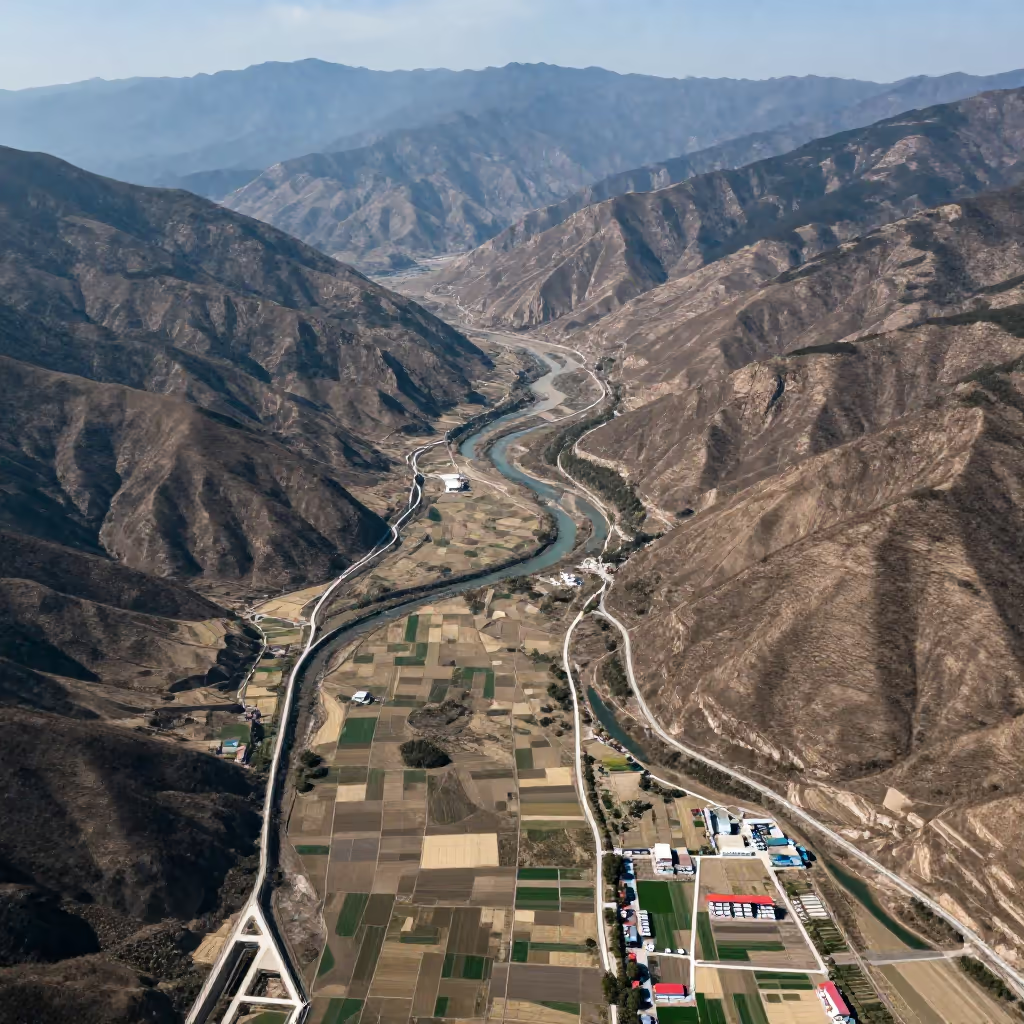
'das Tal' and 'das Becken' can both describe a lower-lying landscape. A 'Tal' usually lies between mountains or hills and is often elongated; a river often flows through it. A 'Becken' is more of a larger, low-lying area surrounded by higher land. It does not have to be as clearly elongated as a valley. Learners may confuse the words because both refer to something low in the landscape. A practical tip: for a long landscape between mountains, you usually say 'Tal'. For a wide, enclosed area, 'Becken' is more suitable.
Becken
Das Becken zwischen den Bergen war früher einmal von einem See bedeckt.
The basin between the mountains was once covered by a lake.
Tal
Nach der Wanderung sahen wir unten im Tal die kleinen Häuser.
After the hike, we saw the small houses down in the valley.