

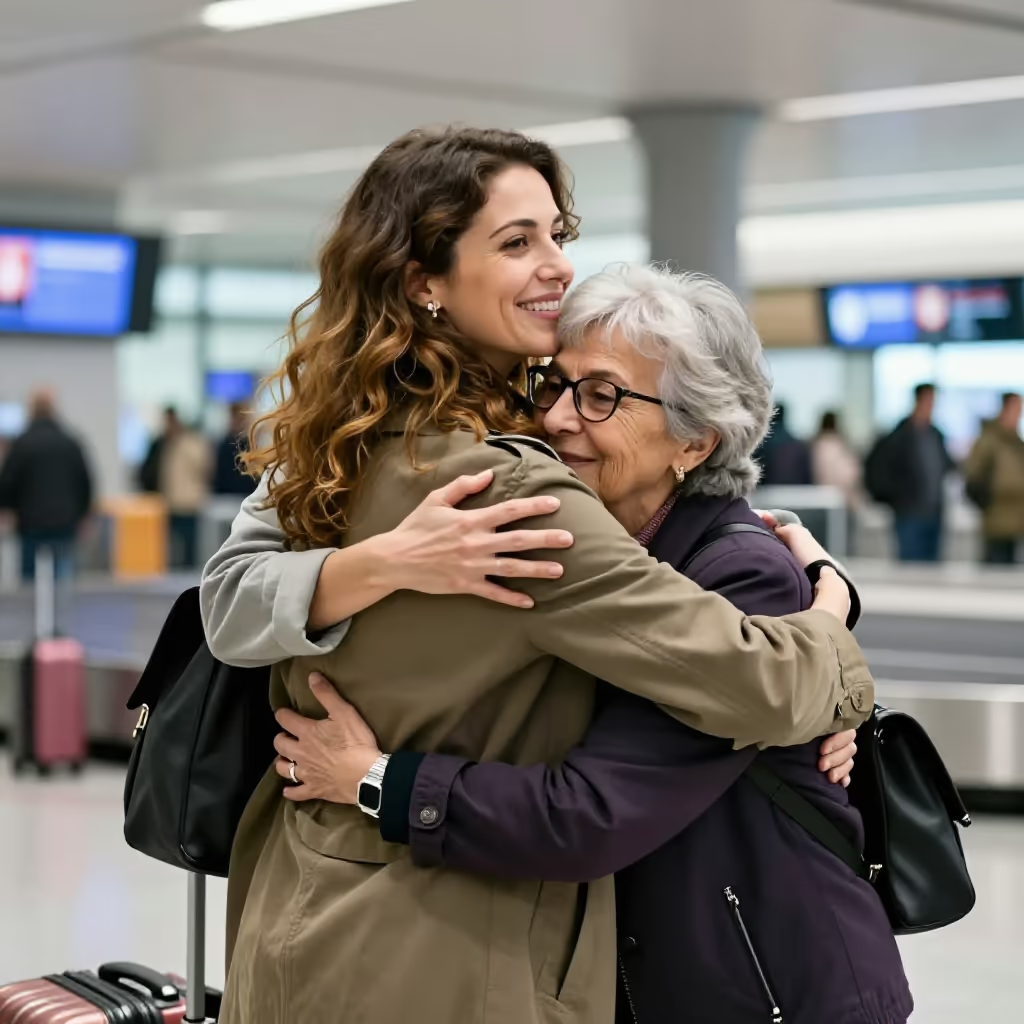
die Begrüssung
greeting
The action or words with which you welcome or greet someone.
EXAMPLE
Die Begrüssung durch den Hoteldirektor war ausserordentlich herzlich.
The greeting by the hotel director was extraordinarily warm.
greeting
Loading your saved state.
greeting
The action or words with which you welcome or greet someone.
Die Begrüssung durch den Hoteldirektor war ausserordentlich herzlich.
The greeting by the hotel director was extraordinarily warm.
The spelling 'Begrüssung' with 'ss' is standard in Switzerland and Liechtenstein. In Germany and Austria, it is written instead as 'Begrüßung' with 'ß'.
In der Schweiz schreibt man Gruss und Begrüssung mit ss.
In Switzerland, Gruss and Begrüssung are written with ss.
The noun 'die Begrüssung' (the greeting) is derived from the verb 'begrüssen' (to greet). The ending '-ung' is a very common way to form nouns from verbs in German.
Die Begrüssung der Gäste übernimmt der Chef persönlich.
The boss will personally take care of greeting the guests.
'Begrüssung' (greeting) is often combined with adjectives that describe the type of welcome. Common combinations are 'eine herzliche' (a warm), 'eine freundliche' (a friendly), 'eine kühle' (a cool), or 'eine offizielle' (an official) Begrüssung.
Nach dem Streit gab es nur eine kühle Begrüssung.
After the argument, there was only a cool greeting.
greeting
Gruß refers to a specific gesture, utterance, or message used to greet someone. Begrüssung refers more to the overall act or the words used to welcome someone. With spoken words, the meanings can overlap; Begrüssung focuses more strongly on the process.
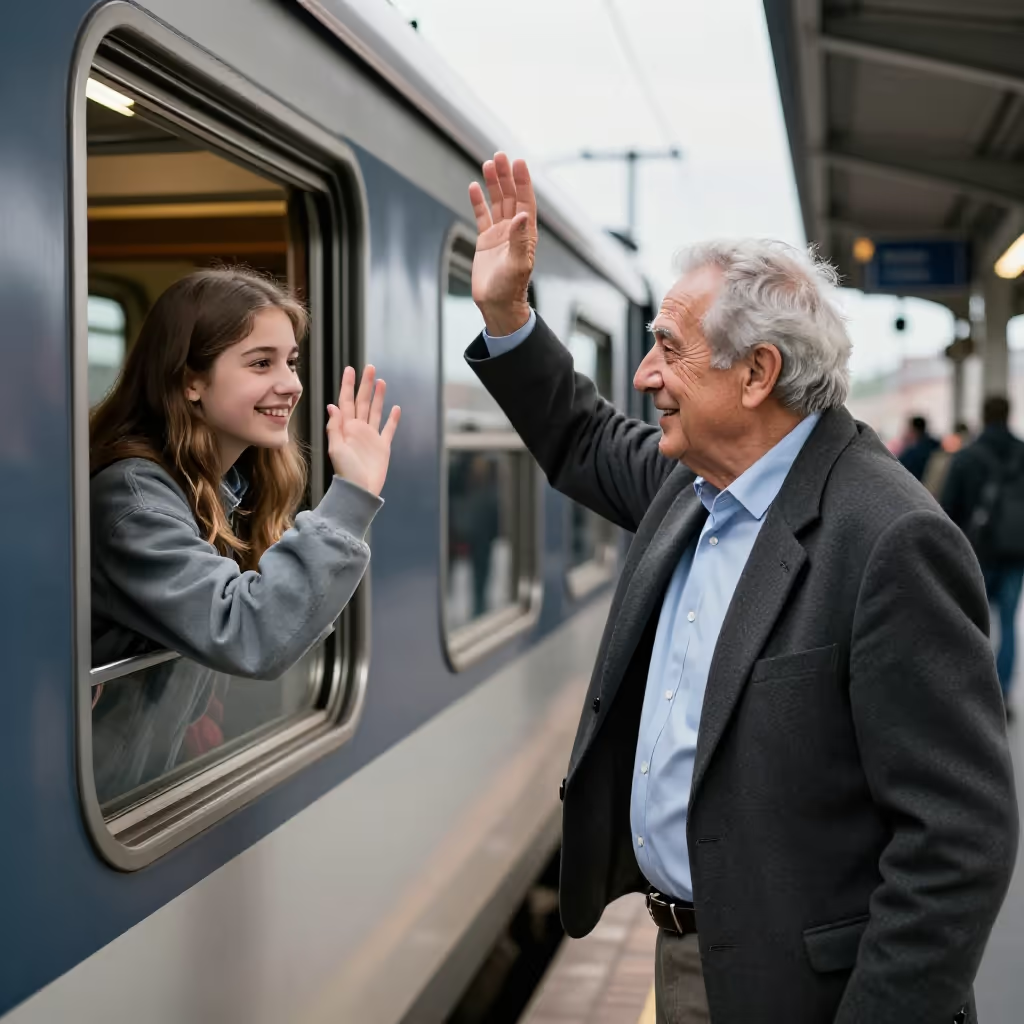
Die Begrüssung der neuen Kollegin durch den Chef dauerte nur wenige Sekunden.
The boss’s welcome for the new colleague lasted only a few seconds.
Der Chef hob die Hand zu einem kurzen Gruß, als die neue Kollegin eintrat.
The boss raised his hand in a brief greeting when the new colleague came in.