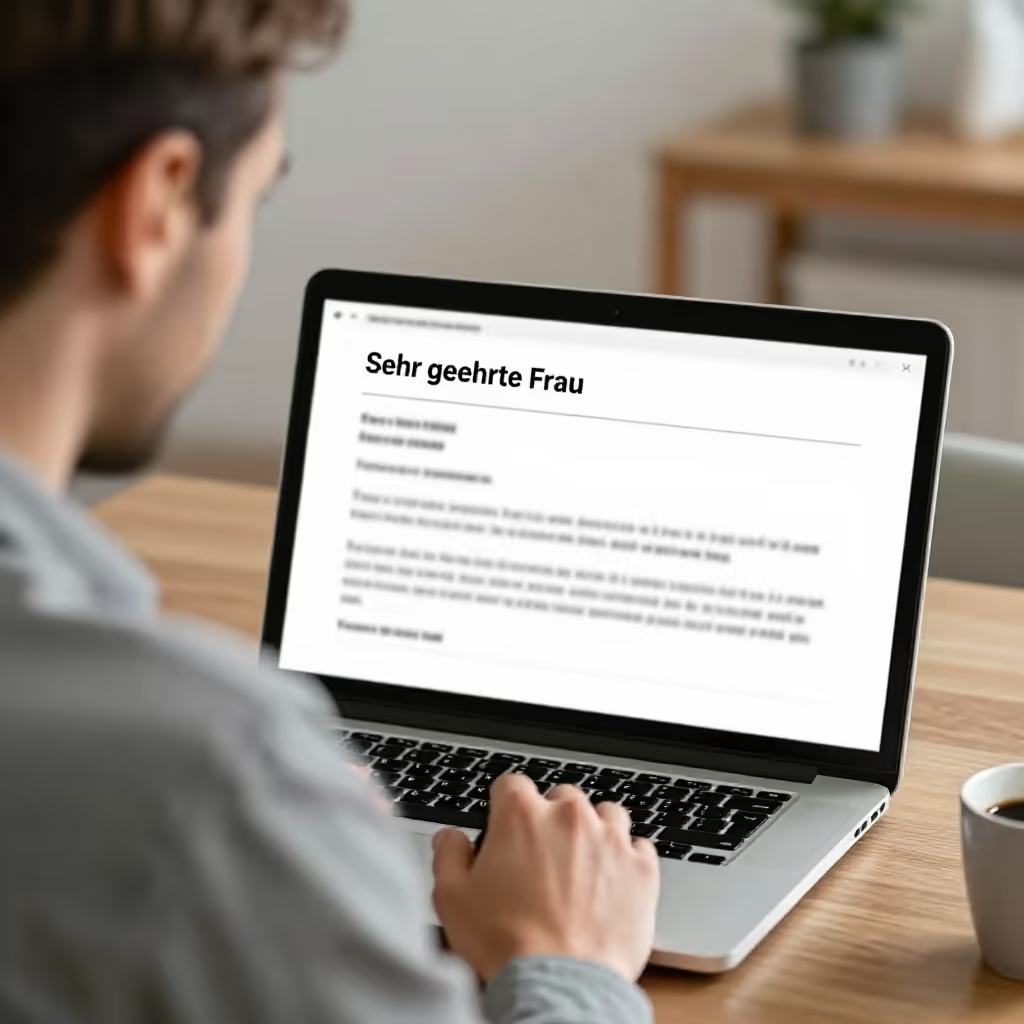
The formula used to address a person directly at the beginning of a letter, email, or speech.
example
In einer formellen E-Mail ist die Anrede „Sehr geehrte Frau Müller,“ korrekt.
In a formal email, the salutation 'Sehr geehrte Frau Müller,' is correct.
Usage tips
Word family
The noun 'die Anrede' (salutation/form of address) is derived directly from the verb 'anreden' (to address someone), which means 'eine Person ansprechen' (to address a person). The noun therefore describes the way in which you address someone.
EXAMPLE
Er war unsicher, wie er den Professor korrekt anreden sollte.
He was unsure how he should address the professor correctly.
Context clue
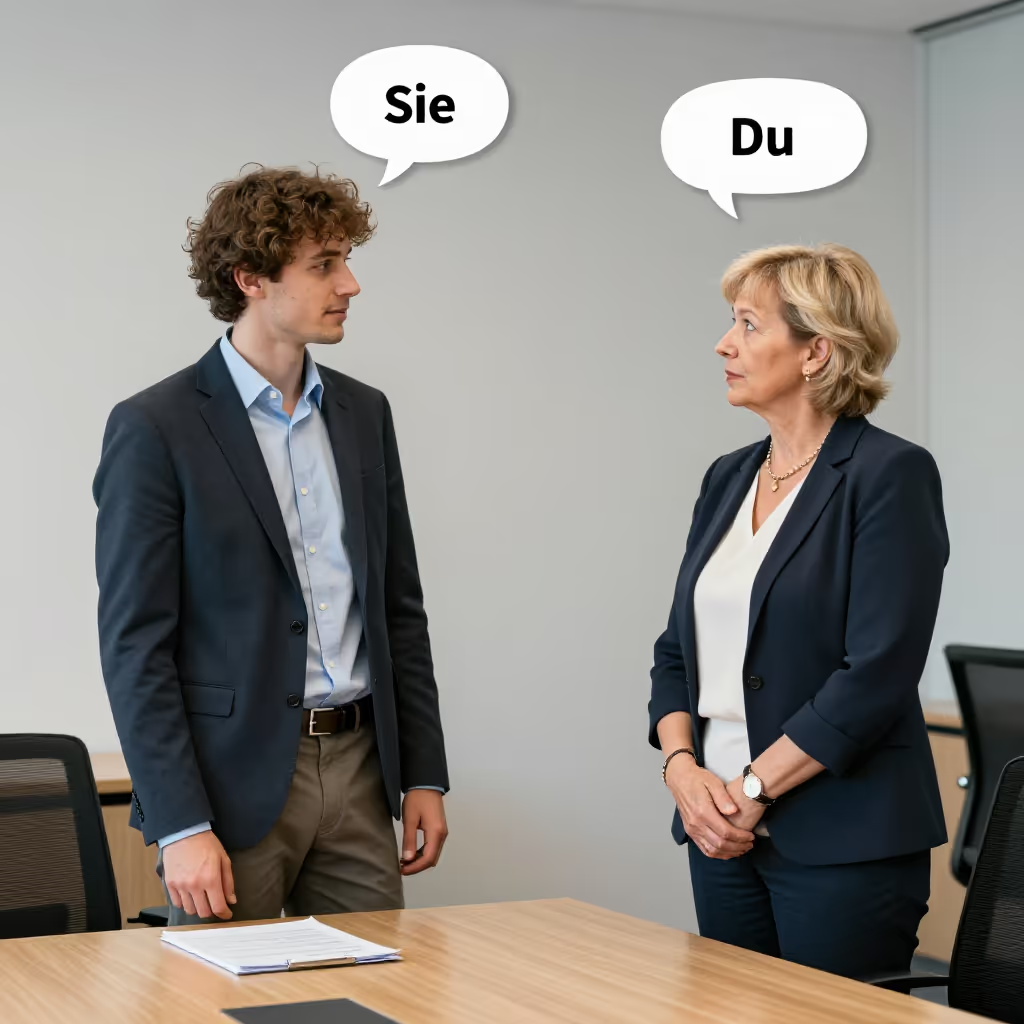
To distinguish the meanings, pay attention to the context. If it is about letters or emails, it refers to the salutation. If it is about the choice between 'Du' and 'Sie', it refers to the personal form of address in conversation.
EXAMPLE
Die Anrede in der E-Mail war sehr unpersönlich.
The salutation in the email was very impersonal.
Sentence structure in letters
An important rule for German letters and emails: after the salutation comes a comma, and the first sentence of the text begins with a lowercase letter.
EXAMPLE
Sehr geehrter Herr Schmidt, vielen Dank für Ihre schnelle Antwort.
Dear Mr. Schmidt, thank you very much for your quick reply.
Typical collocations
In the context of letters, people often speak of the 'formelle Anrede' (formal salutation: 'Sehr geehrte...'), the 'informelle Anrede' (informal salutation: 'Liebe/r...', 'Hallo'), or of 'die richtige Anrede zu wählen' (choosing the correct salutation).
EXAMPLE
Bei unbekannten Empfängern sollten Sie immer eine formelle Anrede wählen.
For unknown recipients, you should always choose a formal salutation.
Cultural context
Choosing the correct form of address ('Du' or 'Sie') is very important in German culture. The wrong choice can be perceived as impolite or disrespectful.
EXAMPLE
Der Chef bot mir die Anrede mit „Du“ an, um die Zusammenarbeit zu erleichtern.
The boss offered to use 'Du' with me to make working together easier.
Compare with
confusable
Anrede vs Titel
title
'der Titel' and 'die Anrede' can both appear when you talk about a person or write to them. 'der Titel' is an official designation, such as an academic degree or a professional position. 'die Anrede' is the form used to address someone directly, for example at the beginning of an email or in conversation. They can be confused because a title can be part of a form of address. In 'Sehr geehrte Frau Dr. Müller' (Dear Ms. Dr. Müller), 'Dr.' is the title, but the whole form is the salutation.
Anrede
Nach der Nachricht wählt sie für ihre Antwort eine höfliche Anrede.
After the message, she chooses a polite salutation for her reply.
Titel
Er achtet darauf, dass der Titel der Ärztin im Formular richtig steht.
He makes sure that the doctor's title is written correctly on the form.