


das Bein
leg
One of the limbs in humans and many animals that is used for standing and walking.
EXAMPLE
Ich habe mir beim Fußball das linke Bein verletzt.
I injured my left leg while playing soccer.
leg
Loading your saved state.
leg
One of the limbs in humans and many animals that is used for standing and walking.
Ich habe mir beim Fußball das linke Bein verletzt.
I injured my left leg while playing soccer.
leg
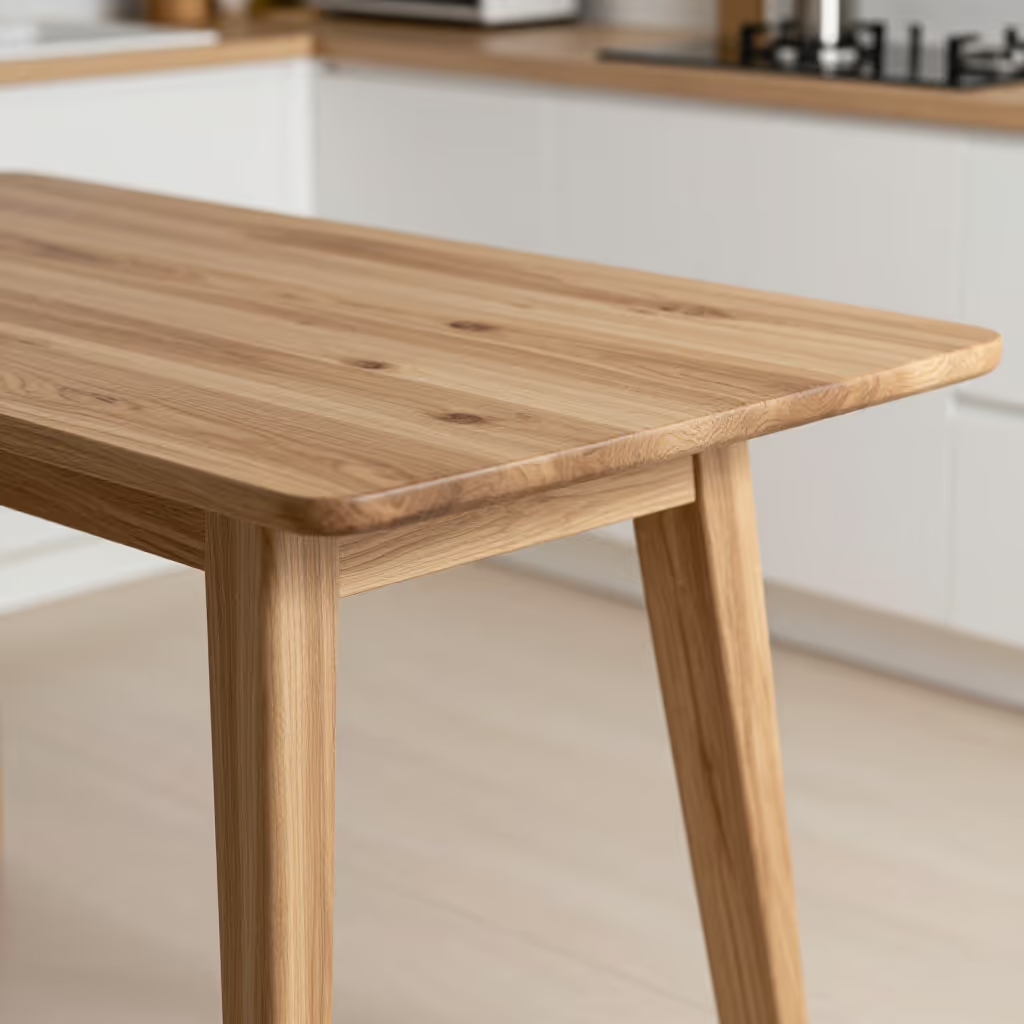
One of the parts on which a piece of furniture such as a table, chair, or bed stands.
Vorsicht, ein Bein von diesem alten Stuhl ist locker.
Careful, one leg of this old chair is loose.

to get going
To set off, get going; to leave one place in order to get to another.
Es wird schon dunkel, wir sollten uns langsam auf die Beine machen.
It's already getting dark; we should slowly get going.
to get back on one's feet
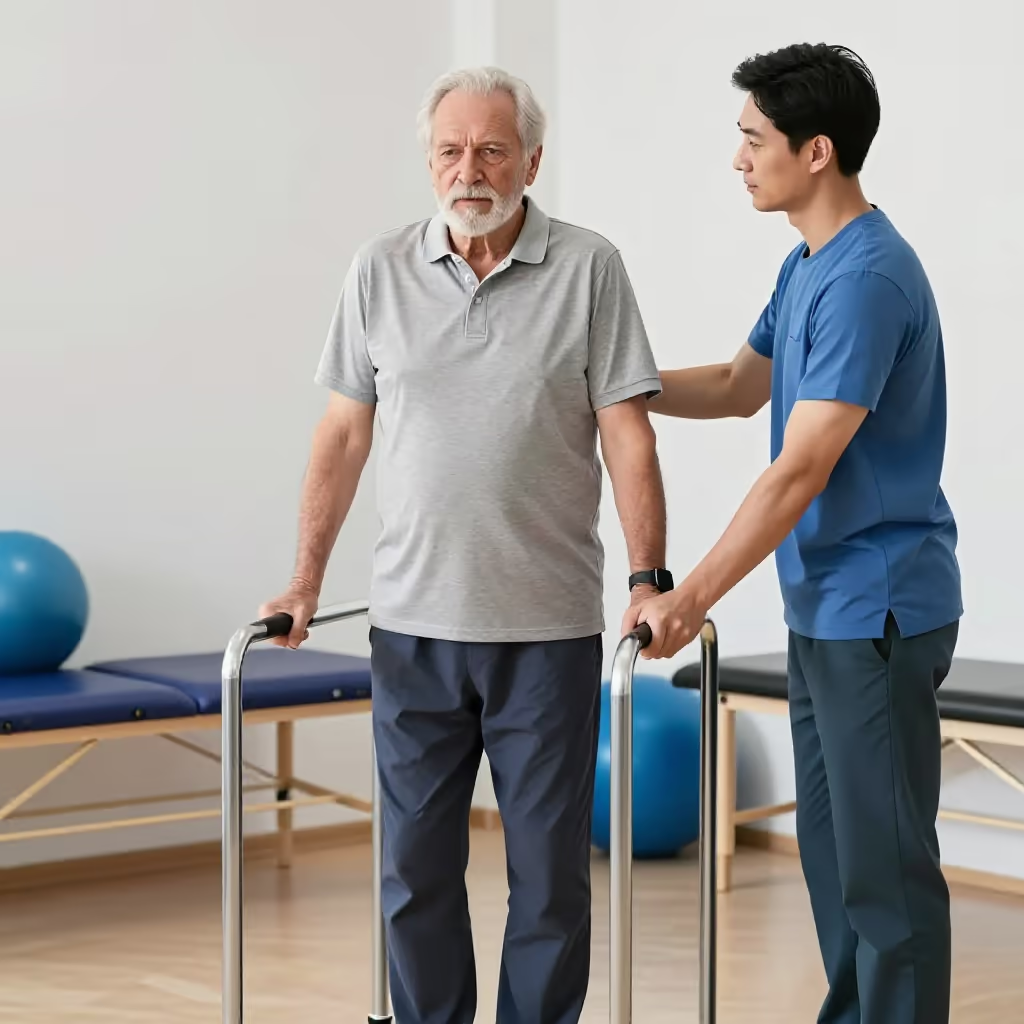
To recover from an illness, an injury, or a difficult phase.
Nach der schweren Grippe braucht sie Zeit, um wieder auf die Beine zu kommen.
After the severe flu, she needs time to get back on her feet.

to trip someone up
To deliberately make someone fall or specifically obstruct their plans and success.
Sein Konkurrent hat versucht, ihm bei der Beförderung ein Bein zu stellen.
His competitor tried to trip him up in the promotion process.
When you injure one of your own body parts, a dative construction is often used. The person is in the dative, and the body part is in the accusative: 'Ich habe mir das Bein gebrochen' (I broke my leg).
Er hat sich beim Skifahren das Bein verletzt.
He injured his leg while skiing.
Whether 'Bein' (leg) means the leg of a living being or of a piece of furniture becomes clear from context. If you are talking about people or animals, it means the body part. If you are talking about tables, chairs, or beds, it means the support.
Der Hund hat ein kurzes Bein.
The dog has a short leg.
The idiom 'sich auf die Beine machen' is reflexive and means 'aufbrechen' (to set off) or 'losgehen' (to get going). It is often used to announce the end of a visit or a break.
Es ist schon spät, ich mache mich jetzt auf die Beine.
It's already late; I'm going to get going now.
The expression 'wieder auf die Beine kommen' means to recover after an illness or a difficult situation. It is used for health problems as well as financial or emotional problems.
Nach der Operation hat er einige Wochen gebraucht, um wieder auf die Beine zu kommen.
After the operation, he needed a few weeks to get back on his feet.
The idiom 'jemandem ein Bein stellen' always has a dative object (the person you harm). It can be used literally (to make someone fall) or figuratively (to sabotage someone's plans).
Ein Mitspieler hat ihm im Strafraum ein Bein gestellt.
A teammate tripped him in the penalty area.
foot
For furniture, both Fuß and Bein can refer to a supporting part. A Bein is normally a longer, clearly visible support, while a Fuß is more often the short bottom part or a broad supporting surface. That is why a tall table has Beine, while a table with a central column often has a Fuß.
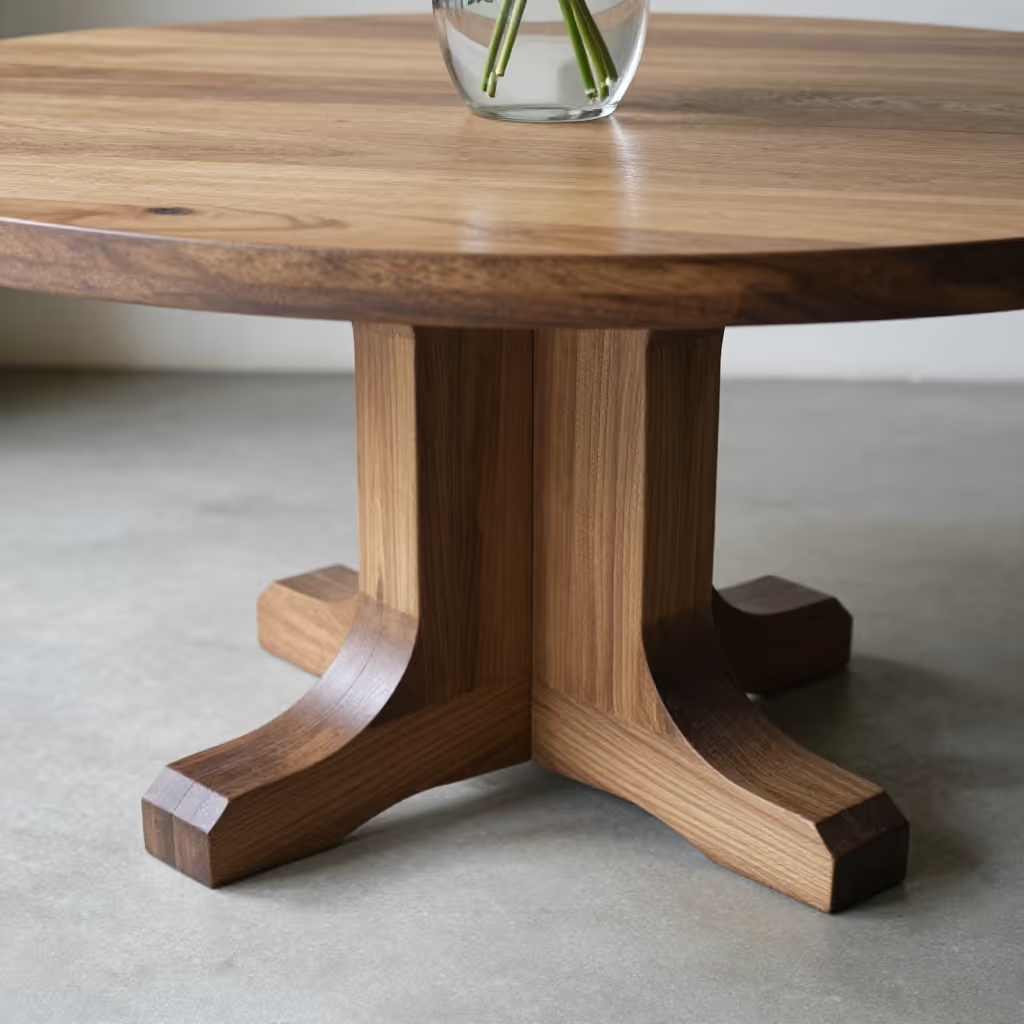
Der kleine Tisch steht auf vier langen schmalen Beinen.
The small table stands on four long, slender legs.
Der kleine Tisch steht auf einem breiten runden Fuß.
The small table stands on a broad, round foot.