

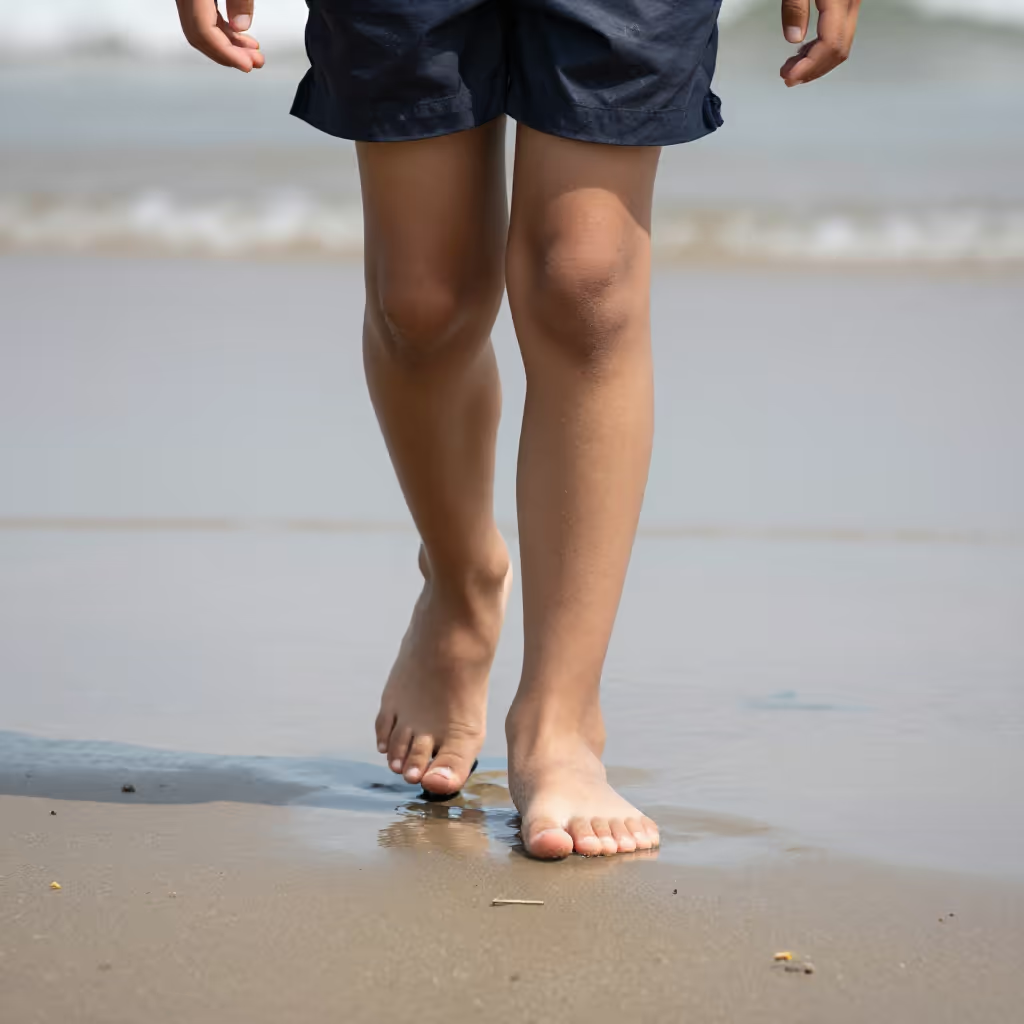
der Fuß
foot
The lowest part of the leg in humans and animals, which one stands and walks on.
EXAMPLE
Nach der langen Wanderung taten mir die Füße weh.
After the long hike, my feet hurt.
foot
Loading your saved state.
foot
The lowest part of the leg in humans and animals, which one stands and walks on.
Nach der langen Wanderung taten mir die Füße weh.
After the long hike, my feet hurt.

on foot
A way of moving around in which one walks instead of using a vehicle.
Da die U-Bahn streikt, müssen wir heute zu Fuß zur Arbeit gehen.
Since the subway is on strike, we have to go to work on foot today.
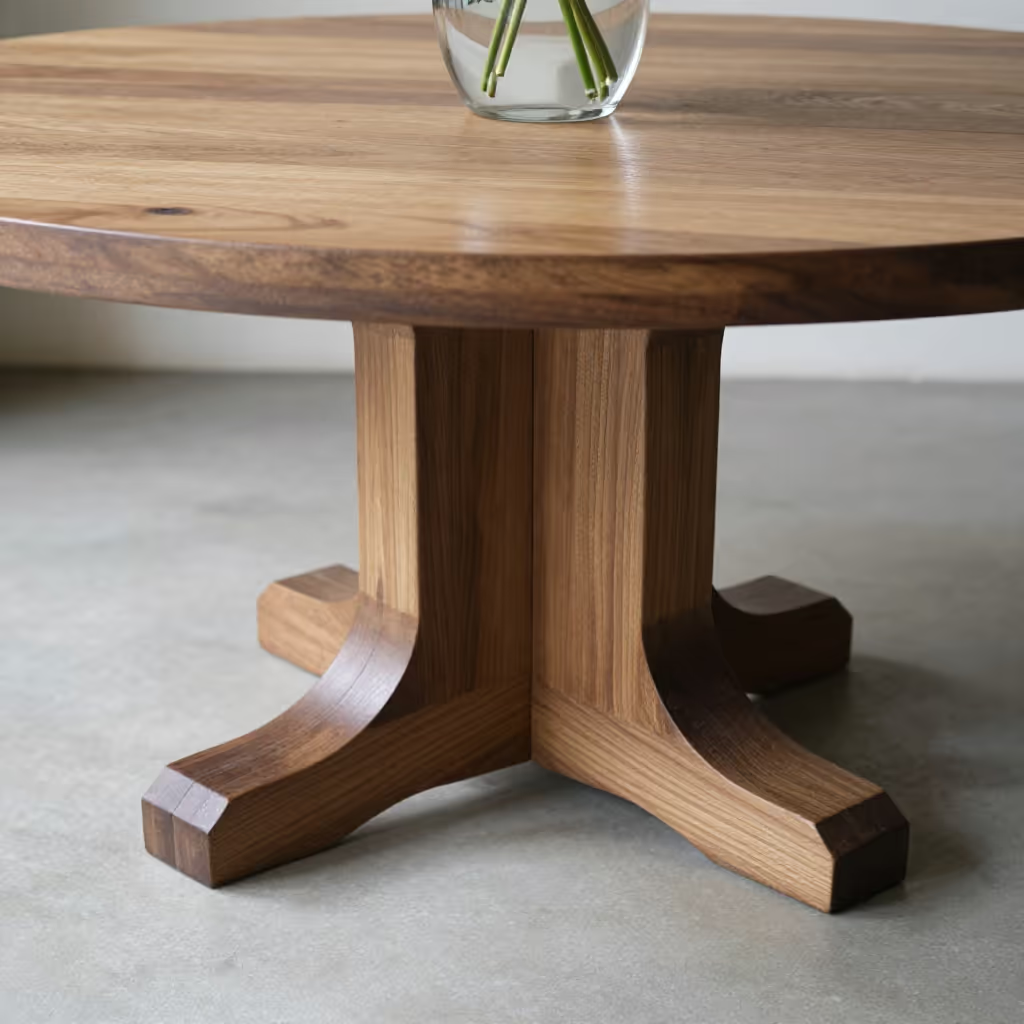
base / foot
The lowest part, base, or pedestal of something, for example a mountain, a piece of furniture, or a glass.
Wir machten am Fuß des Berges eine Pause, bevor wir den Aufstieg begannen.
We took a break at the foot of the mountain before beginning the climb.

to get cold feet
To become afraid at the last moment and give up a plan or intention.
Er wollte sie eigentlich heiraten, hat dann aber kurz vor der Hochzeit kalte Füße bekommen.
He had actually wanted to marry her, but then he got cold feet shortly before the wedding.

foot
An old unit of length equal to about 30.48 centimeters, used today mainly in the English-speaking world.
Das Flugzeug fliegt in einer Höhe von 30.000 Fuß.
The airplane is flying at an altitude of 30,000 feet.
The word 'Fuß' (foot) is the basis for many useful compound nouns. If you recognize 'Fuß', you can often understand the meaning of words like 'Fußball' (football/soccer), 'Fußgänger' (pedestrian), or 'Fußboden' (floor) more easily.
In der Fußgängerzone dürfen keine Autos fahren.
No cars are allowed to drive in the pedestrian zone.
The phrase 'zu Fuß' (on foot) is a fixed expression and means 'walking'. It is always formed with the preposition 'zu' and the singular 'Fuß', even though you walk with two feet.
Die Schule ist nicht weit, ich gehe jeden Tag zu Fuß.
The school isn't far; I go on foot every day.
You can tell from context whether 'Fuß' (foot/base) describes the base of something. In this meaning, the word is often connected with geographical objects, furniture, or objects.
Am Fuß des Leuchtturms gibt es ein kleines Café.
At the foot of the lighthouse, there is a small café.
The idiom 'kalte Füße bekommen' (to get cold feet) has nothing to do with temperature. It means that someone becomes afraid at the last moment and abandons a plan.
Er wollte ein Auslandssemester machen, hat aber kurz vorher kalte Füße bekommen.
He wanted to do a semester abroad, but he got cold feet shortly beforehand.
When 'Fuß' (foot) is used as a unit of measurement, it almost always appears together with a number. This use is especially common in aviation and shipping.
Das Segelboot ist 40 Fuß lang.
The sailboat is 40 feet long.
basis / base
Fuß is the usual term for the lowest part of a mountain. Basis can also refer to its foundation or lower starting area, but sounds more technical or geometric. Fuß is appropriate in an ordinary location description, while Basis is more suitable in a factual model description.
Am Fuß des Berges liegt ein kleines Dorf.
A small village lies at the foot of the mountain.
Im geometrischen Modell bildet die breite Grundfläche die Basis des Bergkörpers.
In the geometric model, the broad base forms the basis of the mountain body.