

bepflanzen
to plant
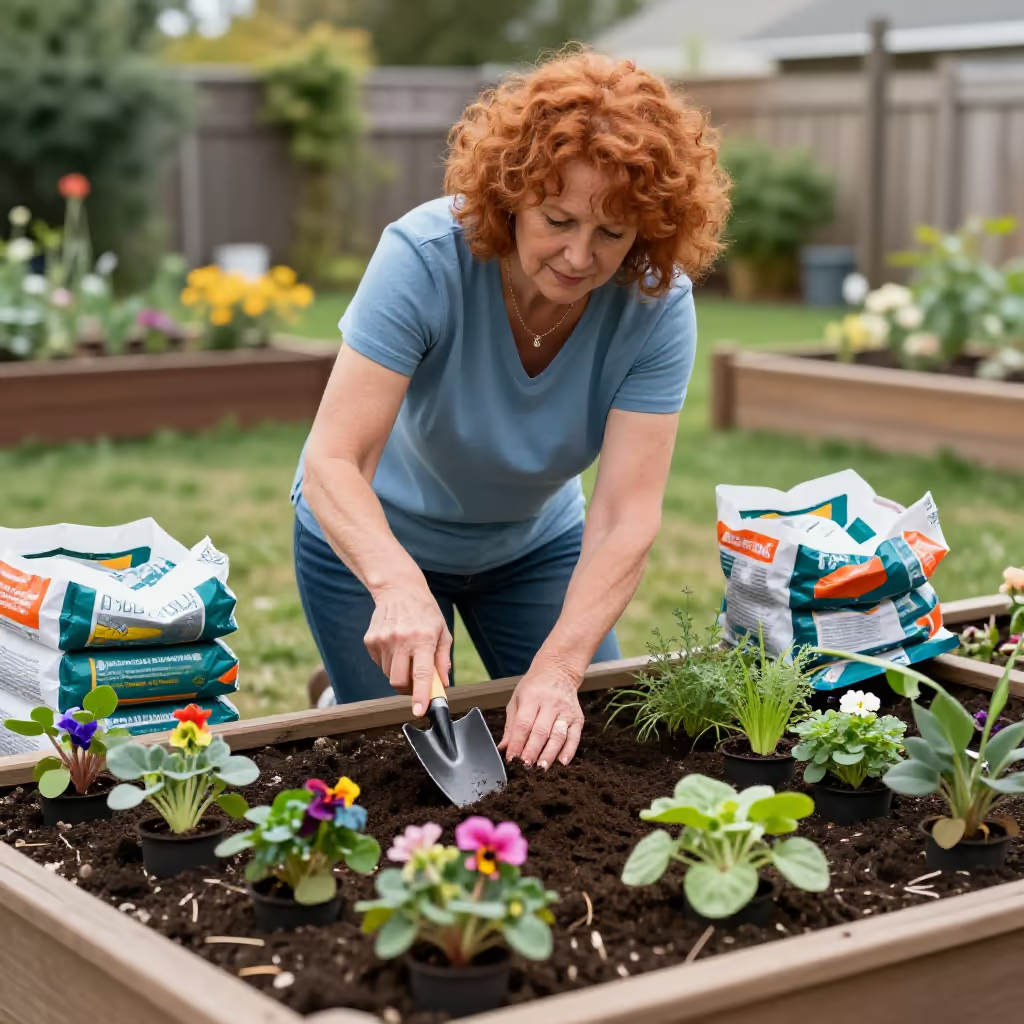
To provide an area, such as a flower bed, garden, or balcony planter, with plants.
EXAMPLE
Wir wollen den Vorgarten im Frühling mit neuen Blumen bepflanzen.
We want to plant new flowers in the front garden in spring.
to plant
Loading your saved state.
to plant
To provide an area, such as a flower bed, garden, or balcony planter, with plants.
Wir wollen den Vorgarten im Frühling mit neuen Blumen bepflanzen.
We want to plant new flowers in the front garden in spring.
The verb 'bepflanzen' (to plant) is inseparable. The prefix 'be-' remains firmly attached to the verb stem 'pflanzen' (to plant) in all tenses and sentence structures.
Sie hat den ganzen Balkon mit Kräutern bepflanzt.
She planted herbs all over the balcony.
The typical sentence structure is: [area in the accusative] + mit + [plants in the dative] + bepflanzen. So you plant AN area WITH something.
Der Gärtner bepflanzt das Beet mit bunten Tulpen.
The gardener plants the flower bed with colorful tulips.
The prefix 'be-' changes the focus of the verb. While 'pflanzen' (to plant) focuses on the individual plant ('eine Rose pflanzen' — to plant a rose), 'bepflanzen' (to plant / to cover with plants) focuses on the area being covered ('ein Beet bepflanzen' — to plant a flower bed).
Die Stadt lässt den Kreisverkehr neu bepflanzen.
The city is having the roundabout replanted.
to plant
Pflanzen emphasizes putting one plant or several specific plants into the ground. Bepflanzen focuses on the area being provided with plants. That is why you use pflanzen for roses, while you use bepflanzen for a flower bed with roses.
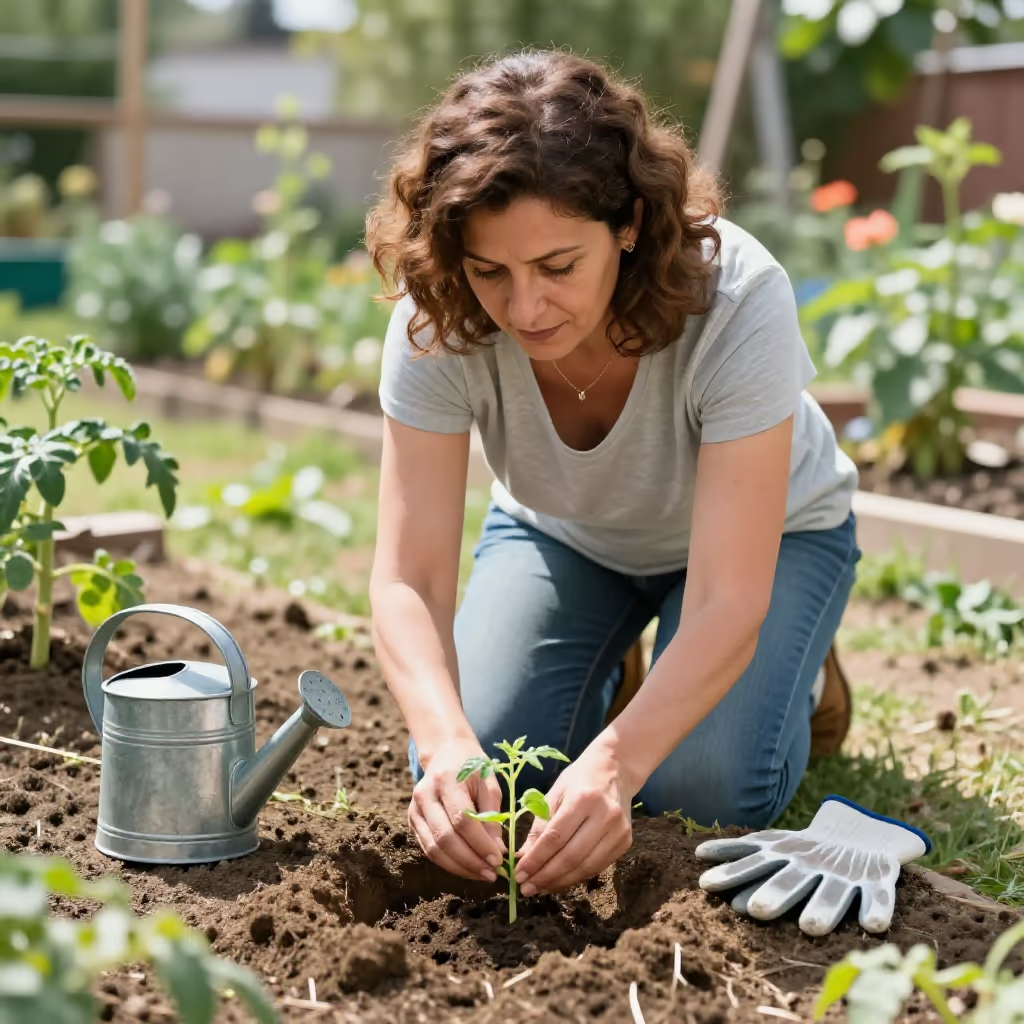
Nora bepflanzt das ganze Beet mit Rosen.
Nora plants the entire flower bed with roses.
Nora pflanzt drei Rosen in das Beet.
Nora plants three roses in the flower bed.