

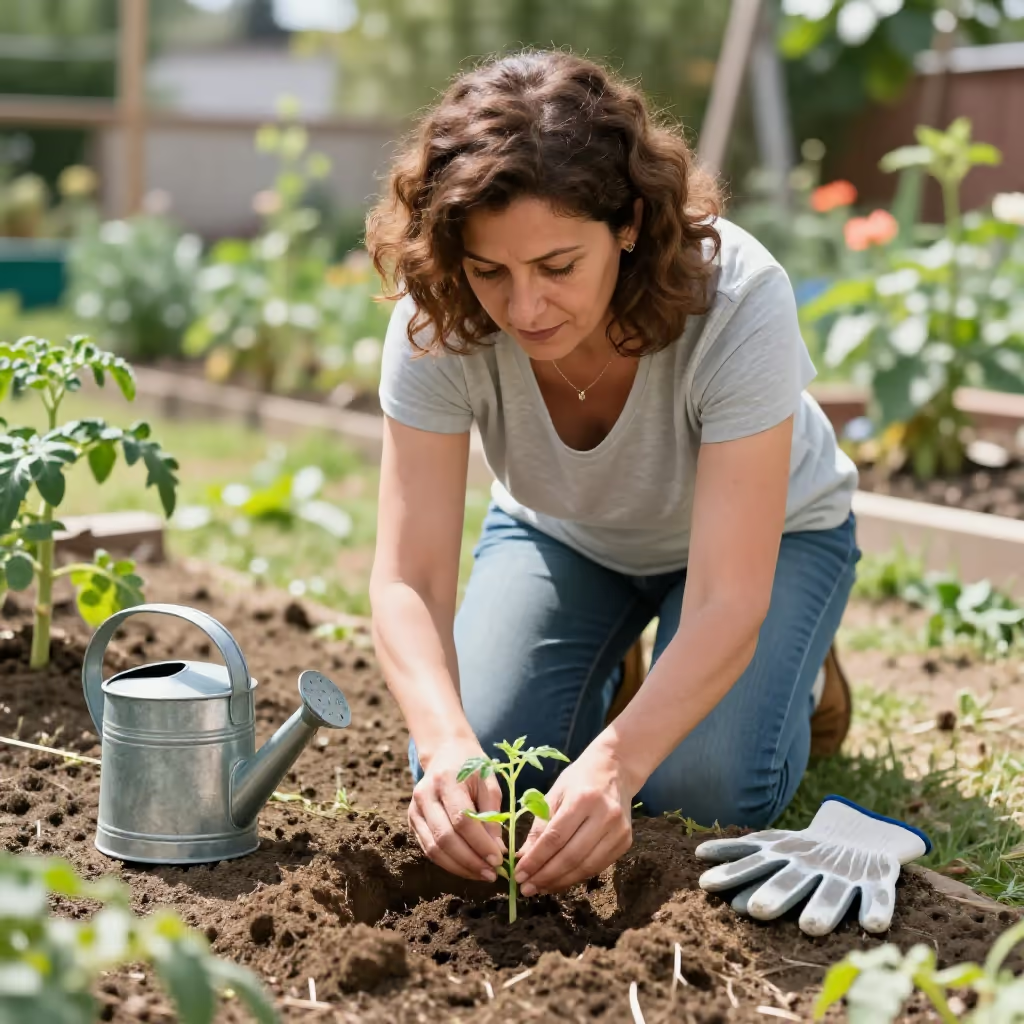
pflanzen
to plant
To put a plant into the ground or a pot so that it can grow there.
EXAMPLE
Im Frühling pflanzen wir Tomaten und Salat in unserem Garten.
In spring, we plant tomatoes and lettuce in our garden.
to plant
Loading your saved state.
to plant
To put a plant into the ground or a pot so that it can grow there.
Im Frühling pflanzen wir Tomaten und Salat in unserem Garten.
In spring, we plant tomatoes and lettuce in our garden.

to kid / fool
Colloquial for tricking, deceiving, or pulling someone's leg.
Willst du mich pflanzen? Das kann unmöglich wahr sein.
Are you kidding me? That can't possibly be true.

to plant oneself
Colloquial for standing or sitting down somewhere demonstratively and without moving.
Er pflanzte sich direkt vor den Fernseher, sodass niemand mehr etwas sehen konnte.
He planted himself right in front of the TV, so no one could see anything anymore.
The verb 'pflanzen' (to plant) is directly related to the noun 'die Pflanze' (the plant). When you plant something, you put a plant into the ground.
Wir haben eine neue Pflanze für das Wohnzimmer gekauft.
We bought a new plant for the living room.
You can recognize the literal meaning from the context of gardens, nature, or plants. The colloquial meanings ('jemanden täuschen' — to deceive someone, or 'sich hinsetzen' — to sit down) are only understandable from the situation and are often recognizable from the grammar (reflexive or with a person as the object).
Er pflanzt Kräuter auf dem Balkon.
He plants herbs on the balcony.
In the literal meaning, 'pflanzen' (to plant) is often combined with what is being planted, e.g. 'Bäume pflanzen' (to plant trees), 'Blumen pflanzen' (to plant flowers), or 'Gemüse pflanzen' (to plant vegetables).
Jedes Jahr im Herbst pflanzen wir neue Tulpenzwiebeln.
Every year in autumn, we plant new tulip bulbs.
This meaning is purely colloquial. It is often phrased as a question to express that you do not believe a statement.
Du hast im Lotto gewonnen? Willst du mich pflanzen?
You won the lottery? Are you kidding me?
In this meaning, the verb is always used reflexively with 'sich' (oneself). It describes a slightly provocative or very self-confident way of sitting or standing somewhere.
Der Junge pflanzte sich mitten in den Weg und wollte nicht aufstehen.
The boy planted himself right in the middle of the path and refused to get up.
to set / put
Setzen and pflanzen can both mean putting a young plant into the soil so that it can grow. Pflanzen is the general, neutral choice for this. Setzen is also used, but depends more on the type of plant and on specialist or regional language conventions.
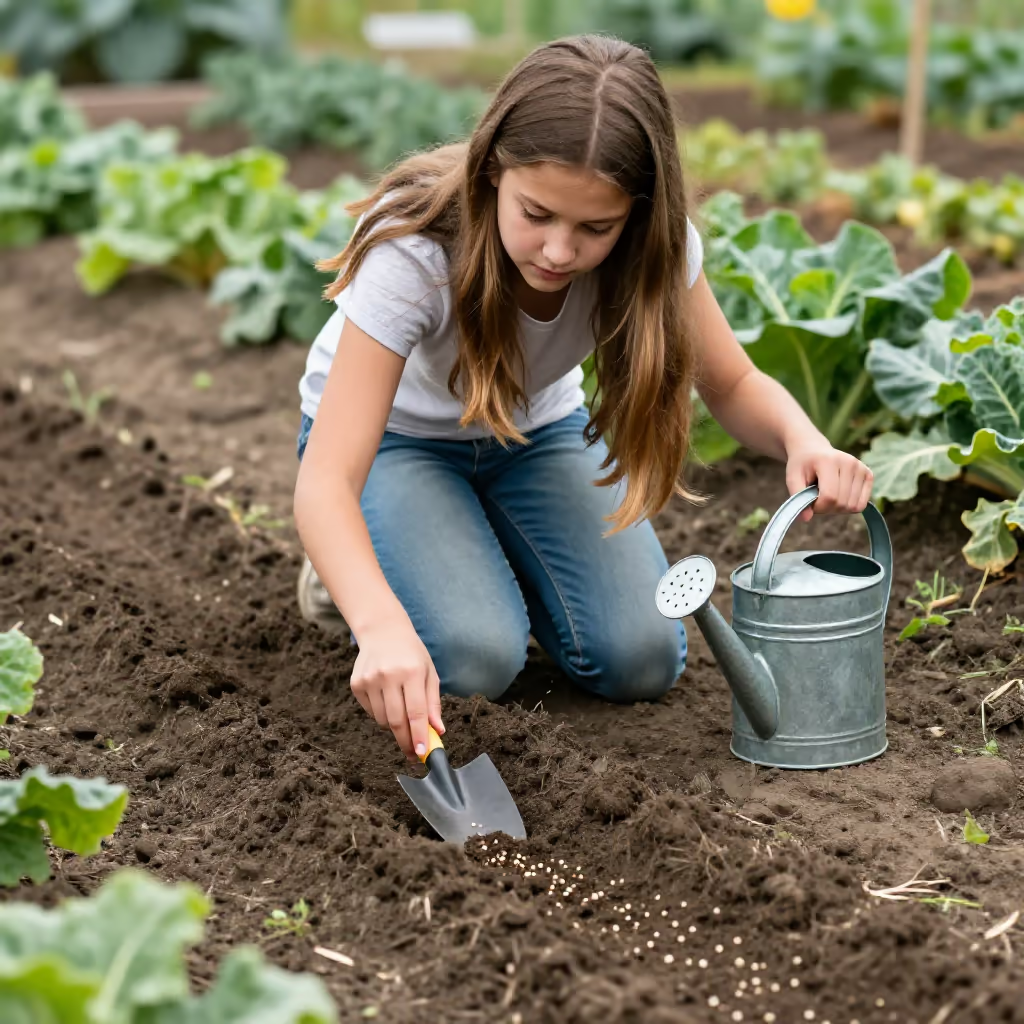
Am Nachmittag pflanzt der Gärtner die jungen Rosen ins Beet.
In the afternoon, the gardener plants the young roses in the bed.
Der Gärtner setzt die jungen Salatpflanzen in geraden Reihen ins Beet.
The gardener puts the young lettuce plants into the bed in straight rows.