

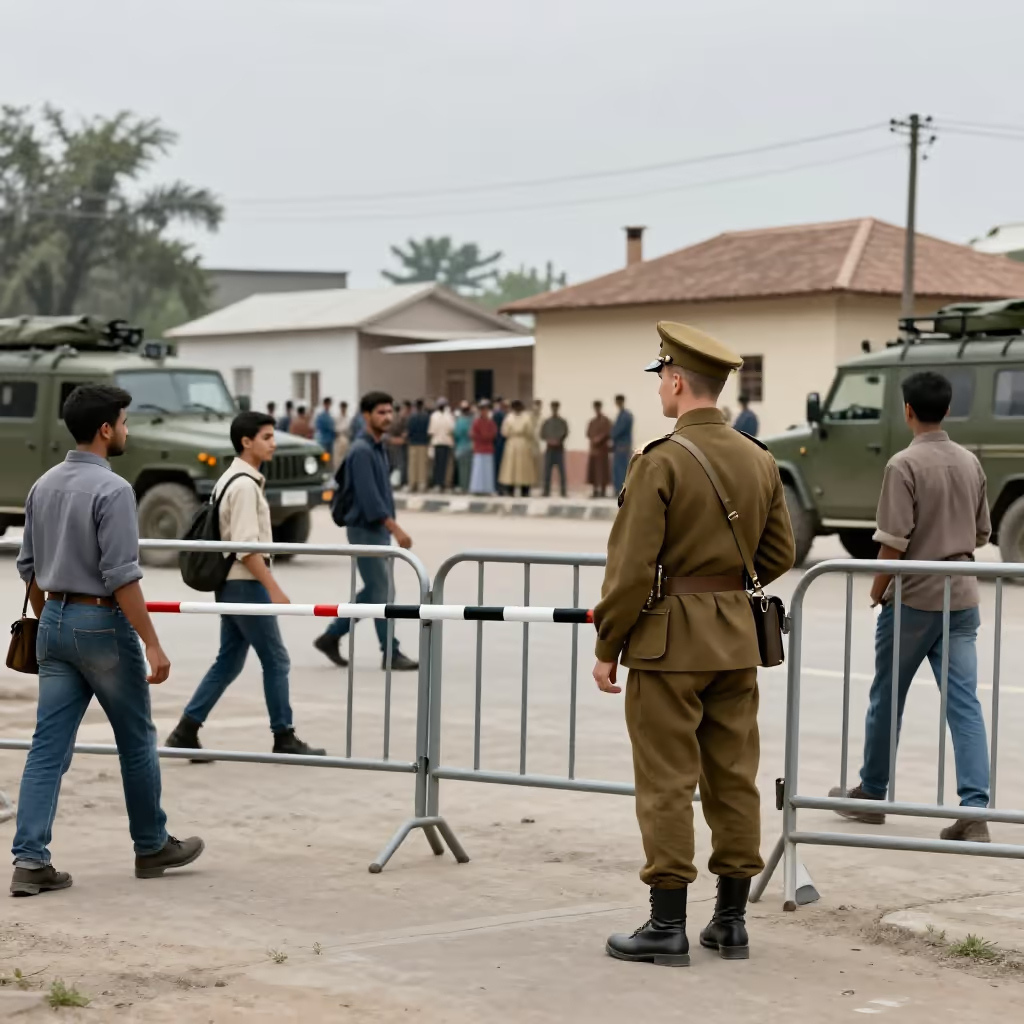
A person, usually a soldier, who belongs to a foreign military power that keeps a country or region militarily occupied and under control against the will of the local population.
example
Die Bevölkerung leistete Widerstand gegen die Besatzer.
The population resisted the occupiers.
Usage tips
Word family
The word 'Besatzer' (occupier) is derived from the verb 'besetzen' (to occupy). A group of occupiers forms 'die Besatzung' (the occupation force / crew) or 'die Besatzungsmacht' (the occupying power).
EXAMPLE
Die fremde Armee besetzte die Hauptstadt.
The foreign army occupied the capital.
Strong context
This word has a very strong negative connotation and is used almost exclusively in a military or political context. It describes an unwanted foreign controlling power.
EXAMPLE
Die Zeitung berichtete über den brutalen Umgang der Besatzer mit Zivilisten.
The newspaper reported on the occupiers' brutal treatment of civilians.
Typical collocations
Common expressions in connection with 'Besatzer' (occupier) are 'Widerstand leisten' (to resist), 'sich widersetzen' (to oppose / resist), or 'gegen die Besatzer kämpfen' (to fight against the occupiers).
EXAMPLE
Einige Bürger leisteten passiven Widerstand gegen die Besatzer.
Some citizens offered passive resistance against the occupiers.
Compare with
near_synonym · confusable
Besatzer vs Eroberer
conqueror
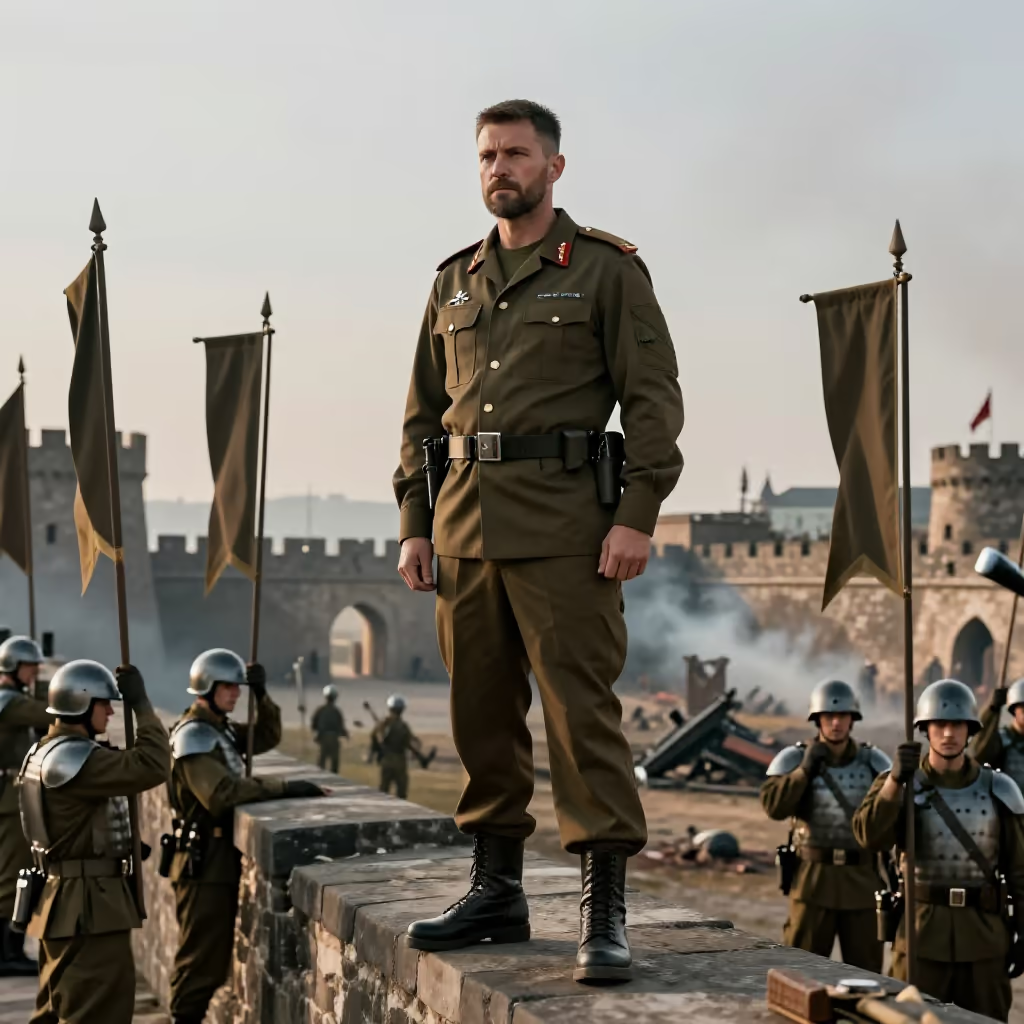
'der Eroberer' and 'der Besatzer' can both have to do with war and military violence. An 'Eroberer' takes over a country or territory through fighting. The focus is on winning and subjugating. A 'Besatzer' then keeps a foreign territory under military control, usually against the will of the population. The words can be confused because the same power can first be an 'Eroberer' and later a 'Besatzer'. For the attack and taking control, 'Eroberer' fits; for ongoing control, 'Besatzer' is better.
Besatzer
Die Besatzer kontrollierten die Straßen und ließen niemanden hinaus.
The occupiers controlled the streets and did not let anyone leave.
Eroberer
Der Eroberer nahm die Stadt nach einer langen Belagerung ein.