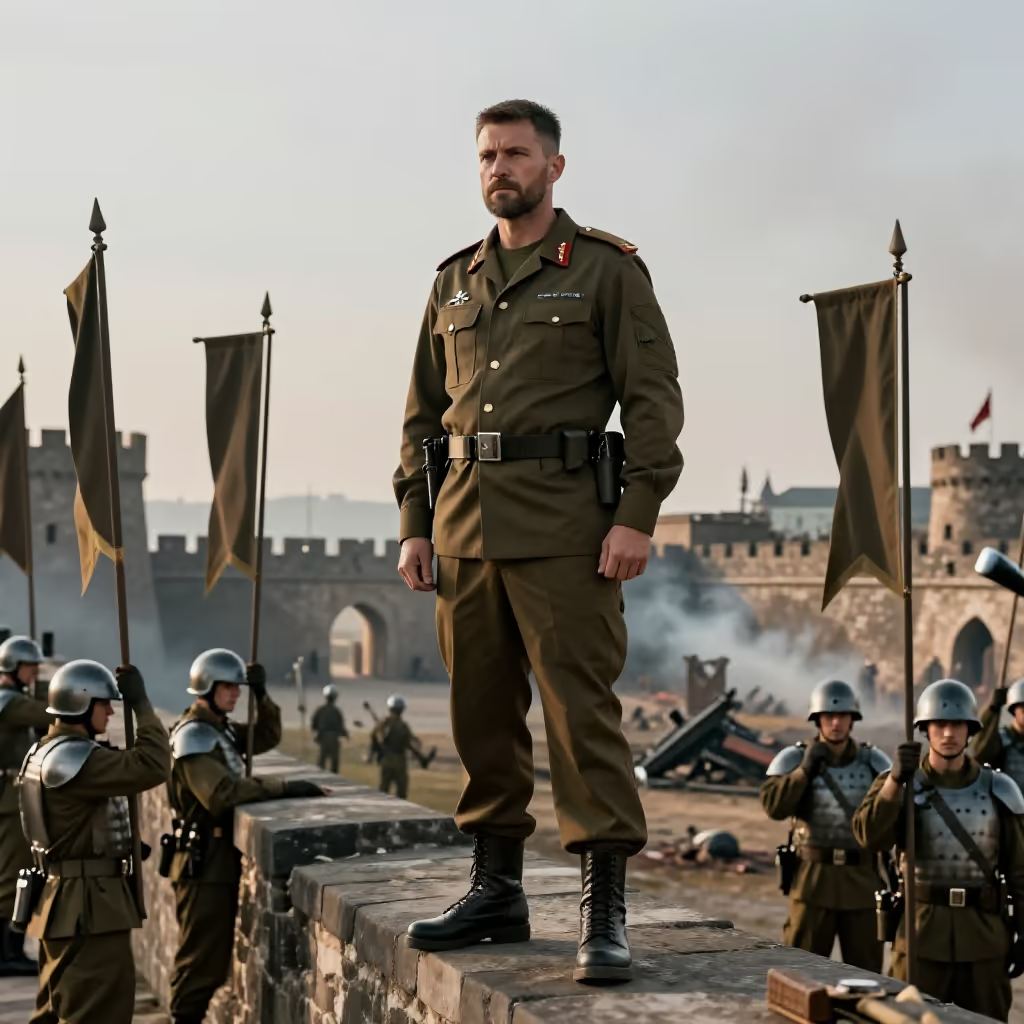
A male person who subjugates and takes possession of a country, territory, or people through military force.
example
Alexander der Große gilt als einer der größten Eroberer der Geschichte.
Alexander the Great is considered one of the greatest conquerors in history.

Usage tips
Word structure
'Der Eroberer' (the conqueror) is the masculine person noun derived from the verb 'erobern' (to conquer). The suffix '-er' is attached to the verb stem to name the doer of the action, that is, the person who conquers.
EXAMPLE
Der Feldherr war als rücksichtsloser Eroberer bekannt.
The general was known as a ruthless conqueror.
Context clues
The literal meaning refers to military or historical contexts (countries, cities). You can recognize the figurative, romantic meaning by the fact that it is about winning affection, often in connection with the word 'Herz' (heart).
EXAMPLE
Die spanischen Eroberer brachten neue Technologien nach Amerika.
The Spanish conquerors brought new technologies to America.
Figurative use
In the figurative meaning, the word is almost always combined with the object 'Herz' (heart) or 'Herzen' (hearts). It describes a person who is very successful romantically.
EXAMPLE
Er galt in seiner Jugend als großer Eroberer der Frauenherzen.
In his youth, he was considered a great conqueror of women's hearts.
Compare with
near_synonym · confusable
Eroberer vs Sieger
winner
'der Sieger' and 'der Eroberer' can both refer to a successful person, but the kind of success is different. A 'Sieger' wins a competition, a fight, or an election. An 'Eroberer' takes control of a territory by force; figuratively, he can also win a person's affection. The words can be confused because both sound like success. 'Sieger' is more neutral and fits sports, games, or elections. 'Eroberer' sounds stronger and fits war, history, or, figuratively, love and charm.
Eroberer
In der Dokumentation ging es um einen Eroberer, der viele Städte besetzte.
The documentary was about a conqueror who occupied many cities.
Sieger
Nach der Wahl sprach der Sieger kurz zu seinen Unterstützern.
After the election, the winner spoke briefly to his supporters.