

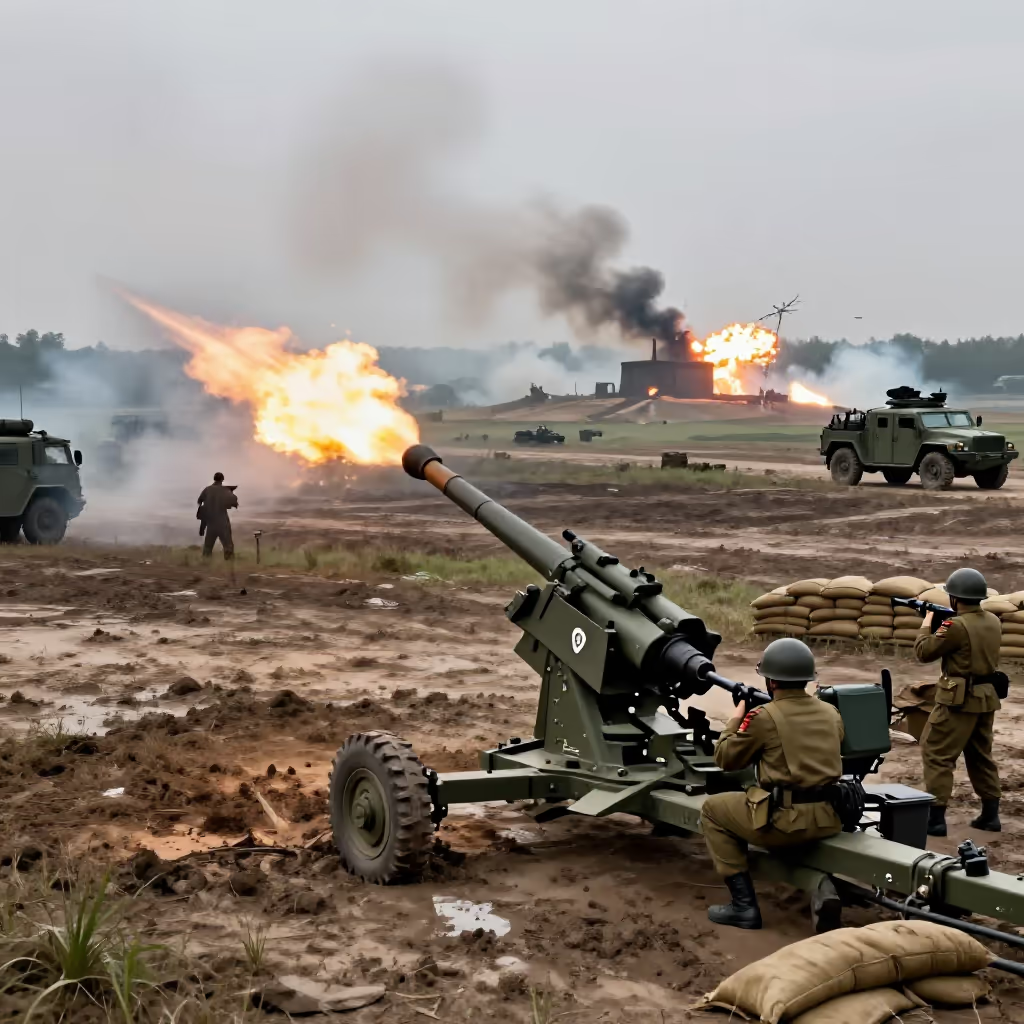
beschießen
to shell
To shoot repeatedly or intensely at a target with firearms, artillery, or other projectiles.
EXAMPLE
Die Burg wurde von den Angreifern mit Kanonen beschossen.
The castle was shelled with cannons by the attackers.
to shell / bombard
Loading your saved state.
to shell
To shoot repeatedly or intensely at a target with firearms, artillery, or other projectiles.
Die Burg wurde von den Angreifern mit Kanonen beschossen.
The castle was shelled with cannons by the attackers.

to bombard someone
To confront someone intensely and continuously with something in a figurative sense, usually with questions, accusations, or information.
Nach der Pressekonferenz wurde der Politiker von den Journalisten mit kritischen Fragen beschossen.
After the press conference, the politician was bombarded with critical questions by the journalists.
'Beschießen' (to shell/bombard) is an inseparable verb. The prefix 'be-' always stays attached to the stem 'schießen' (to shoot), including in the participle and in subordinate clauses.
Die Soldaten haben die feindliche Stellung beschossen.
The soldiers shelled the enemy position.
The prefix 'be-' makes the verb 'schießen' (to shoot) transitive, meaning it needs a direct accusative object. It often intensifies the action and emphasizes that the target is hit directly and intensely.
Die Kinder beschossen sich gegenseitig mit Wasserbomben.
The children bombarded each other with water balloons.
Whether the literal or figurative meaning is intended can be recognized from the object. If weapons or projectiles are mentioned, it is about real shooting. If questions, criticism, or words are mentioned, it is meant figuratively.
Die Festung wurde mit Kanonen beschossen. (wörtlich)
The fortress was shelled with cannons. (literal)
In the figurative meaning, the structure 'jemanden mit etwas (Dativ) beschießen' (to bombard someone with something) is almost always used. The 'something' is the verbal 'ammunition.'
Die Journalisten beschossen den Sprecher mit Vorwürfen.
The journalists bombarded the spokesperson with accusations.
to bombard
Bombardieren and beschießen can both mean repeatedly confronting someone with questions or other things. Bombardieren emphasizes the large quantity, while beschießen emphasizes the repeated, uninterrupted sequence more strongly. Choose the word based on whether the focus is on quantity or on continuous questioning.

Nach dem Vortrag beschossen die Zuhörer die Referentin ununterbrochen mit Fragen.
After the lecture, the audience fired questions at the speaker without stopping.
Nach dem Vortrag bombardierten die Zuhörer die Referentin mit einer großen Menge von Fragen.
After the lecture, the audience bombarded the speaker with a large number of questions.