


bewerfen
to pelt
To throw objects deliberately at a person, animal, or object.
EXAMPLE
Die Kinder bewarfen sich im Park gegenseitig mit Wasserbomben.
The children pelted each other with water balloons in the park.
to pelt / to throw at
Loading your saved state.
to pelt
To throw objects deliberately at a person, animal, or object.
Die Kinder bewarfen sich im Park gegenseitig mit Wasserbomben.
The children pelted each other with water balloons in the park.
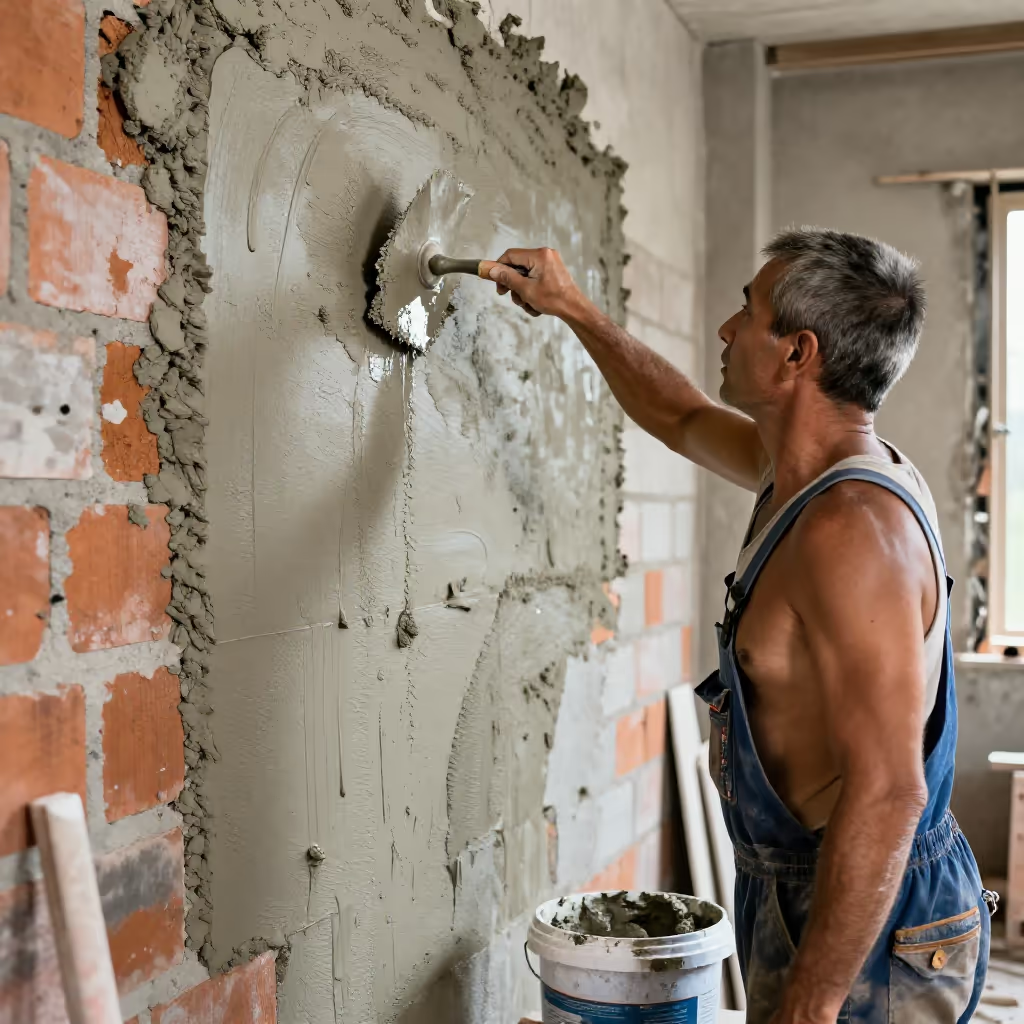
to coat by throwing
To cover a wall with mortar or plaster by throwing the material onto the wall. This is a technique used in construction.
Der Maurer muss die rohe Ziegelwand noch mit einer Schicht Putz bewerfen.
The bricklayer still has to coat the raw brick wall with a layer of plaster by throwing it on.
'Bewerfen' (to pelt / to throw at) is an inseparable verb that comes from the verb 'werfen' (to throw). The prefix 'be-' changes the sentence structure: the target of the throw becomes the direct accusative object of the sentence.
Die Demonstranten bewarfen das Gebäude mit Farbbeuteln.
The demonstrators pelted the building with paint bags.
The verb follows a fixed pattern: someone (subject) pelts someone/something (accusative) with something (dative). The thing being thrown is always used with the preposition 'mit' (with).
Im Winter bewerfen wir uns oft mit Schneebällen.
In winter, we often pelt each other with snowballs.
In the general meaning, 'bewerfen' (to pelt) is often combined with things that are thrown playfully or aggressively, e.g. 'mit Schlamm bewerfen' (to pelt with mud), 'mit Konfetti bewerfen' (to shower/pelt with confetti), or 'mit Kissen bewerfen' (to pelt with pillows).
Nach der Hochzeit wurde das Brautpaar mit Reis beworfen.
After the wedding, the bride and groom were showered with rice.
The construction meaning is very specific. You can recognize it from words like 'Wand' (wall), 'Mauer' (wall), 'Putz' (plaster), or 'Mörtel' (mortar). In all other cases, the general meaning 'etwas auf jemanden werfen' (to throw something at someone) is meant.
Der Handwerker bewarf die Wand gleichmäßig mit dem frischen Putz.
The craftsman coated the wall evenly with the fresh plaster by throwing it on.
to throw
Both verbs can describe deliberately throwing an object at a target. With werfen, the object being thrown or the throwing movement is usually in the foreground, whereas bewerfen names the target as the accusative object and usually introduces the thrown object with mit. Use bewerfen when the target is especially emphasized.

Die Kinder bewarfen ihren Bruder mit Schneebällen.
The children pelted their brother with snowballs.
Tom warf einen Schneeball auf seinen Bruder.
Tom threw a snowball at his brother.