

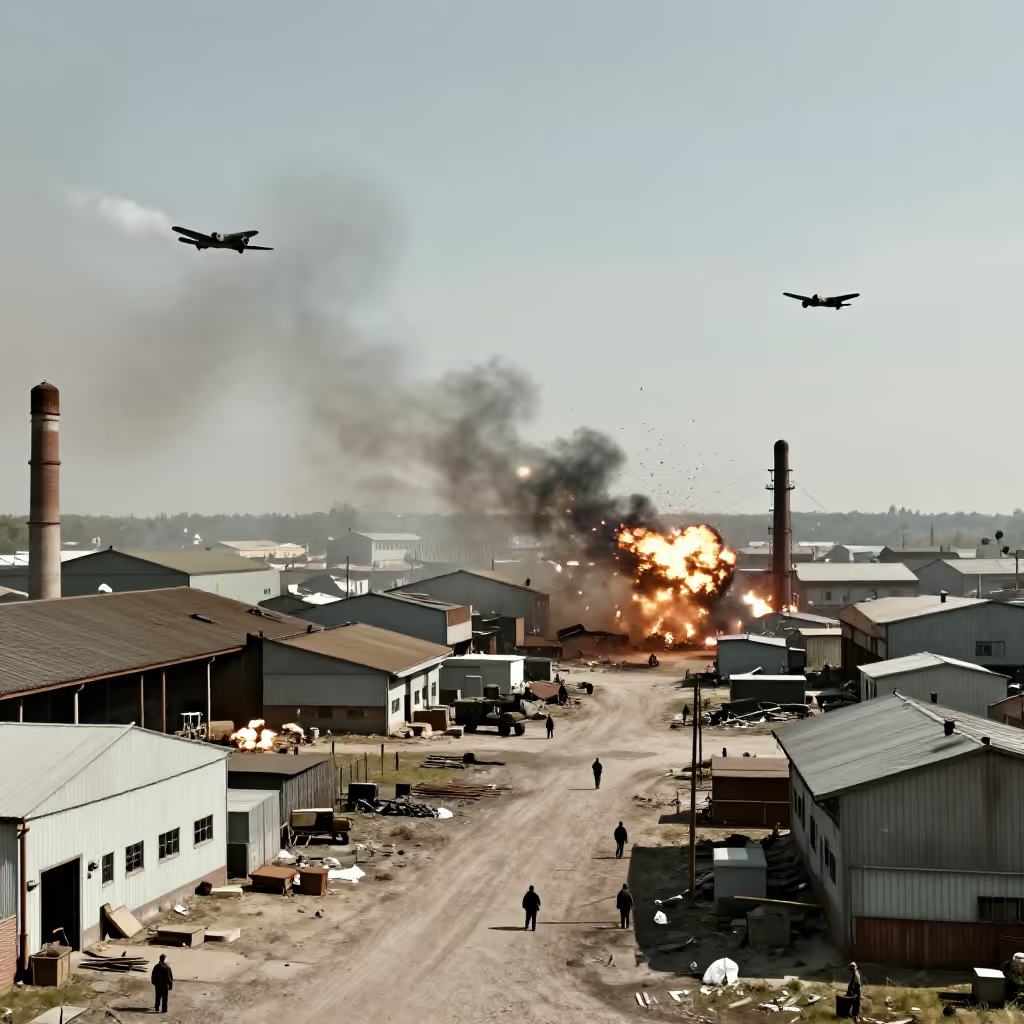
bombardieren
to bombard
To attack a place or target in war with bombs or artillery.
EXAMPLE
Im Zweiten Weltkrieg wurden viele europäische Städte bombardiert.
In the Second World War, many European cities were bombarded.
to bombard
Loading your saved state.
to bombard
To attack a place or target in war with bombs or artillery.
Im Zweiten Weltkrieg wurden viele europäische Städte bombardiert.
In the Second World War, many European cities were bombarded.

to bombard
To overwhelm someone figuratively with a large amount of something, for example questions, emails, or calls.
Nach der Pressekonferenz bombardierten die Reporter den Minister mit Fragen.
After the press conference, the reporters bombarded the minister with questions.
The verb 'bombardieren' (to bombard) is derived from the noun 'die Bombe' (the bomb). The ending '-ieren' is often used for verbs formed from foreign words.
Die Journalisten bombardierten ihn mit kritischen Fragen.
The journalists bombarded him with critical questions.
In the figurative meaning, the verb has a fixed structure: someone bombards someone (accusative) with something (dative).
Meine Kinder bombardieren mich jeden Tag mit neuen Ideen.
My children bombard me with new ideas every day.
In the figurative sense, people are often bombarded 'mit Fragen' (with questions), 'mit Anrufen' (with calls), 'mit E-Mails' (with emails), or also 'mit Vorwürfen' (with accusations).
Seit der Ankündigung wird der Kundenservice mit Anrufen bombardiert.
Since the announcement, customer service has been bombarded with calls.
to shell / bombard
Bombardieren and beschießen can both mean repeatedly confronting someone with questions or other things. Bombardieren emphasizes the large quantity, while beschießen emphasizes the repeated, uninterrupted sequence more strongly. Choose the word based on whether the focus is on quantity or on continuous questioning.

Nach dem Vortrag bombardierten die Zuhörer die Referentin mit einer großen Menge von Fragen.
After the lecture, the audience bombarded the speaker with a large number of questions.
Nach dem Vortrag beschossen die Zuhörer die Referentin ununterbrochen mit Fragen.
After the lecture, the audience fired questions at the speaker without stopping.