

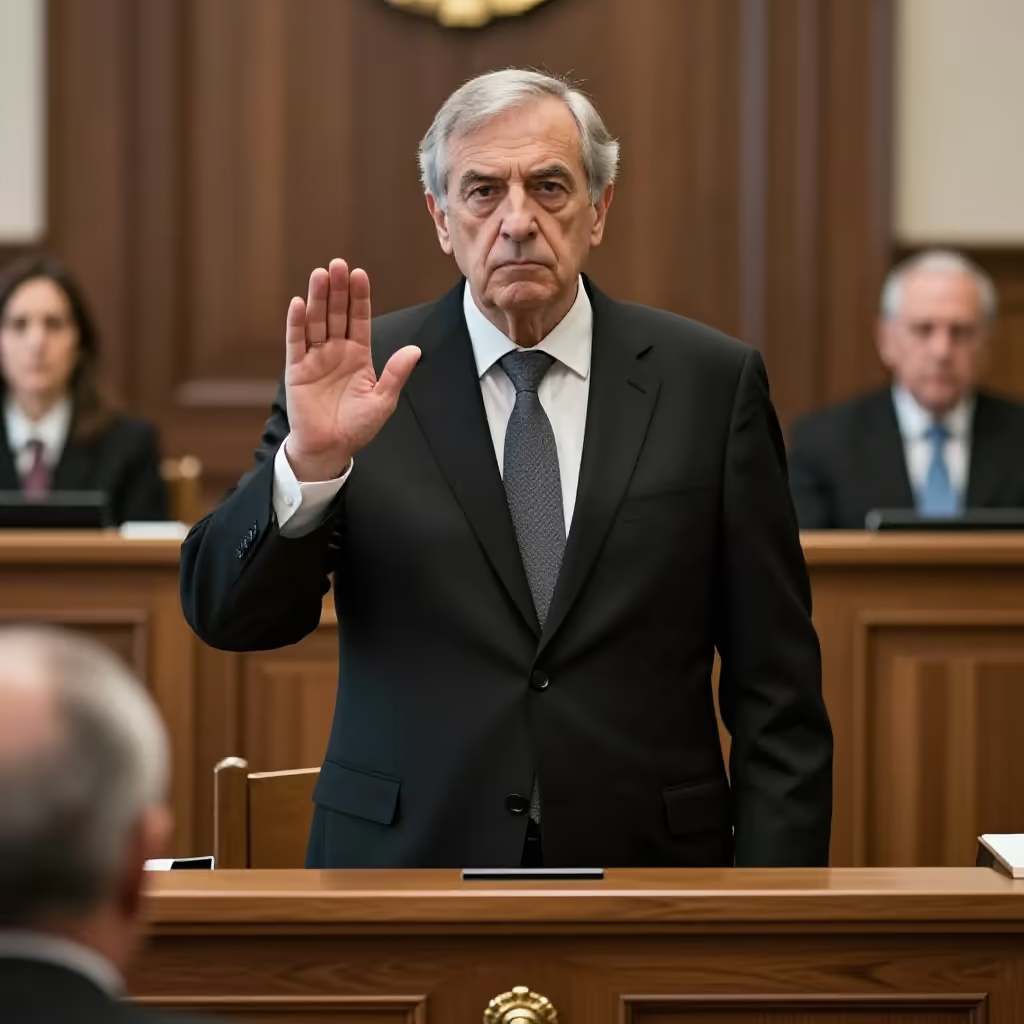
beschwören
to swear
To solemnly and emphatically assure something, often as if under oath.
EXAMPLE
Ich kann beschwören, dass ich die Tür abgeschlossen habe, bevor wir gegangen sind.
I can swear that I locked the door before we left.
to swear / to summon
Loading your saved state.
to swear
To solemnly and emphatically assure something, often as if under oath.
Ich kann beschwören, dass ich die Tür abgeschlossen habe, bevor wir gegangen sind.
I can swear that I locked the door before we left.

to implore
To urgently and emotionally ask or plead with someone to do something or not to do something.
Ich beschwöre dich, sei bei dieser gefährlichen Wanderung extrem vorsichtig!
I implore you, be extremely careful on this dangerous hike!

to bring about
To cause a negative situation such as a conflict, danger, or crisis through careless words or actions.
Mit seinen unbedachten Äußerungen hat er eine diplomatische Krise heraufbeschworen.
With his careless remarks, he brought about a diplomatic crisis.

to summon
To try to call forth supernatural beings such as spirits or demons through magic or a spell.
In dem Fantasy-Roman versucht der Magier, einen mächtigen Drachen zu beschwören.
In the fantasy novel, the magician tries to summon a powerful dragon.
The verb is derived from 'schwören' (to swear). The prefix 'be-' intensifies the action or directs it toward an object. The basic idea of a solemn oath is still recognizable in many meanings.
Er schwor, immer die Wahrheit zu sagen.
He swore to always tell the truth.
'Beschwören' (to swear / to summon) is an inseparable verb. The prefix 'be-' is never separated from the verb stem in any form.
Sie beschwor ihre Unschuld vor Gericht.
She swore to her innocence in court.
Careful: 'heraufbeschwören' (to bring about) is a different, separable verb. The prefix 'herauf-' comes at the end in a main clause. It means to unintentionally cause a negative situation.
Seine Rede beschwor einen Streit herauf.
His speech brought about an argument.
The object of the verb helps you recognize the meaning. Are you swearing to a fact ('dass ...' — that ...), imploring a person ('dich' — you), summoning spirits, or bringing about a crisis? Each object leads to a different meaning.
Ich beschwöre dich, mir zu helfen!
I implore you to help me!
In the meaning 'feierlich versichern' (to solemnly assure), a 'dass' (that) clause often follows, expressing exactly what is being assured.
Er beschwor, dass er nichts von dem Plan gewusst habe.
He swore that he had known nothing about the plan.
to insure / to assure
Versichern and beschwören can both confirm a statement emphatically. Versichern sounds more neutral and is usually intended to remove doubts, while beschwören sounds especially solemn, emotional, or like an oath. Use „versichern“ in ordinary conversation and „beschwören“ when great urgency is intended.

Er beschwor seine Freundin unter Tränen, dass er die Wahrheit sagte.
Through her tears, he swore to his girlfriend that he was telling the truth.
Er versicherte seiner Freundin ruhig, dass er die Wahrheit sagte.
He calmly assured his girlfriend that he was telling the truth.