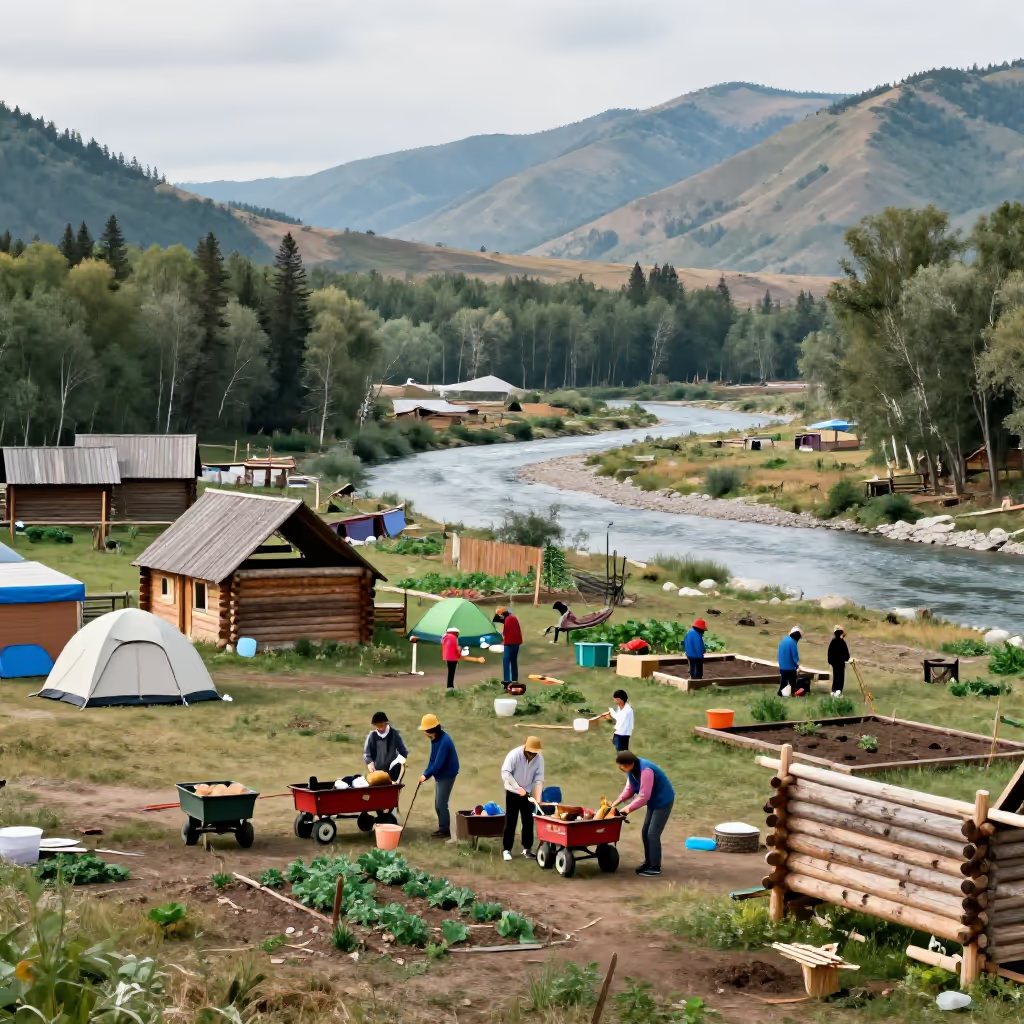
To settle in a previously uninhabited or foreign area and establish a settlement there.
example
Europäische Auswanderer besiedelten im 19. Jahrhundert weite Teile Nordamerikas.
European emigrants settled large parts of North America in the 19th century.
Usage tips
Inseparable verb
The verb 'besiedeln' (to settle/colonize) is inseparable. The prefix 'be-' always stays firmly attached to the verb and makes the verb require an accusative object: Wen oder was besiedeln? (Settle/colonize whom or what?)
EXAMPLE
Die Römer besiedelten große Teile Europas.
The Romans settled large parts of Europe.
Context clue
You can tell whether people or other living beings are meant from the subject of the sentence. If it is about humans ('Siedler' (settlers), 'ein Volk' (a people)), the historical meaning is meant. With animals, plants, or bacteria, the biological meaning is meant.
EXAMPLE
Die ersten Siedler besiedelten das fruchtbare Tal.
The first settlers settled the fertile valley.
Typical collocations
In a historical context, 'besiedeln' (to settle/colonize) is often used with geographical places as the object. Typical combinations are 'ein Gebiet besiedeln' (to settle an area), 'eine Region besiedeln' (to settle a region), or 'einen Kontinent besiedeln' (to settle a continent).
EXAMPLE
Die Polynesier besiedelten die entlegensten Inseln des Pazifiks.
The Polynesians settled the most remote islands of the Pacific.
Biological context
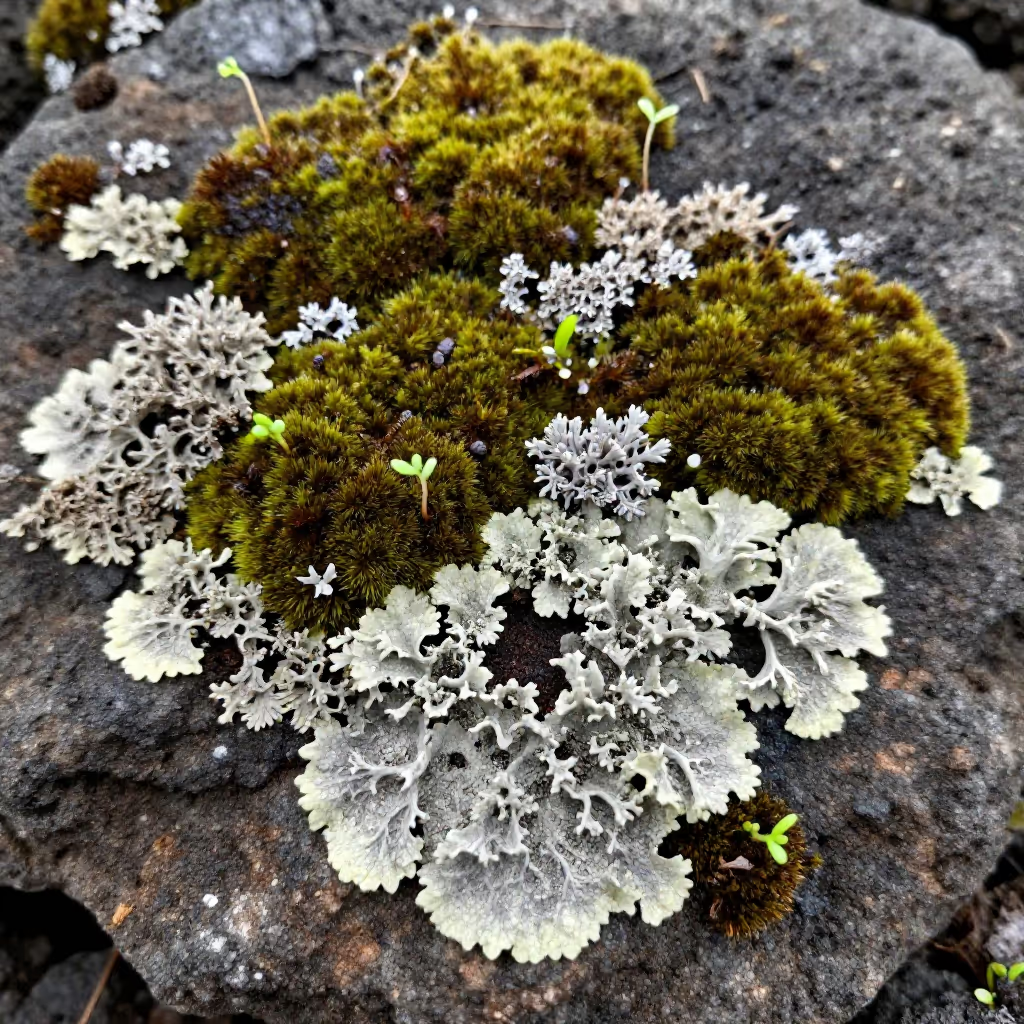
In biology and medicine, the verb is used to describe the spread of organisms. For example, people say that bacteria 'eine Wunde besiedeln' (colonize a wound) or useful microbes 'den Darm besiedeln' (colonize the intestine).
EXAMPLE
Bestimmte Algenarten besiedeln selbst die unwirtlichsten Felsen.
Certain types of algae colonize even the most inhospitable rocks.
Compare with
near_synonym · confusable
besiedeln vs ansiedeln
to settle / establish
'ansiedeln' and 'besiedeln' both have to do with people, animals, or plants living in a place or spreading there. 'sich ansiedeln' focuses more on the people, companies, or species: they come to a place and stay there. You can also say that someone establishes a company or an animal species somewhere. 'besiedeln' focuses more strongly on the area or habitat: an area is filled with inhabitants or inhabited by a species. The words can be confused because both fit when talking about new places to live or new habitats. As a guide: people or companies 'siedeln sich an'; an area 'wird besiedelt'.
besiedeln
Nach vielen Jahren besiedeln wieder seltene Vögel das alte Moor.
After many years, rare birds are colonizing the old moor again.
ansiedeln
In der Nähe des Bahnhofs haben sich mehrere kleine Firmen angesiedelt.
Several small companies have settled near the train station.