

bevölkern
populate
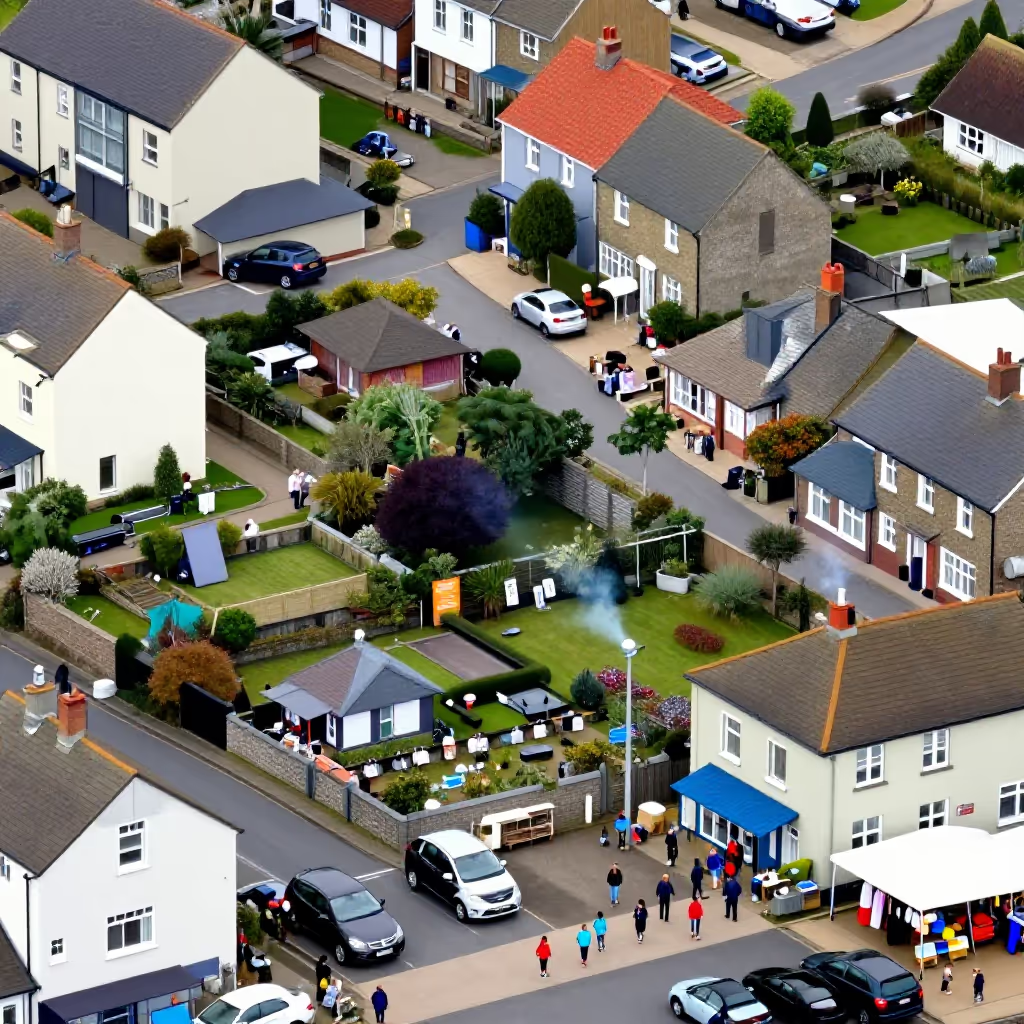
To live as inhabitants in an area, country, or place.
EXAMPLE
Verschiedene indigene Stämme bevölkerten ursprünglich diesen Kontinent.
Various indigenous tribes originally populated this continent.
to populate / to fill
Loading your saved state.
populate
To live as inhabitants in an area, country, or place.
Verschiedene indigene Stämme bevölkerten ursprünglich diesen Kontinent.
Various indigenous tribes originally populated this continent.
fill
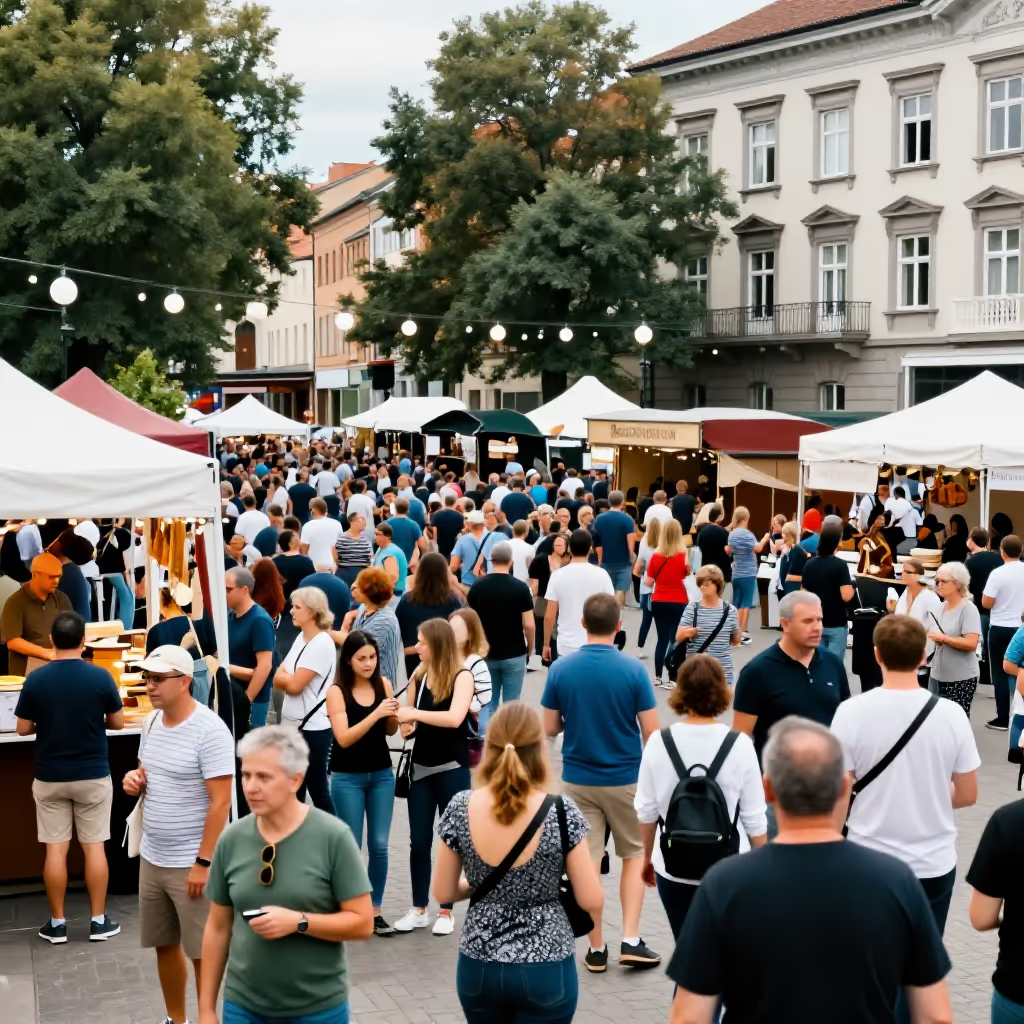
To fill a place in large numbers or spend time there, without living there permanently.
Am Wochenende bevölkern Touristen die Altstadt.
On weekends, tourists fill the old town.
This verb is derived from the noun 'das Volk' (the people). The inseparable prefix 'be-' makes it a transitive verb that literally means to fill a place 'with people'.
Unzählige Insekten bevölkern diesen Wald.
Countless insects populate this forest.
'Bevölkern' (to populate/fill) always requires a direct object in the accusative that denotes the place or area. It is also often used in the passive to emphasize the place.
Die Küste wird von vielen verschiedenen Vogelarten bevölkert.
The coast is populated by many different species of birds.
The context shows whether permanent settlement (m01) or a temporary crowd of people (m02) is meant. In m01, the subjects are often 'Stämme' (tribes), 'Arten' (species), or 'Einwohner' (inhabitants). In m02, they are typically 'Touristen' (tourists), 'Fans' (fans), or 'Besucher' (visitors).
Vor Jahrhunderten bevölkerten Kelten diese Region.
Centuries ago, Celts populated this region.
In the meaning 'to fill a place', the verb is often used for public spaces. Typical combinations are 'die Strände bevölkern' (to fill the beaches), 'die Einkaufsstraßen bevölkern' (to fill the shopping streets), or 'den Park bevölkern' (to fill the park).
An sonnigen Tagen bevölkern Familien die Spielplätze.
On sunny days, families fill the playgrounds.
to live
Both verbs can express that people live permanently in a place. With wohnen, the person is the subject and the place usually follows as a location phrase. With bevölkern, the inhabitants are likewise the subject, but the inhabited place appears as an accusative object.

Seit vielen Generationen bevölkern mehrere Familien dieses Tal.
Several families have populated this valley for many generations.
Seit vielen Generationen wohnen mehrere Familien in diesem Tal.
Several families have lived in this valley for many generations.