


blättern
to leaf through
To turn the pages of a book, magazine, or document, often casually and without reading closely.
Während er wartete, blätterte er gelangweilt in einer Illustrierten.
While he was waiting, he leafed through a magazine, bored.
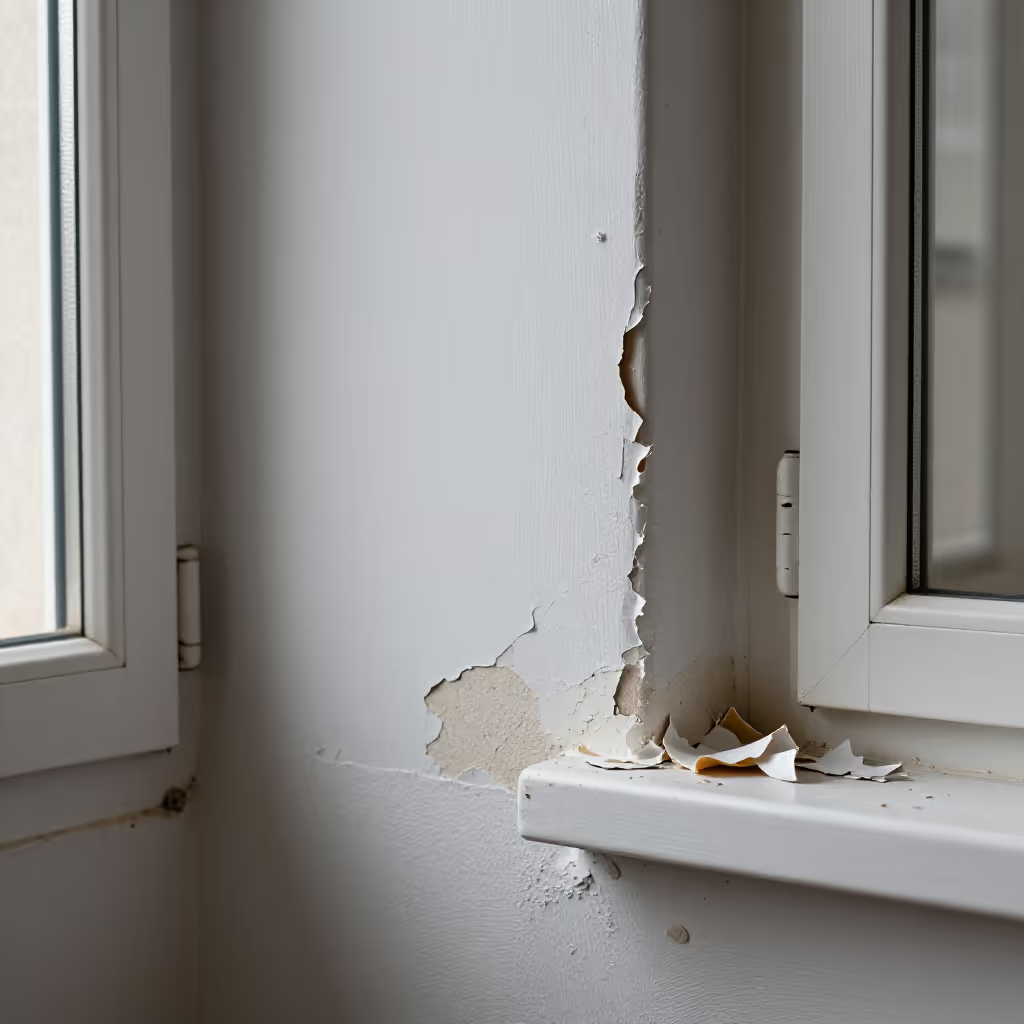

to leaf through / to flake
Loading your saved state.
to leaf through
To turn the pages of a book, magazine, or document, often casually and without reading closely.
Während er wartete, blätterte er gelangweilt in einer Illustrierten.
While he was waiting, he leafed through a magazine, bored.

The verb 'blättern' (to leaf through / to flake) comes from the noun 'das Blatt' (leaf/sheet). This connection explains both meanings: you turn the 'Blätter' (pages) of a book, or paint comes off in 'leaf-like' pieces.
Im Herbst fallen die Blätter von den Bäumen.
In autumn, the leaves fall from the trees.
The subject of the sentence reveals the meaning. If a person is the subject, 'blättern' (to leaf through) means turning pages. If paint, plaster, or skin is the subject, it means 'sich ablösen' (to come off/detach).
Er blätterte nervös durch seine Notizen.
He leafed nervously through his notes.
When turning pages, 'blättern' (to leaf through) is often used with the prepositions 'in' (+ dative) or 'durch' (+ accusative) to name the medium.
Sie blätterte in einem alten Fotoalbum.
She leafed through an old photo album.
When something comes off, the preposition 'von' (+ dative) is often used to describe the surface something is detaching from.
Nach dem Sonnenbrand hat die Haut von meinen Schultern geblättert.
After the sunburn, the skin on my shoulders flaked.
to read
'lesen' and 'blättern' often happen with books, magazines, or documents, but they do not mean the same thing. 'lesen' means that you really take in the text and want to understand it. 'blättern' means that you turn pages or quickly look through a book or notebook. You may read only a little or be looking for something. Learners may confuse the words because when leafing through something, you sometimes also read individual words. If the content is important, you say 'lesen'. If the movement through the pages or a quick overview is important, you say 'blättern'.

Im Wartezimmer blätterte sie in einer alten Zeitschrift.
In the waiting room, she leafed through an old magazine.
Heute liest ihr den Text zu Hause und beantwortet danach die Fragen.
Today you will read the text at home and answer the questions afterward.