

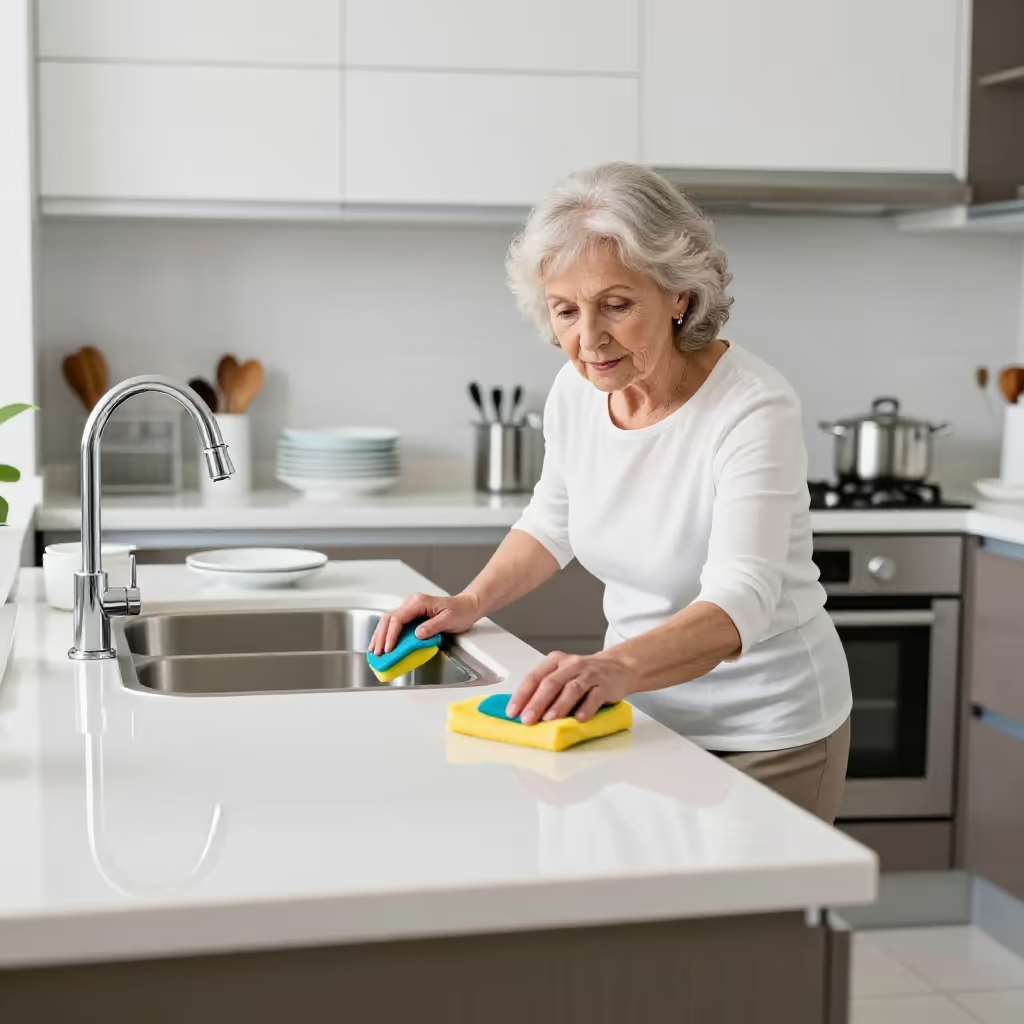
(Colloquial, predicative only) Extremely clean, flawless. A short form of 'blitzblank' (sparkling clean) or 'blitzsauber' (spotlessly clean).
example
Nachdem wir den ganzen Tag geputzt hatten, war die Küche wieder blitz.
After we had cleaned all day, the kitchen was spotless again.

Usage tips
Predicative only
This adjective can only be used predicatively, meaning after the noun with a verb like 'sein' (to be) or 'werden' (to become). It cannot stand before a noun and is therefore never declined.
EXAMPLE
Das Badezimmer ist jetzt wieder blitz.
The bathroom is spotless again now.
Word family
The adjective 'blitz' (spotless) is derived from the noun 'der Blitz' (lightning). It describes something that is so clean that it lights up or shines like lightning.
EXAMPLE
Nach der Autowäsche war der Lack wieder blitz.
After the car wash, the paintwork was spotless again.
Register: colloquial
'Blitz' (spotless) in this meaning is colloquial. It is a short and informal way to say that something is immaculately clean.
EXAMPLE
Wow, deine Fenster sind ja blitz!
Wow, your windows are really spotless!
Compare with
near_synonym
Blitz vs sauber
clean
'sauber' and 'blitz' can both mean that something is not dirty. 'sauber' is the normal word for things, rooms, or clothing without dirt. 'blitz' is colloquial and means extremely clean, almost spotless. It is used only predicatively, for example with 'sein' (to be): 'Das Bad ist blitz.' (The bathroom is spotless.) In everyday language, 'sauber' is always natural; 'blitz' sounds stronger and more casual.
Blitz
Nach dem Putzen ist das Bad wieder blitz.
After cleaning, the bathroom is spotless again.
sauber
Du machst den Tisch sauber, bevor die Gäste kommen.