

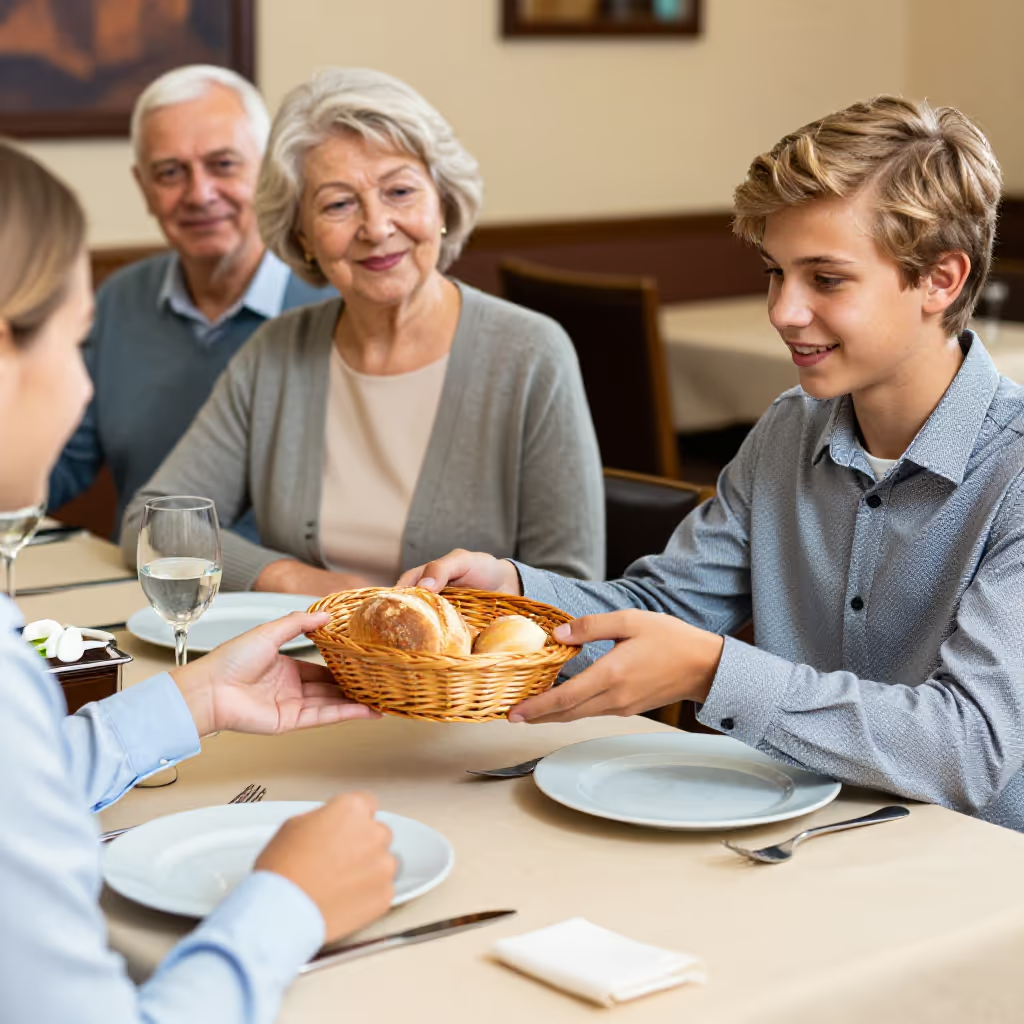
das Benehmen
behavior / manners
The way a person behaves in social situations, especially with regard to politeness, decency, and manners.
Sein schlechtes Benehmen bei der Feier hat alle schockiert.
His bad behavior at the party shocked everyone.


behavior / manners
Loading your saved state.
behavior / manners
The way a person behaves in social situations, especially with regard to politeness, decency, and manners.
Sein schlechtes Benehmen bei der Feier hat alle schockiert.
His bad behavior at the party shocked everyone.

'Das Benehmen' (behavior/manners) is the nominalization of the reflexive verb 'sich benehmen' (to behave). This pattern, in which the infinitive of a verb becomes a neuter noun, is very common in German.
Er muss lernen, sich in der Schule besser zu benehmen.
He has to learn to behave better at school.
'Benehmen' (behavior/manners) is almost always combined with adjectives that evaluate the behavior. Common combinations are 'gutes Benehmen' (good manners), 'schlechtes Benehmen' (bad behavior), 'unmögliches Benehmen' (impossible/unacceptable behavior), or 'tadelloses Benehmen' (impeccable behavior).
Für diesen Job sind gute Umgangsformen und ein tadelloses Benehmen wichtig.
For this job, good manners and impeccable behavior are important.
The expression 'sich ins Benehmen setzen mit' (to contact / to enter into consultation with) is very formal and belongs to official or administrative language. It is practically never used in normal everyday speech.
Das Ministerium wird sich mit den betroffenen Verbänden ins Benehmen setzen.
The ministry will contact the affected associations.
This meaning exists only as a fixed expression: 'sich ins Benehmen setzen mit jemandem' (to contact someone / to enter into consultation with someone). The preposition 'mit' requires the dative here.
Bitte setzen Sie sich zur Klärung des Sachverhalts mit der Personalabteilung ins Benehmen.
Please contact the HR department to clarify the facts of the matter.
style
'der Stil' and 'das Benehmen' can both describe how a person interacts with others. 'Stil' sounds more general here and means a person's characteristic way of presenting themselves, for example calm, direct, or polite. 'Benehmen' refers more specifically to whether someone behaves appropriately and politely in a social situation. The words are easy to confuse because both have to do with behavior. If you are talking about politeness or rules in social interaction, 'Benehmen' fits better. If you are describing a person's characteristic manner, 'Stil' is often the right choice.

Das Benehmen des Kindes im Restaurant war sehr höflich.
The child's behavior in the restaurant was very polite.
Herr Neumanns Stil im Gespräch ist ruhig und respektvoll.
Mr. Neumann's style in conversation is calm and respectful.