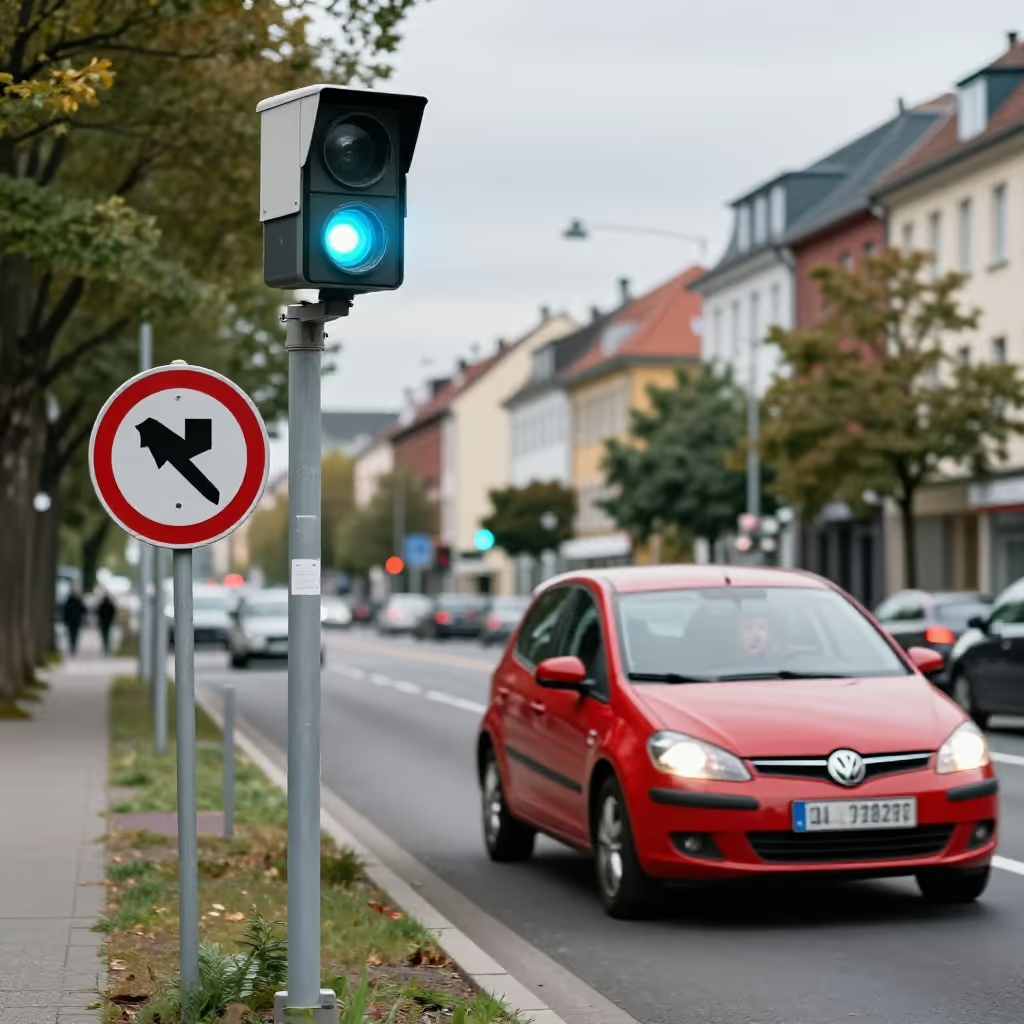
A device that measures the speed of vehicles and takes a photo if the speed limit is exceeded. Also called a radar trap.
example
Ich bin gestern auf der Autobahn von einem Blitzer erwischt worden.
Yesterday I was caught by a speed camera on the highway.

Usage tips
Word family
The word 'Blitzer' (speed camera/flash) is derived from the verb 'blitzen' (to flash/lightning). The ending '-er' here refers to a thing that performs the action of the verb—so a device that produces a flash.
EXAMPLE
Am Himmel blitzte es, aber es regnete nicht.
There was lightning in the sky, but it wasn't raining.
Context clue
You can always tell from context whether a radar trap or a camera flash is meant. If it is about traffic, speed, and fines, it is the radar trap. If it is about photography, portraits, and light, it is the flash unit.
EXAMPLE
Fahr vorsichtig, auf dieser Strecke gibt es oft Blitzer.
Drive carefully; there are often speed cameras on this route.
Typical collocations
In connection with radar traps, fixed expressions are often used. Typical phrases are 'in einen Blitzer fahren' (to drive into a speed camera trap), 'von einem Blitzer erwischt werden' (to be caught by a speed camera), or 'geblitzt werden' (to be flashed/caught by a speed camera).
EXAMPLE
Ich glaube, ich wurde gerade geblitzt.
I think I just got flashed by a speed camera.
Typical collocations
In photography, people often talk about an 'externen Blitzer' (external flash; a separate device) or an 'internen Blitzer' (built-in flash; built into the camera). You can take photos 'mit Blitzer' (with flash) or 'ohne Blitzer' (without flash).
EXAMPLE
Ein externer Blitzer sorgt für eine bessere Ausleuchtung des Motivs.
An external flash provides better illumination of the subject.