

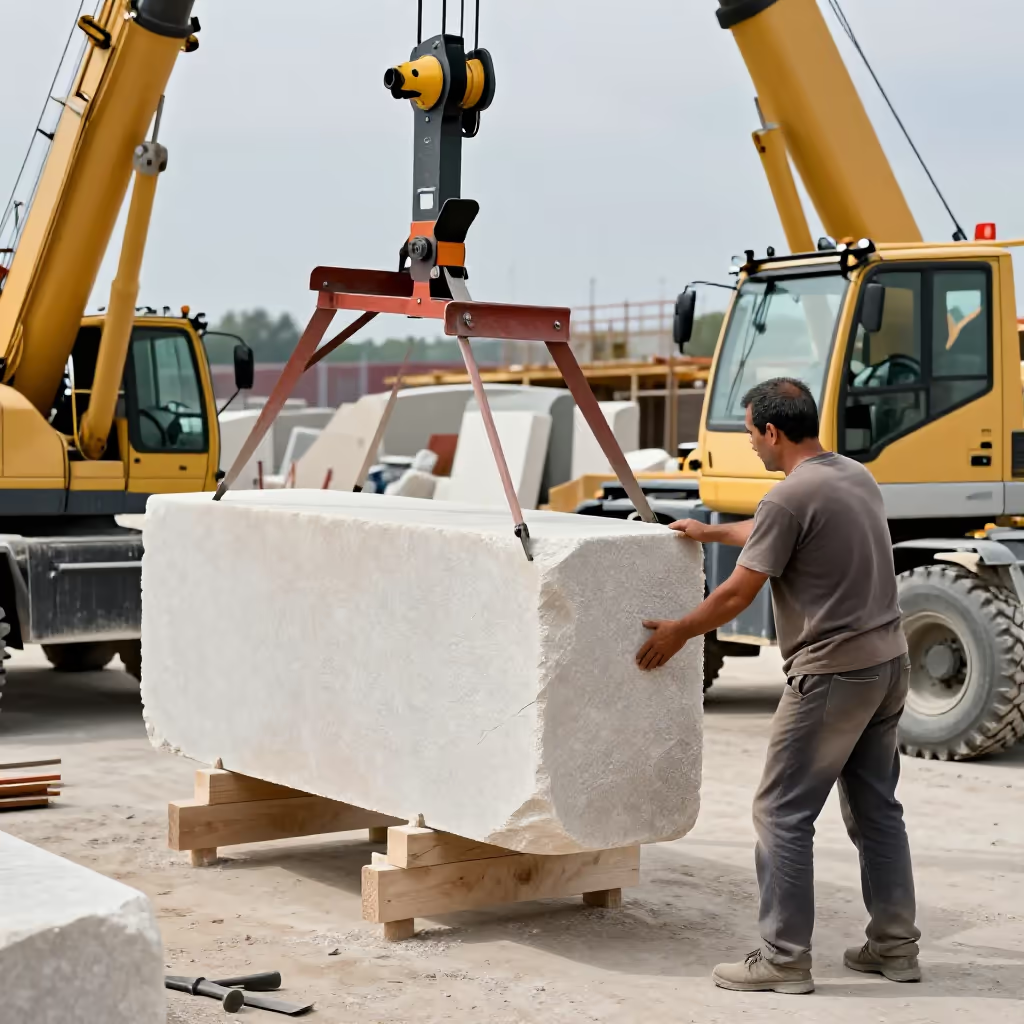
der Block
block
A large, solid piece of a firm material such as stone, wood, or ice.
EXAMPLE
Der Bildhauer meißelte die Figur aus einem einzigen Block Marmor.
The sculptor chiseled the figure from a single block of marble.
block / pad
Loading your saved state.
block
A large, solid piece of a firm material such as stone, wood, or ice.
Der Bildhauer meißelte die Figur aus einem einzigen Block Marmor.
The sculptor chiseled the figure from a single block of marble.

notepad / pad
A stack of paper glued together along one edge and used for writing or drawing.
Ich habe mir während des Meetings alles auf einem Block notiert.
I wrote everything down on a notepad during the meeting.
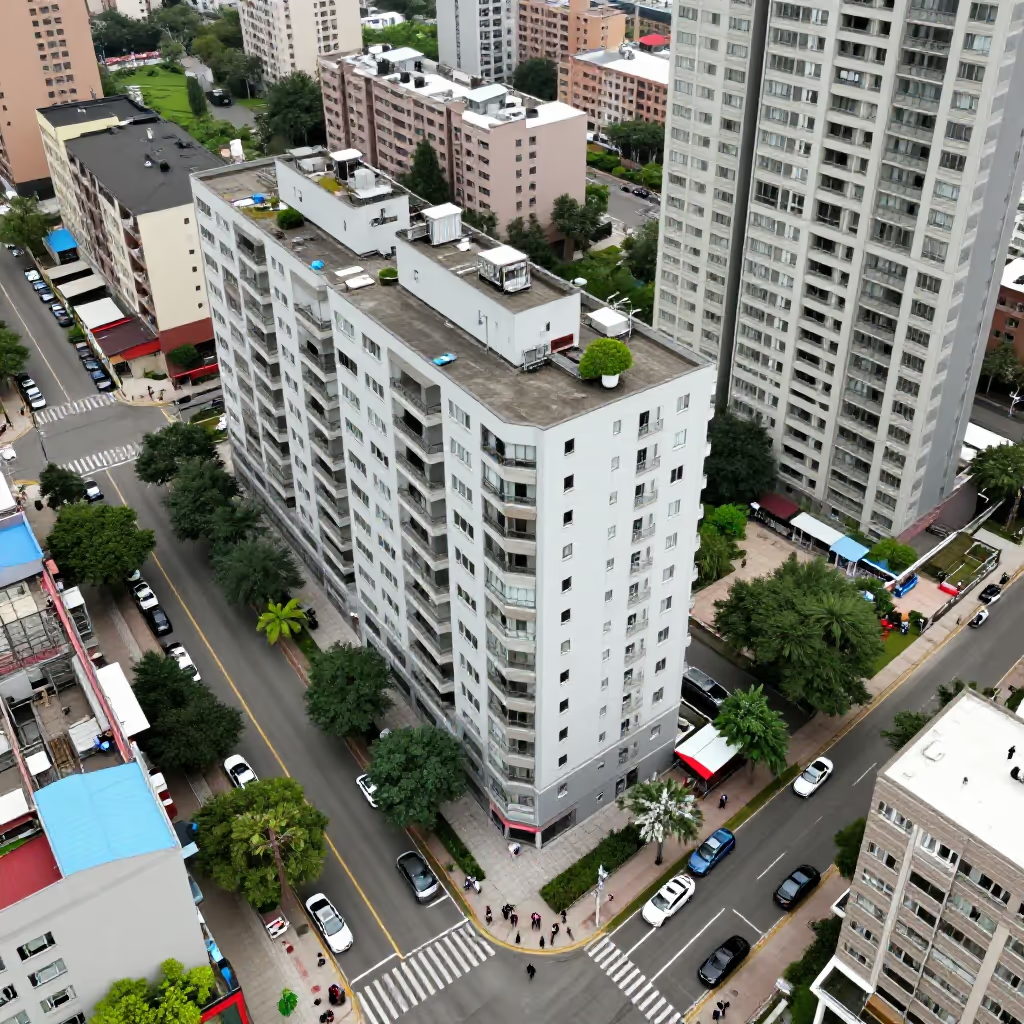
block
A large residential building or a complex of several connected buildings; also an urban area enclosed by streets.
Sie wohnt in dem großen Block am Ende der Straße.
She lives in the large block at the end of the street.
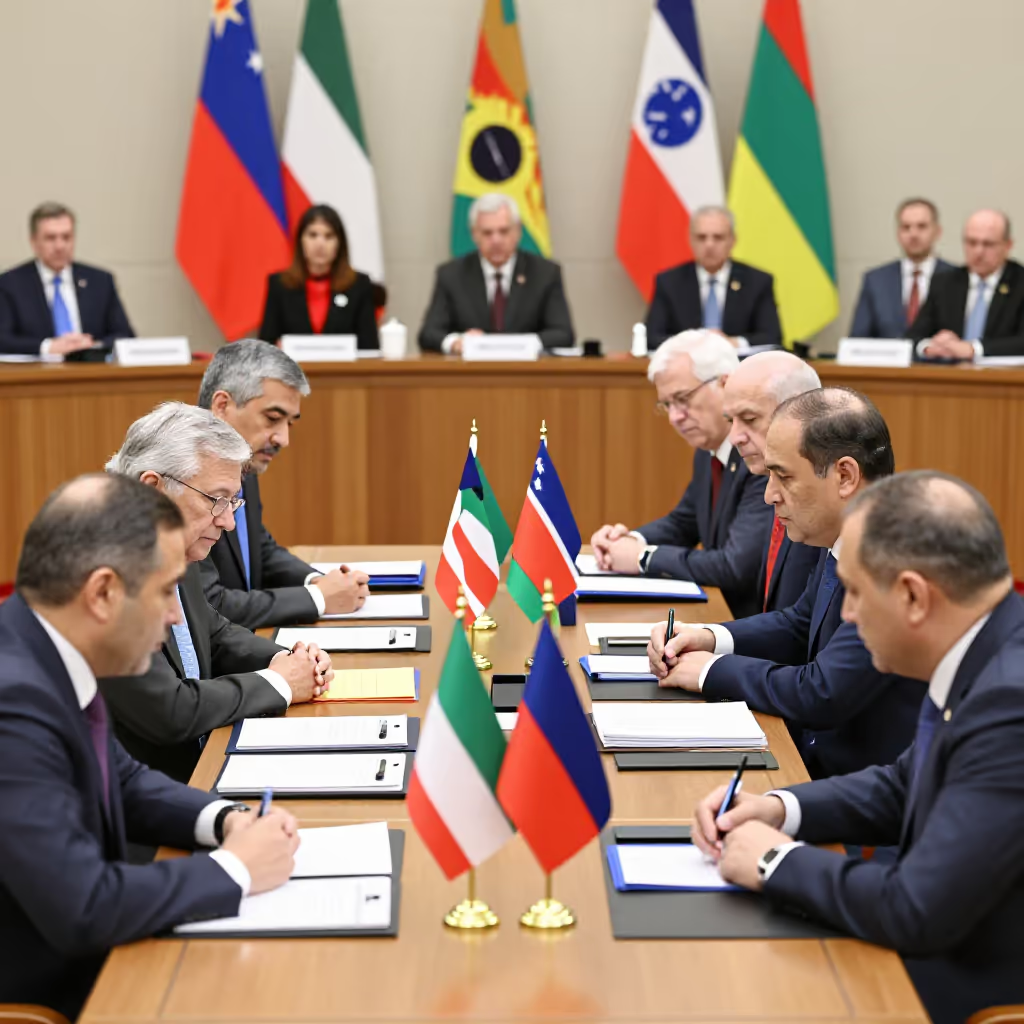
bloc
A group of states, parties, or people that pursue shared political or economic interests.
Die beiden Parteien bildeten im Parlament einen gemeinsamen Block.
The two parties formed a joint bloc in parliament.
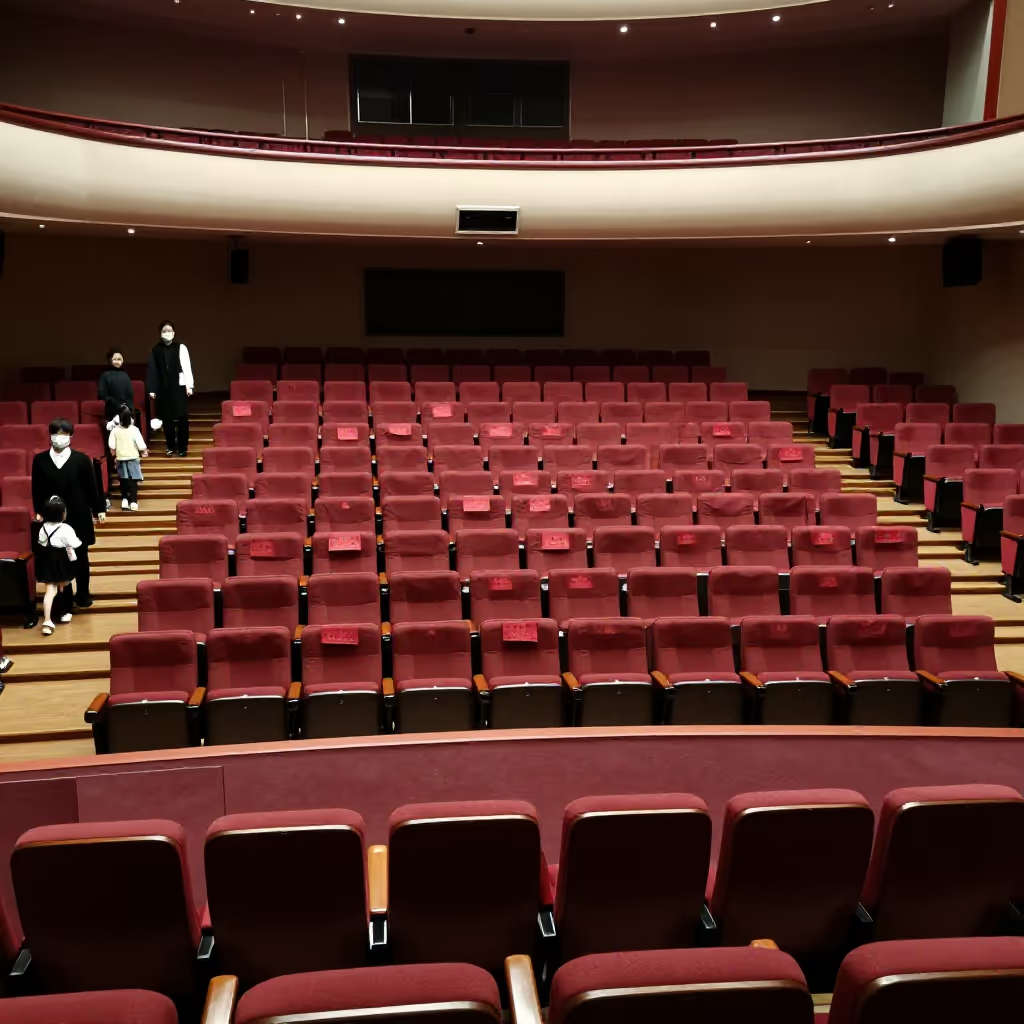
block
A connected unit, for example a period of time in a schedule or a group of seats in a theater.
Der Kurs findet als Block an einem Wochenende statt.
The course takes place as a block over one weekend.
'Block' is a very productive base word. Many compound nouns make the meaning more precise, for example 'Wohnblock' (apartment block), 'Schreibblock' (notepad), 'Motorblock' (part of an engine), or 'Blockflöte' (recorder).
Für die Schule brauche ich noch einen neuen Schreibblock.
I still need a new notepad for school.
When 'Block' describes a piece of material, the material is often given with the preposition 'aus' (from / made of).
Die Statue wurde aus einem einzigen Block Granit gefertigt.
The statue was made from a single block of granite.
In connection with a notepad, typical verbs are 'notieren' (to note down), 'schreiben' (to write), or 'zeichnen' (to draw). It is often described with adjectives such as 'kariert' (squared) or 'liniert' (lined).
Er hat sich die Telefonnummer schnell auf seinem Block notiert.
He quickly noted down the phone number on his notepad.
In an urban context, 'Block' can mean a building or the area surrounded by streets. 'In einem Block wohnen' refers to the building, while 'um den Block gehen' refers to the area.
Meine neue Wohnung ist in einem großen Block am Stadtrand.
My new apartment is in a large block on the outskirts of the city.
In political or economic contexts, 'Block' refers to an alliance with shared interests. A typical verb in this context is 'bilden' (to form).
Die Oppositionsparteien bildeten einen Block gegen den Gesetzesentwurf der Regierung.
The opposition parties formed a bloc against the government's draft law.
area / field
In a theater, Bereich and Block can refer to a group of seats. Bereich is the more general spatial term and does not necessarily imply a fixed division. Block usually refers to a clearly recognizable, contiguous seating section.

Unsere Plätze befinden sich im hinteren Block des Theaters.
Our seats are in the back block of the theater.
Die günstigen Plätze befinden sich im hinteren Bereich des Theaters.
The cheaper seats are in the back section of the theater.