

blocken
to block
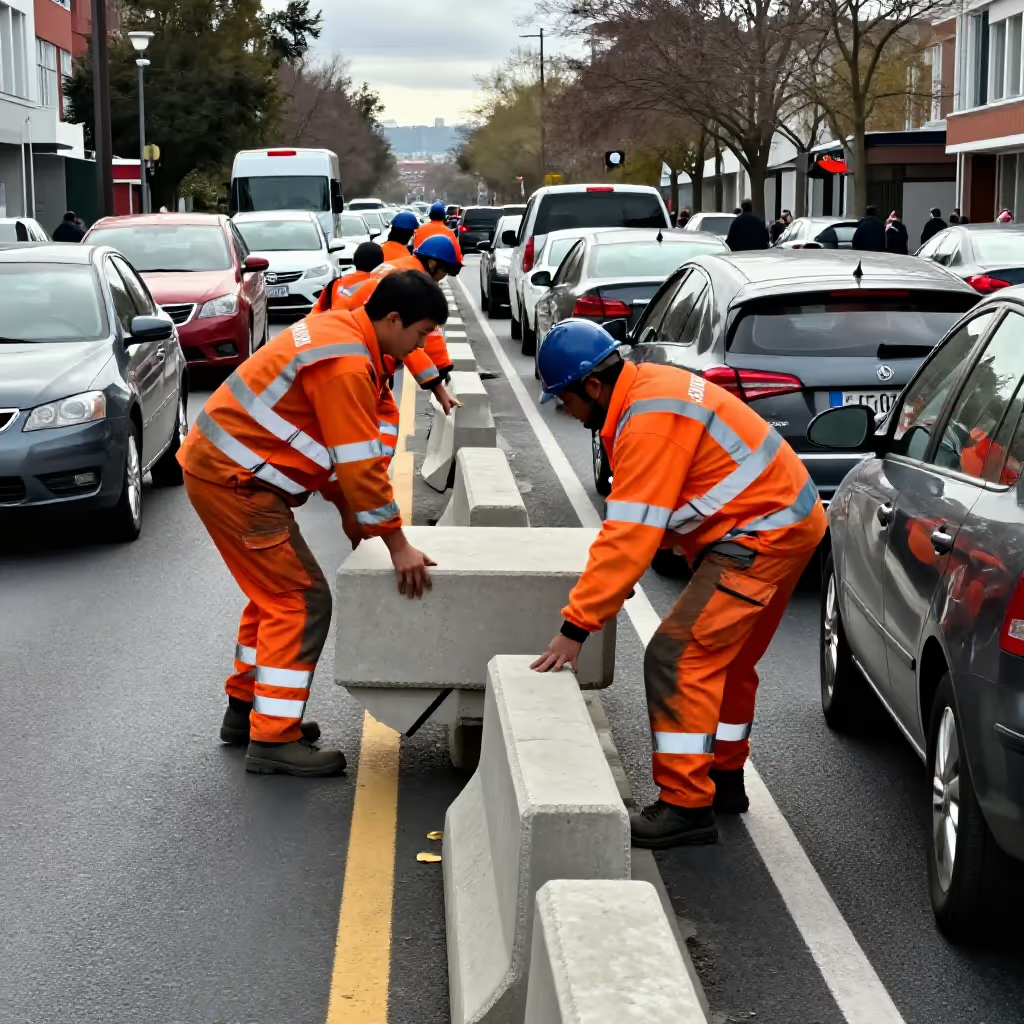
To create an obstacle in order to block a path, movement, or access.
EXAMPLE
Ein umgestürzter Baum blockt die gesamte Fahrbahn.
A fallen tree is blocking the entire roadway.
to block
Loading your saved state.
to block
To create an obstacle in order to block a path, movement, or access.
Ein umgestürzter Baum blockt die gesamte Fahrbahn.
A fallen tree is blocking the entire roadway.
to block
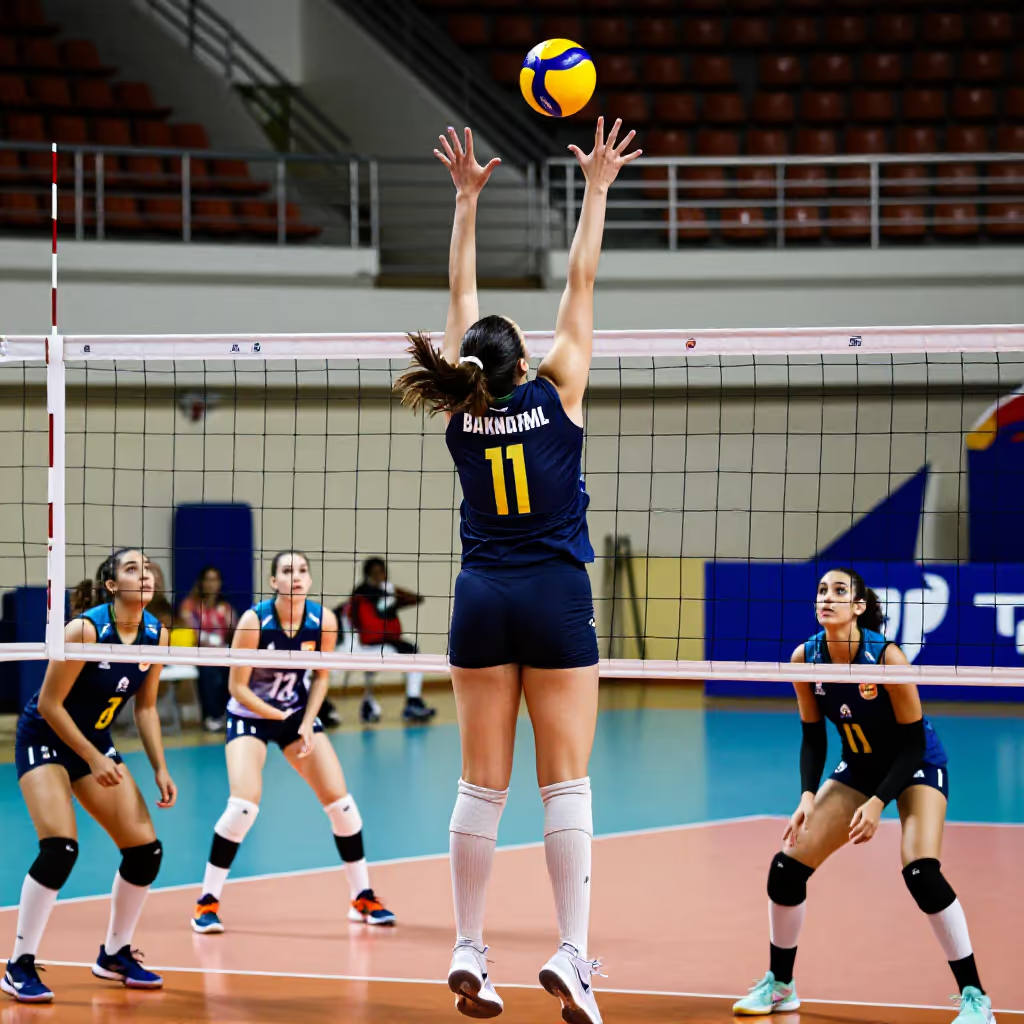
In sports, to stop an opponent's attack by putting yourself in their way, e.g. in volleyball or basketball.
Der Verteidiger konnte den Schuss des Stürmers im letzten Moment blocken.
The defender was able to block the striker's shot at the last moment.

to block
On the internet or social media, to block a person so that they can no longer contact you or see your profile.
Nach den beleidigenden Nachrichten habe ich ihn sofort geblockt.
After the insulting messages, I blocked him immediately.

to shut down
To inwardly resist something; to reject a topic or confrontation and not engage with it.
Immer wenn wir über die Zukunft reden, blockt er total.
Whenever we talk about the future, he completely shuts down.

to block off
To reserve or firmly schedule a specific period of time in the calendar for an activity.
Ich habe mir den Freitagnachmittag geblockt, um die Präsentation vorzubereiten.
I blocked off Friday afternoon to prepare the presentation.
'Blocken' (to block) is a loanword from English ('to block'). In German, it is conjugated like a regular weak verb: ich blocke, ich blockte, ich habe geblockt.
Er hat den Anruf einfach geblockt.
He simply blocked the call.
The exact meaning of 'blocken' (to block) often becomes clear from the object. If you block a road, you obstruct it. If you block a person, you block them digitally. If you block an appointment, you reserve it.
Die Polizei blockte die Zufahrt zur Unfallstelle.
The police blocked the access road to the accident site.
In a sports context, 'blocken' (to block) always means to stop an opponent's attack. Typical collocations are 'einen Schuss blocken' (to block a shot), 'einen Ball blocken' (to block a ball), or 'einen Angriff blocken' (to block an attack).
Die Volleyballspielerin sprang hoch, um den Ball zu blocken.
The volleyball player jumped high to block the ball.
In the digital world, 'blocken' (to block) is the standard verb for preventing contact with a person on social media or messengers. The object here is always a person or a profile.
Wenn dich jemand belästigt, solltest du den Kontakt sofort blocken.
If someone is harassing you, you should block the contact immediately.
In the psychological meaning, 'blocken' (to shut down) can also be used without an object. It then means that a person closes themselves off internally from a discussion or a feeling.
Jedes Mal, wenn ich das Thema anspreche, blockt sie sofort ab.
Every time I bring up the topic, she immediately shuts down.
In the context of calendars and time planning, 'blocken' (to block off) means to reserve a period of time for a specific activity. It is often used reflexively: 'sich Zeit blocken' (to block off time for oneself).
Kannst du dir morgen eine Stunde für ein Gespräch mit mir blocken?
Can you block off an hour tomorrow for a conversation with me?
to block / to ban
On the internet, sperren usually means withdrawing access to an account or service. Blocken, by contrast, means preventing a person from contacting you or seeing your profile. The key distinction is therefore whether access or contact is being prevented.

Mia blockt Paul, damit er ihr keine Nachrichten mehr senden kann.
Mia blocks Paul so that he can no longer send her messages.
Die Plattform sperrt Pauls Konto wegen eines Regelverstoßes.
The platform blocks Paul's account because he violated the rules.